
NELFUND Helped Me Through School: A Conversation With Oladepo Caleb, the Best Graduating Student of LAUTECH
by
Listen to this article
A lot of people do not use AI the right way, and I think it's one of the reasons why students have been affected by its usage. I usually say AI is not necessarily a tool to solve a problem for you. It's either a tool to do research or a tool to explain an already solved problem.
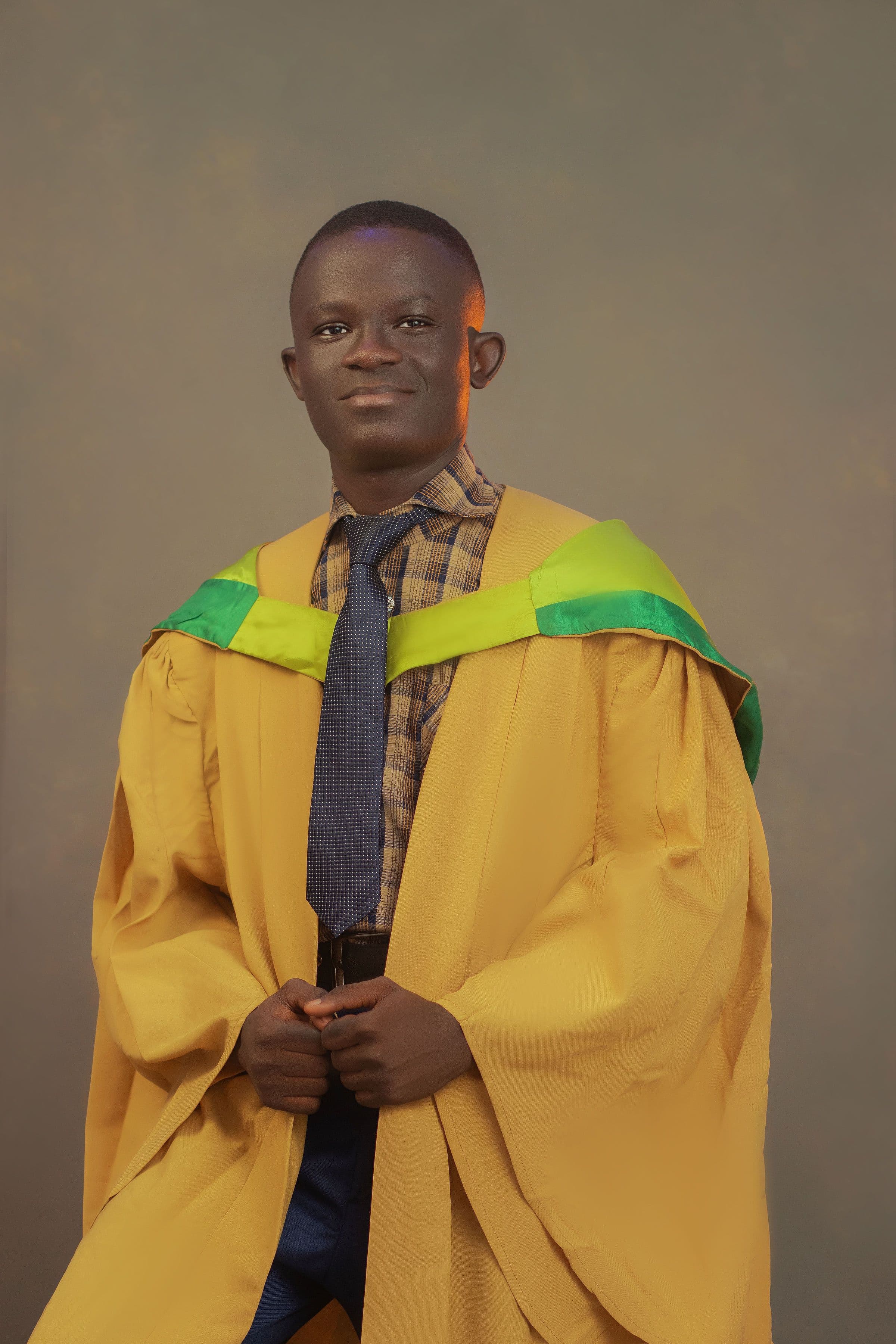
When Oladepo Caleb Olugbenga announced his extraordinary feat of emerging as the best graduating student from Ladoke Akintola University on X (formerly Twitter), his tweet generated mixed reactions from Nigerians. There was nothing strange about a high-performing student announcing their academic achievements online. What made his case different was the mention of Nigerian Education Loan Fund (NELFUND), a student loan initiative of the Tinubu-led administration of the Federal Republic of Nigeria.
To many individuals, celebrating the student loan initiative overlooked what should be expected from the government, which is ensuring the best brains are kept within the four walls of academic institutions. But beyond this reaction, Oladepo Caleb is a young boy from a humble missionary family who used every tool available to achieve academic success. Sadiq Abubakar had a long phone conversation with Oladepo Caleb to discuss what it means to study in Nigeria, particularly the struggles of brilliant individuals who are raised by financially struggling parents. Questions are in italic:
Interviewer: “Could you tell us your background, where you grew up, your primary school, secondary school before being admitted to LAUTECH?”
Oladepo Caleb: Honestly speaking, talking about my background, it's not as straight as I want it to be. The first thing is that I attended several primary schools and about two secondary schools. Since my parents were missionaries, they changed their locations a lot and that influenced my movement across schools. But in terms of background, I will best describe it as very humble. Let me just say that fact. I come from a very poor background. At the start of my parents’ ministry, it was very difficult and serving in a village further worsened our financial capacity. An important addition is that I represented my school, Ejigbo Baptist High School, Osun State in various competitions. I earned cash prizes through these various competitions to support my academic ambitions.
Interviewer: What was the admission process to LAUTECH like for you?
Oladepo Caleb: To be sincere, I did not see the LAUTECH admission coming. Even though I scored 268 in my Joint Admissions and Matriculation Board (JAMB) examination, the D7 in Physics from the West African Examination Council examination somehow seemed like an obstacle to the possibility of studying at LAUTECH. Fortunately, I had something to show in my National Examination Council (NECO) result to prove my competence in physics. Merging these two results secured my admission to LAUTECH.
Interviewer: Why LAUTECH?
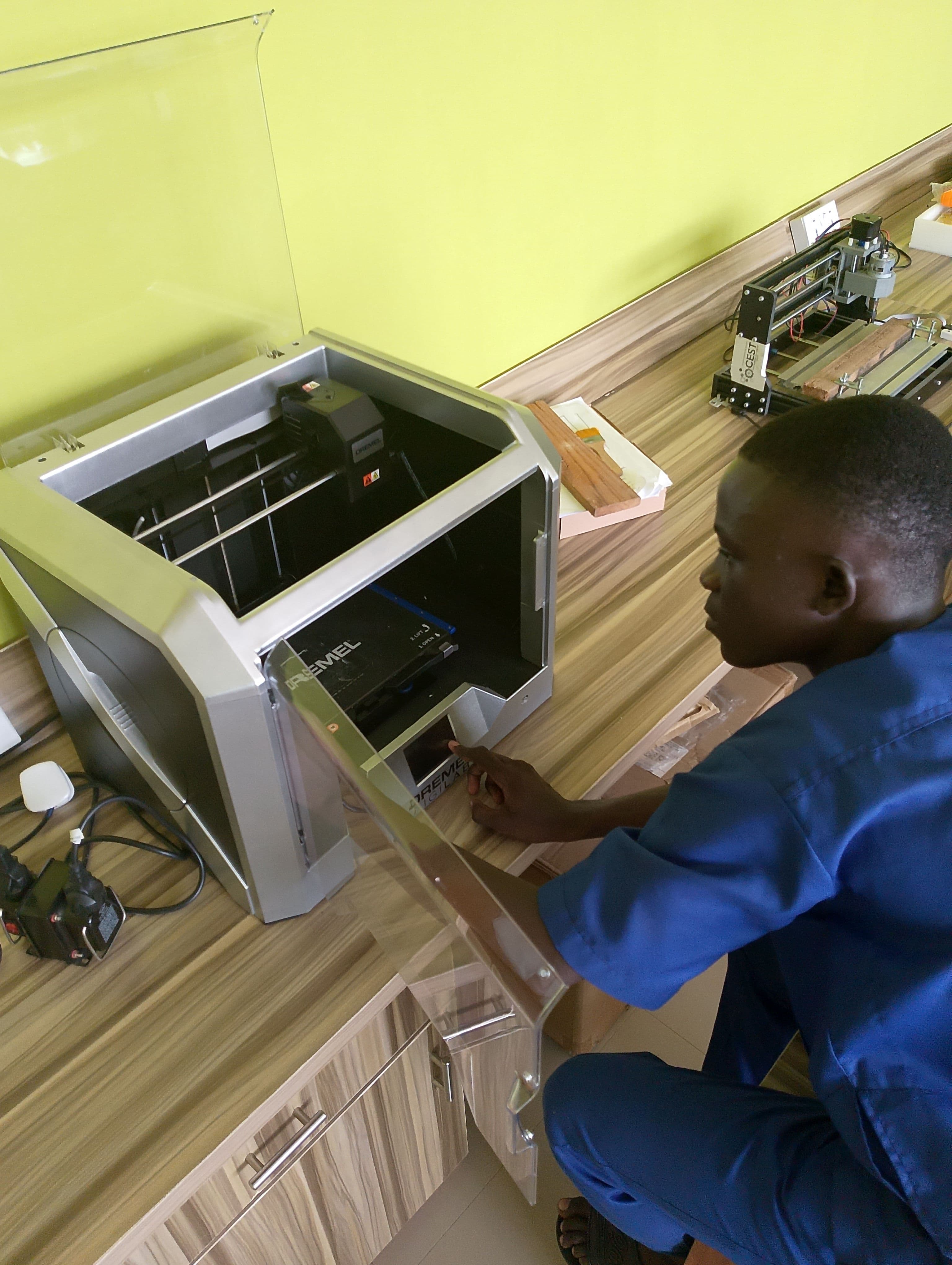
Oladepo Caleb: I wanted to attend Obafemi Awolowo University before my parents decided to send me to LAUTECH since my elder brother was already a student in the university. Also, I wanted to study engineering in a highly reputable university. Since primary school, I had known that electronic electrical engineering was what I wanted. I have always been curious about how electronic devices work. Hence, choosing a course that matches with my natural interest in a university of technology turned out to be a significant decision.
Interviewer: How did you study as a student?
Oladepo Caleb: Let me be sincere with you, sir. I am not a rigid type. If I'm being factual with you, my case is a matter of convenience and mercy. Being the best graduating student has nothing to do with me being the best. It also does not mean I have a study technique that is better than the ones other people adopted. But I will say this…
The first technique is regular attendance. I didn't like to miss class. The second is to factor in the speed required during an examination while I am studying. The reality about an exam is how smart you are and how fast you can manoeuvre your way. I took quizzes, attendance, and assignments seriously as the exams. I went the extra mile to research things related to assignments we are given for better comprehension.
The third thing that I did was to maximise the use of AI for academic purposes. Honestly, a lot of people do not use AI the right way, and I think it's one of the reasons why students have been affected by its usage. I usually say AI is not necessarily a tool to solve a problem for you. It's either a tool to do research or a tool to explain an already solved problem.
I don't just send a question to AI to solve a problem for me. No. Even when it comes to calculations, they are highly deficient. So AI is a tool for conducting research about the question. I would prompt it and ask if it can see some questions online. I prompt AI like I'm having a conversation with a person. I use Gemini as my personal Google Assistant, such that even when I'm reading, I can just share my screen and switch on my mic. We discuss while I read from my notes. So I take AI as my virtual tutor, a virtual teacher to me.
And another thing is how I revise. The major problem pertaining to exam preparation is how you revise as a student. When you read, you should also study. You know they usually say that we should meditate on the scriptures. So, you meditate on what you read. We need to meditate on our books too. I use visualisation techniques a lot. There is a friend of mine, Ayanfe Olawale, with whom I practiced visualising videos of a concept just to ensure the process required for them to come alive is well stored in the brain.
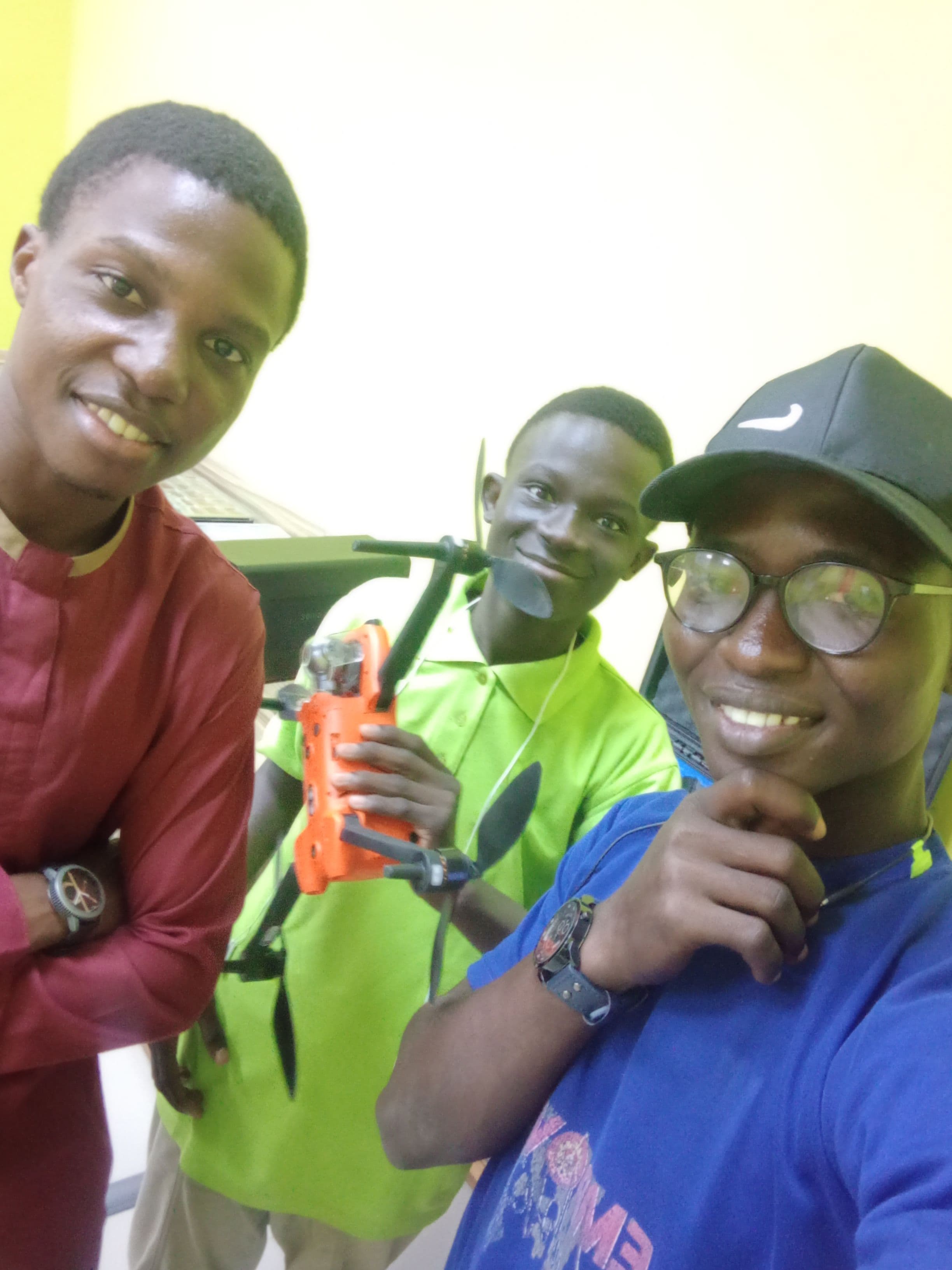
And, one more thing that I will add is the fact that a lot of students only focus on their books. But we, my friends and I, focused on academics for the sake of knowledge and self-development. We focused on building our critical thinking and reasoning skills. We used to take tests, critical thinking tests, IQ tests, and all those math puzzles. We even competed among ourselves. To cap it up, it’s still about God putting what you have read in your remembrance. You might read and forget. It has happened to me. I had to just calm down in the exam hall, put my head on the table in just five seconds, eight seconds, or ten seconds, to calm myself and pray to God. And in no time, I remembered what I had read and passed the exam in flying colours. So that part is also real. It is very very real.
So it's all about God putting it in your remembrance. It is part of the Covenant that, okay, I succeed, that I am the best student, which is part of the script that is written about my life. But if I did not cooperate, that part would have been omitted and also go on to affect other future achievements. So it's a script I had to fulfill. But I cooperated with the scriptwriter, which is my Creator, my Lord Jesus Christ.
Interviewer: Was there a time you almost gave up?
Oladepo Caleb: Sir, the reality is, as with every student, we always have reason to feel like giving up. It's not only for scholars. Every student will always have a reason to give up. I forgot to mention. My first semester at 100 level was 4.3GPA, which is 2:1or second class (Upper Division). I started with second class. So if it's about giving up, honestly, I should have given up because 4.3 was not something I devised. I was like, I had planned for first class. In fact, the best graded level was not my plan. My own plan was just to graduate with first class. At least have first class. So when I had 4.3, the semester that followed, I had 5.0. That was how it continued that I suffered a series of difficulties. Sir, this is real. I will read today. If you ask me tomorrow, I can't remember anything. Nothing. It was as if they had wiped my memory, sir. And exams are coming. So, there were times that I felt like I was really stressing myself over this thing. But at the same time, it got to a point that it was only to trust in God with the little I could do, honestly. The reality is that you cannot finish all of God's work. So if it's about giving up, there will be times you want to give up. You feel like, "Can I not even let this course wear me out?" And lo and behold, when the result comes out, because mercy has spoken.
Interviewer: What other things did you do in addition to studying?
Oladepo Caleb: As for that, not only one. I took many leadership roles. The truth is, as a student, your primary assignment is to focus on your academics, but it's not all. Academics is not just all. School is a medium where you also connect, you build, and you grow. So, during my 100 level, 200 level, 300 level, I was largely focused on trying to build my CGPA. So I introduced extracurricular activities when I got to 400 level, and that was when I served as the prayer coordinator in my fellowship, Scripture Union Campus Fellowship. I served as the prayer coordinator in my 500 level, I served as the Caretaker Chairman for the whole school, equivalent to the SUG president that other schools use.
Interviewer: In your post on X (formerly Twitter) you said NELFUND also helped you in achieving this feat. Can you elaborate on that?
Oladepo Caleb: As regarding the post… Twitter has limitations in the amount of words, characters that you can use. I just said NELFUND, their loans actually worked. The fact is that the loans worked for my final year. I will tell you, for any engineering student, final year is the most demanding year in terms of funds and amount that you will spend. I applied for NELFUND for the very first time when I was in 400 level, during my IT. And the first time I got the payment was in my final year. But the role that loan played in my life is significant. I was able to take care of expenses required for my project, report writings, accommodation, tuition and other things.
When I made the post, many people jumped and said, "Oh, this guy is just trying to do propaganda." I'm not a politician. If you check my history, I'm not someone that is largely interested in politics, let alone collaborating with the government to come up with propaganda that sanitises its image. I'm not. That's not my concern. My own concern is appreciating those that have contributed to my journey. If you check my X handle, you will discover that I thanked NELFUND.
Also, I appreciated Life Foundation because they were the ones that even made it easy for me right from the beginning by giving me ₦100,000 every session. But the school fees I paid every year in LAUTECH was more than ₦100,000. So despite that, I had to find extra money by working. My parents too collected loans here and there. They ran into debt from here and there just to see me through school. But using the ₦20,000 per month upkeep made available through NELFUND and the institutional loan made to clear my tuition made studying easier for me. With this loan, the financial burden on my family was lifted. That is why I deemed it necessary to appreciate NELFUND’s contribution to my academic success.
Interviewer: What are your plans for the future?
Oladepo Caleb: One thing I want to do is my masters and my PhD. Yes, I want to do both of them, if possible, in this country or outside the country.
Interviewer: What advice would you give students who want to excel academically? What common mistakes should students avoid?
Oladepo Caleb: For students who want to excel academically, the first thing that I would say is know your God, know yourself, know your ability, know your strengths, know your weaknesses, know when to play, know when to pray, know when to read, know when to study. See beyond cramming, understand. See beyond the text, the letters. Go to the core principles. Avoid mental stress and friends that do not share the same passion or goal with you.
Abubakar S Tajudeen
Abubakar S Tajudeen is a final-year law student at the University of Ibadan. He previously earned a bachelor’s degree in French from the Department of European Studies at the same institution. A hyperpolyglot, he speaks and understands eight African and international languages. With an academic background that bridges French studies and law, his research interests are multidisciplinary, encompassing (post)colonial literature, linguistics, and multilingualism, as well as public policy, international law, human capacity development, and civic communication. He has published in the Midwest Social Sciences Journal.
comments
Honourable
25w
Congratulations on your outstanding accomplishments! Your drive to reach higher is truly commendable.
Tajudeen Mutiu
25w
In never action, there must be a reaction. Triumph in the academic arena does not only mean you have to sound academically alone there are some ingredients which must be put in place to record great success which they boy have exhibit. Congratulations to Caleb and to Tinubu led administration for bringing the students loan which has helped many to navigate through the financial challenges.
Felicity
25w
Inspiring. He's done well. Congratulations to him.