
Bandit attacks become more lethal as the rainy season approaches
by
Listen to this article
Northwest Nigeria: Security Situation Report (March 22–28, 2026)
Introduction
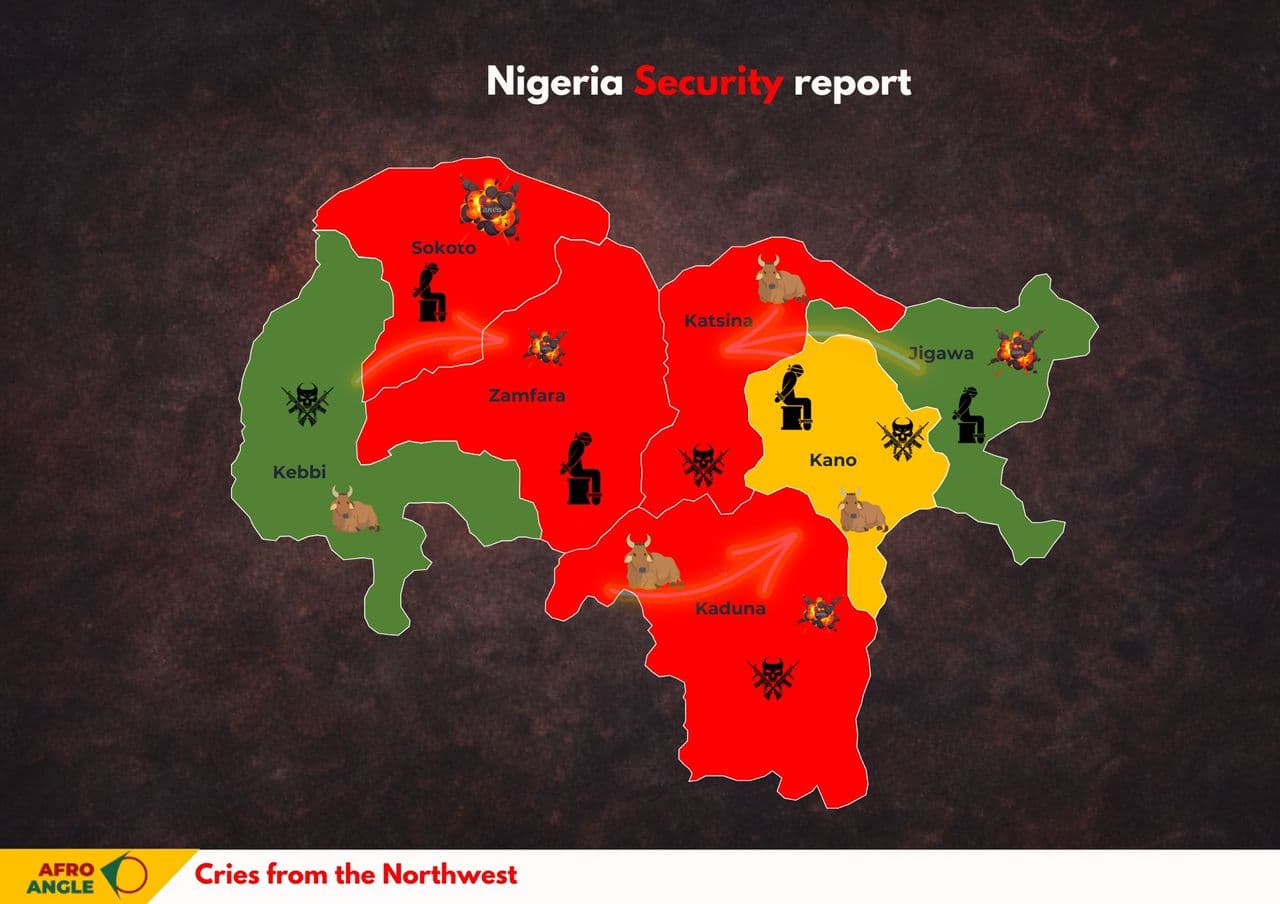
The security landscape across Northwest Nigeria remains volatile, defined by a complex interplay of opportunistic banditry and the more structured, ideological expansion of insurgent groups. During the reporting period of March 22 to March 28, the region grappled with a sophisticated level of coordinated violence targeting rural agricultural hubs, mining sites, and critical transit corridors. While aggregate data for the week suggests a slight decline in the frequency of violent confrontations and attacks by armed bandits, the specific details of these attacks point toward a more dangerous pattern.
The steady encroachment of armed groups into semi-urban areas and the tactical evolution of the Lakurawa faction. The bold incursion into the Damba area of Gusau, the Zamfara State capital, serves as a stark indicator that the traditional buffer zones between rural instability and urban administrative centers are rapidly eroding.
Week in Review
A comparative analysis of this week’s data against the preceding period offers a nuanced view of the conflict's current velocity. The total number of recorded security incidents in the region declined from 25 to 20, representing a 20% decrease in the frequency of attacks. This reduction in volume was mirrored by a significant drop in lethality; fatalities plummeted from 38 in the previous week to 21, marking a 45% decrease. However, these figures should not be misinterpreted as a de-escalation of intent.
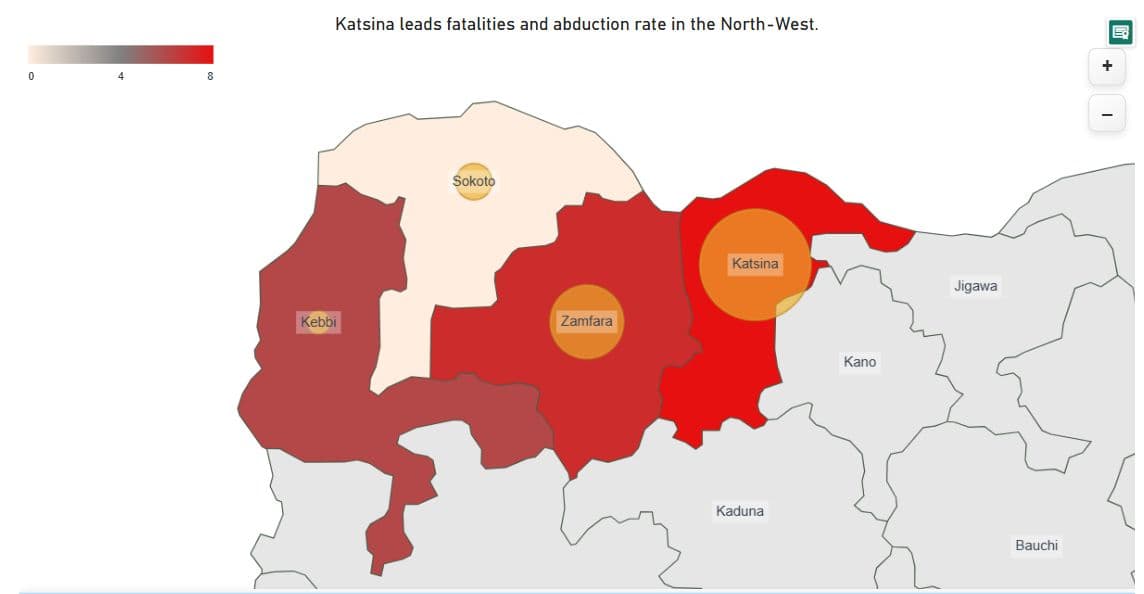
The most critical metric remains the surge in mass abductions. Kidnapping incidents rose from 35 to 45, a 29% increase, highlighting a strategic shift toward high-yield, low-risk economic crimes. Geospatially, Katsina State continues to function as the regional epicenter of this violence. Accounting for 26 of the region's abductions, 8 fatalities, and 9 distinct attacks, Katsina remains the geographic pivot point from which violence radiates into neighboring states. The concentration of activity here suggests that, despite ongoing military pressures, armed groups retain a high degree of mobility and the ability to dominate the state's security corridors at will.
Analysis: Bandit Attacks becomes more lethal as season changes
The abduction of over 15 civilians in the Damba area of Gusau represents a pivotal moment in the reporting week. Traditionally, Zamfara's security challenges were confined to the thick forests of the hinterlands, but the movement of threats into the state capital’s periphery signals a degradation of urban security architecture. This shift forces a recalculation of risk for residents and businesses previously considered insulated from the rural confined activity of banditry.
Simultaneously, the Gora-Kankara highway remains a choke point of instability. The kidnapping of commuters along this route, which serves as a vital artery connecting Katsina to Sokoto, underscores the persistent failure to secure major supply lines. These highway intercepts serve a dual purpose for armed groups: they provide immediate liquid capital through ransoms and effectively paralyze the regional movement of goods and people, further isolating rural communities from state protection.
Perhaps the most concerning development of the week is the renewed lethality of the Lakurawa insurgent group. In Kebbi State, the group demonstrated its high-end tactical capabilities by launching a sophisticated ambush on a military convoy in Girnimasa, Shanga Local Government Area (LGA). The attack, which resulted in the deaths of at least six soldiers and the destruction of several armored vehicles, marks a significant departure from the group’s relatively lower profile following heavy losses sustained during the U.S.-supported airstrikes and military offensives in early January.
Following those January setbacks, Lakurawa appears to have restructured its operational engagement. There is a visible shift away from purely territorial defense toward asymmetric retribution against both state forces and local populations. This was evidenced by the brutal retaliatory assaults on communities in Arewa Danbi in February killing 34 civilians. Furthermore, evidence is mounting that Lakurawa is successfully exporting its brand of violence southward. The recent improvised explosive device (IED) attack on a bridge in Luma, within the Borgu region of Niger State, suggests a deliberate expansion into the North-Central zone. By targeting critical infrastructure like bridges, the group is transitioning from a localized threat in Kebbi to a regional insurgent force capable of disrupting inter-state transit and establishing new influence zones in the strategic Niger-Kwara corridor.
As the rainy season approaches, the focus of armed groups is increasingly turning toward the agrarian economy. In Sabon Birni LGA, Sokoto State, the abduction of four farmers is not an isolated incident of kidnapping; it is a precursor to a wider strategy of harvest taxation and rural subjugation. Indeed, another attack was reported on March 29, where bandits shot and injured a civilian and kidnapped five others in Maiwa village. In the Northwest, control over land is synonymous with control over survival. Armed groups are positioning themselves to act as the de facto authorities of the upcoming farming season, imposing levies on those who wish to plant and eventually claiming a percentage of the harvest.
This predatory governance poses a direct threat to national food security. In local government areas like Sabon Birni and parts of Katsina, the state’s inability to protect the farming community means that food output will be dictated by the whims of bandit leaders. If farmers are unable to access their fields without paying exorbitant protection fees, the resulting shortfall in production will exacerbate an already dire humanitarian crisis in the region.
Outlook
In the coming weeks, the conflict will increasingly hinge on mobility. As the rainy season sets in, the Nigerian military’s heavy armor and supply chains will come under strain, particularly on the region’s unpaved rural roads. Armed groups, especially bandit factions and Lakurawa elements, are better adapted to these conditions. Their decentralized structure and light operational footprint allow them to maneuver more effectively through mud and dense vegetation, giving them a clear seasonal advantage. It also allows for further attacks in other regions including the North Central as seen in Plateau State on March 29, where armed bandits reportedly killed over 40 people in Gari Ya Waye community Angwan Rukuba, Jos North LGA.
This shift is likely to alter the balance of control on the ground. With reduced military reach in hard-to-access areas, these groups are positioned to tighten their grip on rural communities. In practical terms, this means a probable increase in coercive taxation and resource extraction from farming populations at the peak of the agricultural cycle.
If a deliberate adjustment in operational posture is absent, this dynamic could deepen. A strategy that does not explicitly prioritize the protection of key agricultural zones and the stabilization of semi-urban fringes risks ceding the rural interior by default. The likely outcome is a fragmented control pattern, urban centers remaining nominally under state authority, while forest-based armed actors consolidate parallel governance structures across the rural areas.
Adam Abass
Adam Abass is a graduate student of political science and international relations. His research focuses on Middle Eastern politics, counter-terrorism, peace, and security in Africa.
comments
No comments yet