
How Kogi Became a Hub for Extremist Expansion into Southern Nigeria
by
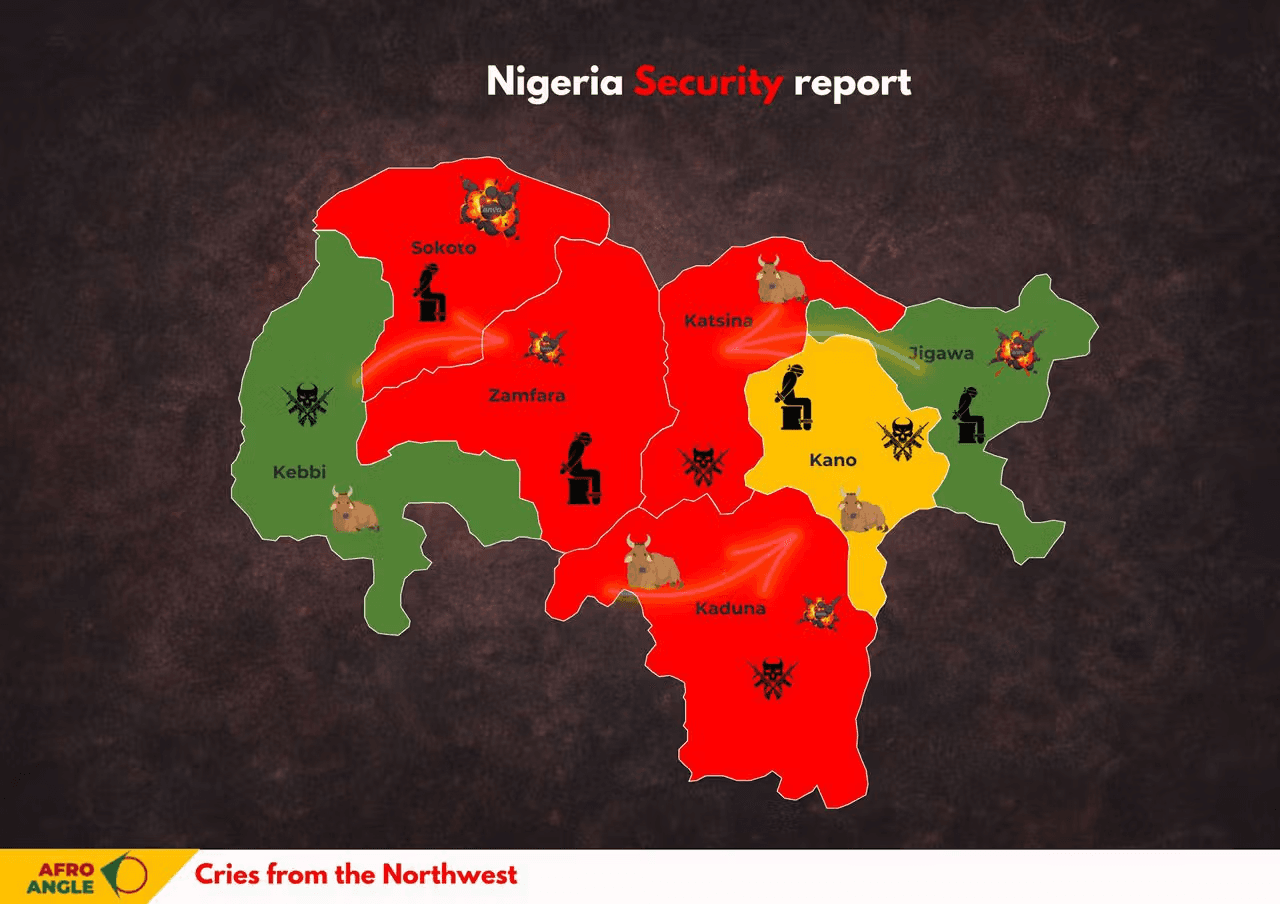
Northern Nigeria Security Situation Report (October 4–10, 2026)
Introduction
In the reporting week, there was a significant operational success for the Nigerian military and its security partners, demonstrating the continued pressure on the Islamic State West Africa Province (ISWAP) beyond its strongholds in the North-east.
- A joint operation involving the Department of State Services (DSS), Amotekun and other security agencies, with intelligence support from the United Kingdom, reportedly led to the killing of Abdussamad Ohida, an ISWAP commander, in a forest in Owo, Ondo State. Ohida took over leadership of ISWAP’s central Nigeria faction following the arrest of his superior, Abu Ikrimah, by the DSS in 2023.
- The operation followed intelligence that Ohida was reportedly planning attacks against civilians in parts of southern Nigeria, particularly during the festive period.
- The killing of Ohida also highlights a wider concern beyond the elimination of a senior ISWAP commander. It draws attention to the group's expansion towards the North-central and southern regions, the role Kogi State plays as a staging ground for its operations, and how local social networks have helped extremist groups establish a presence in communities where their ideology can take root.
- In another major development, a Nigerian surveillance aircraft crashed near Igbokoda in Ilaje Local Government Area of Ondo State while reportedly conducting a routine flight from Edo State to Lagos. All 25 people on board, including 20 passengers and five crew members, were killed.
- Lakurawa operations also appears to be resurging. The Afroangle intelligence team recorded three attacks linked to the group since the previous week. In the latest incident, the group reportedly attacked a military forward operating base in Maiyama Local Government Area of Kebbi State. Troops repelled the assault and seized more than 100 motorcycles. In a separate attack attributed to Lakurawa, gunmen targeted a construction site along the Sokoto-Badagry Superhighway, killing two security personnel and one foreign national.
- The government continued to expand military deployments to improve operational coverage and response times. Army formations have been operationalised in Osun, Oyo, Zamfara and Kebbi states. The Army also announced that it had taken over Old Oyo National Park and converted it into a troop training ground. The move is intended to restrict armed groups from using forested areas as sanctuaries and bases for criminal activities.
Weekly Review
Across the northern operational theatre, the reporting week was marked by military successes alongside continued attacks by armed groups against vulnerable communities and livelihoods. Threats to humanitarian operations and the continued resilience of insurgent groups also remained prominent.
Northwest: In the North-west, the week began with an attack on a mining site and a military base in Bindin community, Maru Local Government Area of Zamfara State. The attack reportedly resulted in the deaths of eight soldiers, one police officer and 23 miners. It followed the miners' refusal to pay compensation to the armed group, highlighting the growing influence of these groups and the risks faced by miners and security personnel operating in rural communities.
In Sokoto State, a humanitarian worker and a police inspector were reportedly killed during an attack along the Kajiji-Shagari axis. In another incident, six people were abducted while harvesting crops in Wasagu, Danko-Wasagu Local Government Area.
North-east: Troops foiled an attempted ISWAP attack along the Molai-Damboa route and neutralised three IEDs planted along key road corridors. These included the Gwoza-Wala-Warabe-Pulka route in Gwoza Local Government Area, the Dikwa-Ajiri route and a farm along the Pulka-Gwoza road. In addition, In a significant tactical success, Nigerian troops also repelled an ISWAP attempt to overrun a military base in Kukawa Local Government Area of Borno State. Supported by air operations, the troops reportedly killed 25 militants. In Yobe State, troops operating in Geidam Local Government Area killed one suspected terrorist and captured another.
North-central: Recurring violence in Plateau State continued to affect communities. In Mangu Local Government Area, suspected Fulani bandits reportedly killed a man in a community. In the Rim community, Riyom Local Government Area, troops foiled an attempted attack. Meanwhile, an armed Fulani herder reportedly killed a mobile police officer along Kwi Road in Barkin Ladi Local Government Area. In Nasarawa State, two people were arrested following a clash between farmers and herders in Ogobo community, Nasarawa Local Government Area.
The reporting week highlights the continued security threat facing vulnerable communities across northern Nigeria, despite ongoing efforts by security forces to contain armed groups and disrupt their operations.
Kogi State as an ISWAP/Ansaru Staging and Operational Hub
Research, policy discussions and community-based intervention on insurgent groups such as ISWAP and Ansaru have largely focused on these group's strongholds in the North-east, and to some extent the North-west. This focus has often left these ambitions beyond the region underexamined.
In recent years, Kogi State has emerged as an important location in these group's efforts to expand into southern Nigeria. Its strategic position, bordering several states and connecting the North-central to parts of the South-west, provides opportunities for the movement of fighters and the coordination of operations across state boundaries. The state has also provided a local environment in which violent extremist networks have been able to recruit and establish themselves. Understanding these dynamics is important to explaining how Kogi has become a transit point, staging ground and operational hub for extremist groups seeking to extend their reach.
ISWAP-Related Incursions in the Middle Belt
- Some major attacks attributed to ISWAP and Ansaru in the North-central and South-west have also been linked to networks operating from Kogi. Abdulmumin Otaru, for instance, was reportedly a key cell leader involved in urban bombings and the December 2022 IED attack in Okene.
- The ISWAP attack on St Francis Catholic Church in Owo, Ondo State, which killed more than 40 people, was reportedly planned, financed and staged from Okene. The geographical proximity between Kogi Central and Ondo, alongside the network of forested areas connecting parts of the two states, may have facilitated the movement of operatives and logistical support.
- The 2022 Kuje prison attack, involving ISWAP and Ansaru-linked networks, also highlighted connections between extremist cells operating in Kogi. The operation reportedly involved cooperation between Abu Baraa, an Ansaru figure based in Kogi, and Abu Ikrima, who was associated with ISWAP's expansion into southern Nigeria. Abu Ikrima's Ebira-linked network reportedly provided local staging areas, route reconnaissance and safe accommodation for escapees moving through Kogi towards Niger and Kaduna states and the Lake Chad region. Some escapees subsequently joined ISWAP and Ansaru cells operating in Kogi, strengthening local networks and expanding recruitment opportunities in Okene.
Drivers
One of the factors associated with the development of violent jihadist networks in Kogi is the socio-religious and political history of the Ebira ethnic group, which is concentrated in the central part of the state, including Okene, Adavi and Okehi. During the late twentieth century and early 2000s, extremist movements emerged within parts of the local Salafi community in Okene. These developments were shaped by theological disputes involving Salafi groups, traditional Sufi brotherhoods and indigenous Ebira religious traditions.
This period of religious contestation overlapped with political thuggery involving youth groups in Kogi Central. The interaction between violent political networks and established extremist interpretations of Islam created opportunities for recruiters linked to Boko Haram, Ansaru and, later, ISWAP to approach vulnerable individuals.
Family and kinship networks have also played a role in the survival of extremist cells in the state. Ansaru and ISWAP have reportedly recruited through extended family connections, clan associations and trusted local Islamic schools in Okene and surrounding areas. Recruitment from these networks have produced prominent ISWAP and Ansaru figures, including Abu Ikrima, Abdussamad Ohida, Abu Baraa and Abdulmumin Otaru. These individuals have reportedly played roles in maintaining the groups' presence in Kogi and facilitating their operations in other parts of the North-central and South-west.
The killing of Ohida therefore highlights the importance of understanding the local networks that sustain ISWAP's presence in Kogi. His death could disrupt the group's operations, but it does not automatically remove the relationships and logistical structures that have supported its expansion. Reports that extremist ideas remain prevalent within some local networks also reinforce the need for intelligence-led operations to identify and dismantle active cells without treating entire communities or ethnic groups as security threats.
How ISWAP fund its operations
Illicit financing has further supported these groups. Armed robbery, kidnapping and illegal mining can provide funds for operational activities, weapons acquisition and secure communications. However, the social relationships that connect operatives to local communities remain an important part of how extremist networks establish themselves and sustain their presence. These relationships can provide access to accommodation, information and logistical support, making it more difficult for security forces to identify and dismantle cells.
Outlook
The security landscape across northern Nigeria is likely to remain volatile in the coming weeks, particularly as the 2027 election season approaches. Intelligence coordination should be strengthened following the operation, with greater attention to the networks connecting Kogi to neighbouring states. Security agencies should also expand operations in forested areas bordering Kogi, particularly those providing access to the South-west. The priority should be to identify whether ISWAP retains the personnel, local support and logistical capacity to continue planning or facilitating attacks beyond the North-east.
In the North-west, attacks by bandit groups are likely to continue, with the approaching harvest season potentially increasing the risk to farmers. Armed groups may also intensify extortion, including demands for payments linked to harvesting crops. Lakurawa is likely to remain a concern, particularly if its recent attacks indicate a sustained resurgence. Foreign nationals and construction projects could remain vulnerable to attacks intended to generate ransom revenue.
In the North-east, insurgent attacks against communities and military positions are likely to continue. ISWAP may also intensify attacks against military formations to demonstrate its continued operational capacity and attract attention as the country moves closer to the polls.
In the North-central, communal violence in Plateau State is likely to persist. Meanwhile, the reported decline in large-scale attacks in Kwara State and, to a lesser extent, Niger State over the past week requires continued monitoring. The reduction may reflect increased military activity and operational presence, including efforts to rescue kidnapped victims from Dekara in Borgu Local Government Area. However, a decline in reported attacks does not necessarily indicate that the threat has been contained. Security forces should maintain heightened operational alertness, particularly around the Kainji-Borgu area, while monitoring whether armed groups are relocating or changing their tactics.
The killing of Ohida is likely to disrupt ISWAP's central Nigeria operations in the short term. However, the broader threat will depend on whether the group can replace its leadership and maintain the local networks that have supported its expansion towards the South-west. Continued monitoring of Kogi and the forest corridors connecting it to neighbouring states will be important in assessing whether the operation has produced a lasting reduction in ISWAP's operational capacity.
Afroangel Intel Admin
Afroangle Intel Admin
comments
No comments yet