
How Nigeria’s Forests Provide Safe Havens and Sanctuaries for Armed Groups
by
Northern Nigeria Security Situation Report | October 11–17, 2026
Highlights
- After weeks of relatively low-profile attacks, ISWAP assaulted a Nigerian military base in Guzamala, killing at least 10 soldiers and wounding 20 others. The group also reportedly destroyed military vehicles and seized weapons. The attack represents a significant assault on military positions amid the group's renewed campaign against military bases in recent weeks.
- The military intensified its operations against ISWAP. An airstrike on the group's enclave in Badu village, Guzamala LGA, reportedly killed more than 40 fighters, including a commander, and destroyed two vehicles and 20 motorcycles. The losses could weaken the group's operational capacity, although the extent of the impact will depend on its ability to replace personnel and equipment.
- An open-source report alleged that Islamic State-linked cells known as “Awamul Muslimeena fee Nigeria” have intensified efforts to recruit bandits in Zamfara and Niger states through preaching and religious outreach. The cells are reportedly composed largely of Fulani Islamic clerics from the Republic of Niger. Afroangle Intelligence has not independently verified these claims. However, if confirmed, the reported activity could indicate attempts to expand Islamic State influence among existing armed networks, further complicating an already fragile security environment.
Introduction
Forests have become particularly important to this threat environment. Across several regions, they provide concealment, access to resources and space for armed groups to organise, evade military pressure and launch attacks on nearby communities and transport routes.
The Nigerian military's reported deployment to Old Oyo National Park highlights the growing recognition of this problem. The park's security significance, alongside concerns about armed groups operating in other forested areas, reinforces a central challenge for Nigeria's counterterrorism campaign: security forces must establish a sustained presence in these territories and prevent armed groups from using them as secure operating bases. Without this, military operations may continue to disrupt individual cells without removing the conditions that allow them to recover.
Weekly Review
Across northern Nigeria, the security environment during the reporting period was characterised by attacks on military positions, abductions and violence against rural communities. Security forces also recorded operational successes against suspected armed groups and kidnapping networks.
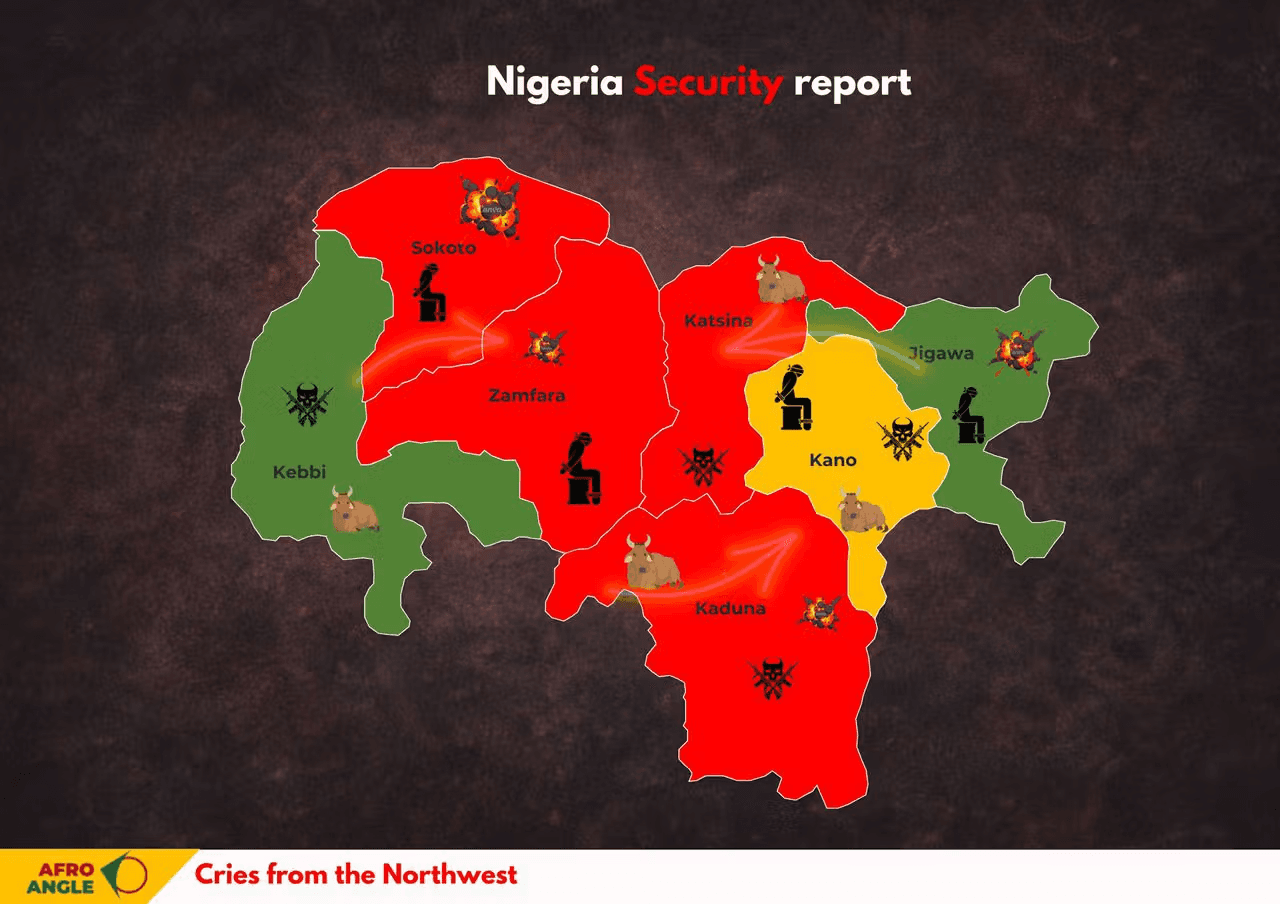
In the North-West, suspected bandits abducted 10 women who were reportedly gathering firewood in Warwarna, Alliki and Twbkinkwashi villages in Rabah LGA, Sokoto State. The incident highlights the risks faced by rural residents who must enter isolated areas to collect essential household resources. These routine activities expose civilians to abduction, particularly where armed groups operate with limited interference. Security forces also clashed with suspected Lakurawa fighters in a separate operation. Several fighters were reportedly killed, camps and support structures destroyed, and weapons and five motorcycles recovered.
In Kaduna State, police arrested 12 suspects during an operation in Millennium City and Maraban Rido, both in Chikun LGA. The suspects included eight alleged kidnappers and four suspected informants. The arrests could help security agencies investigate the networks supporting kidnapping operations.
In the North-East, Nigerian troops killed six suspected Boko Haram and ISWAP fighters following an attack on a Forward Operating Base in Garaha, Hong LGA, Adamawa State. The insurgents reportedly advanced on foot from the Lar axis and attempted to overrun the base. They also targeted a telecommunications mast equipped with military surveillance equipment. The incident illustrates the continued threat to military positions and surveillance infrastructure, which are important to the military's ability to monitor insurgent movements and coordinate operations.
In the North-Central, suspected bandits believed to have fled from Zamfara State killed five farmers, abducted 18 people, including women and children, and burnt houses and shops in attacks reported between October 9 and 12. The attacks affected the Fanga community in Mashegu LGA and Kigbere and Kokani communities in Borgu LGA. Residents said the attackers demanded levies and continued their assaults despite previous payments. This suggests that paying levies has not provided reliable protection for affected communities and may instead expose residents to repeated demands.
In Kogi State, a joint operation involving the Army, police, vigilantes and local hunters disrupted a suspected kidnapping gang operating along the Ejule-Ochadamu-Itobe highway and the Abocho axis in Ofu and Dekina LGAs. Two suspected gang members were killed in an exchange of gunfire, while three others, including an alleged gang leader, were arrested. The operation highlights the value of coordinated security deployments along transport corridors frequently exposed to kidnapping and other criminal activity.
Taken together, the week's incidents show that armed groups continue to exploit gaps in territorial security. While security forces have recorded operational successes, attacks on military bases and rural communities demonstrate that these gains have yet to eliminate the conditions that enable armed groups to operate across northern Nigeria.
Nigeria's Forests as Operational Sanctuaries for Armed Groups
Nigeria's forests and protected areas have become important operating environments for several violent non-state actors. Areas originally designated for wildlife conservation, timber production and ecological protection can also provide concealment and access to resources for armed groups where government oversight is weak. In some locations, these groups have established camps, built support networks and used the surrounding terrain to launch attacks on nearby communities, transport corridors and security positions. The extent of armed-group presence varies considerably. Some forests have long been associated with insurgent activity, while others are used as temporary hideouts, transit routes or staging areas. It is therefore important to distinguish between a group operating within a forest, maintaining a permanent base there and exercising sustained control over the surrounding territory. These are different levels of presence, and each has different implications for security operations.
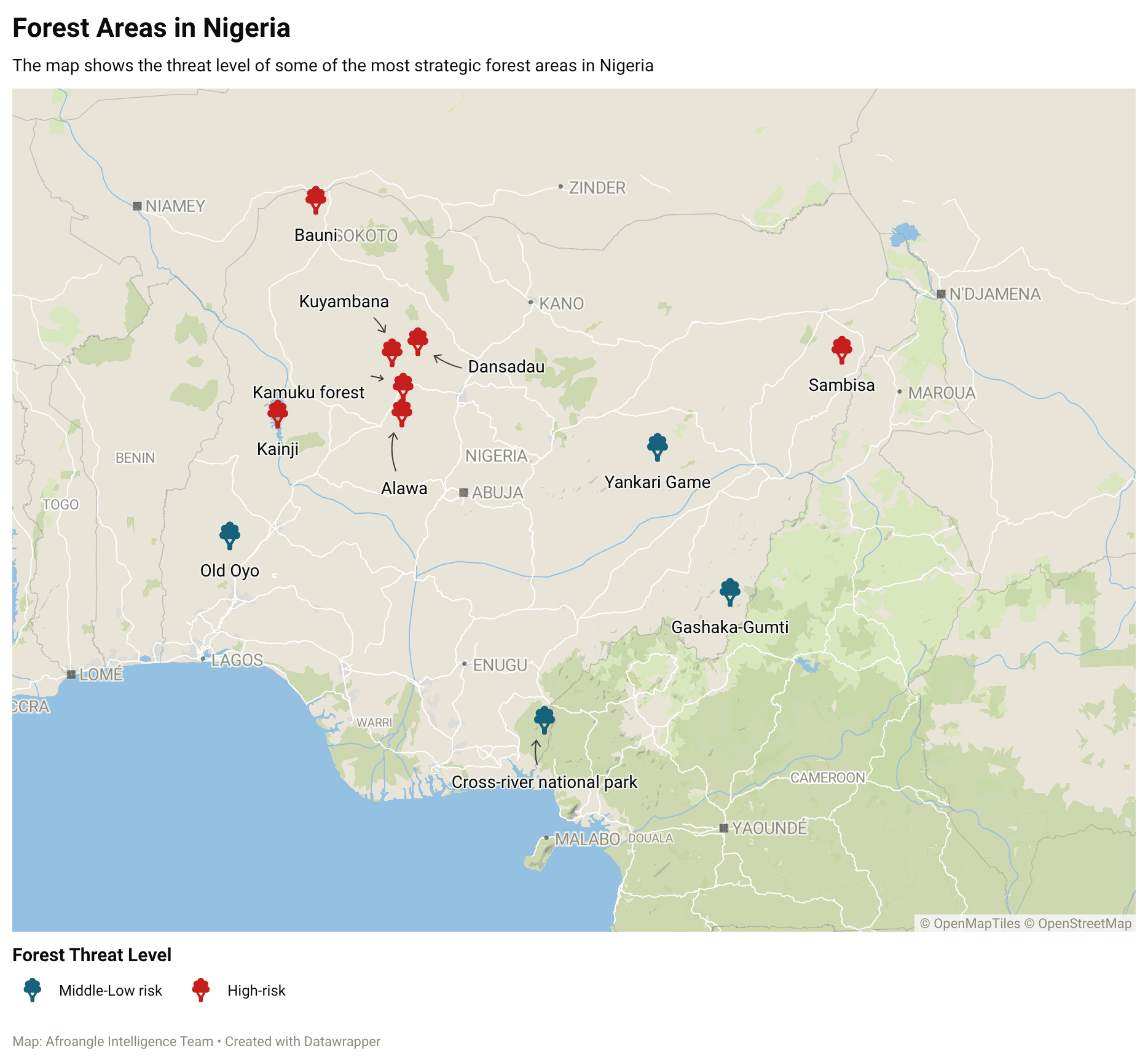
In the North-East, Sambisa Forest in Borno State has served as a major stronghold for Boko Haram. The forest has provided concealment and space for the group to establish camps, store weapons and hold captives. It was also associated with the abduction of the Chibok schoolgirls in 2014. Although military operations have disrupted Boko Haram's presence in parts of the forest, the area remains significant to understanding the group's historical ability to survive sustained pressure and operate from difficult terrain.
In the North-West, Kamuku Forest in Kaduna State and the wider network of forested areas extending towards Niger, Zamfara and Katsina states have been associated with banditry and other armed activity. Their terrain can make surveillance difficult and allow fighters to move between rural settlements and remote camps. Forests in this region have also been linked to the operations of Ansaru and other militant networks.
Kainji Lake National Park, which spans parts of Niger and Kwara states, is another area of concern. Reports have linked forested areas around the park and the wider border region to the activity of several armed groups, including Lakurawa, Ansaru and factions associated with Boko Haram. The area's proximity to the Republic of Benin adds a cross-border dimension to the threat. Where armed groups can move between remote forest areas and border communities, security agencies face additional challenges in tracking their movements and coordinating operations across jurisdictions. Other forested areas, including Dajin Rugu and Dansadau, have also been associated with armed bandit activity. Their significance lies partly in their connection to surrounding rural communities and routes used by farmers, traders and herders. Where armed groups operate from these areas, they can threaten settlements, abduct residents and impose illegal levies while using the forest as a place of concealment between attacks.
There are also concerns about the potential expansion of armed-group activity into other protected areas. Old Oyo National Park has drawn attention amid reports of military activity intended to counter suspected militant presence. Reports have also raised concerns about possible activity by groups identified as Mahmuda and suspected JNIM elements moving between parts of North-Central Nigeria and northern Benin. Okomu National Park, Omo Forest Reserve, Idanre Forest Reserve and Yankari Game Reserve are also relevant to wider assessments of forest security and can be viewed as at-risk forest areas.
How Armed Groups Use Forested Areas as Vantage Points
Tactical advantages:
Dense vegetation and difficult terrain can limit visibility, complicate aerial surveillance and make it harder for security forces to identify camps or track movements. Roads may be poorly maintained, while narrow tracks can restrict the movement of military vehicles. These conditions can increase the risks of ambushes and improvised explosive devices, particularly when troops advance without reliable intelligence about routes and enemy positions. The terrain also gives armed groups room to disperse. Fighters can move away from a threatened camp, establish temporary positions elsewhere and return after military operations have ended. This makes it difficult to translate the destruction of a single camp into lasting territorial control. Where security deployments are temporary, armed groups may be able to reoccupy areas once troops withdraw.
Financial and logistical Advantage
Forests can also support the financial and logistical systems that sustain armed groups. Depending on the location, these economies may involve cattle rustling, illegal mining, logging, extortion and the collection of levies from surrounding communities. Revenue from these activities can help fund weapons, food, transport and recruitment. Access to local supply networks may further reduce the need for armed groups to rely entirely on external support.
Control on Local Communities
Forest territory can also help armed groups exert influence over nearby communities. Where state security and administrative presence is limited, fighters may impose levies, regulate movement or punish residents accused of cooperating with the authorities. Such practices do not necessarily amount to full territorial control, but they can restrict civilian movement and weaken public confidence in the government's ability to provide protection. Communities may also become reluctant to share information with security agencies when doing so could expose them to reprisals.
Why Forested Areas Impede Security Operations
The geography of these areas creates significant operational challenges, but terrain alone does not explain the persistence of armed groups. Intelligence gaps, limited surveillance coverage, inadequate access roads and difficulties sustaining a military presence can all reduce the effectiveness of counterterrorism operations. In areas where several armed networks operate, identifying individual groups and understanding their relationships can be especially difficult.
The presence of multiple actors also complicates the response. Different groups may compete, cooperate temporarily or use overlapping routes without being part of a single organisation. Treating all armed actors in a forest as one network risks overlooking differences in their objectives, capabilities and support systems. Security agencies need reliable information on who is operating in each area, how they are supplied and which communities or economic activities they depend on.
What needs to change
- Nigeria's response should focus on maintaining security pressure after initial operations, rather than measuring progress only by the number of fighters killed or camps destroyed. This requires better intelligence on armed-group movements, supply routes and financial networks. Persistent surveillance, including the targeted use of drones where operationally appropriate, could help security forces identify changes in activity and monitor areas that are difficult to access on the ground. Such systems should complement reliable human intelligence and be supported by clear safeguards to reduce risks to civilians.
- The government should strengthen oversight of illegal mining, logging and other economic activities that may finance armed groups. Enforcement will be less effective if it targets only workers at the site while leaving the financiers, buyers and transport networks untouched. Investigations should seek to identify the wider commercial chains that enable illegal extraction and move its proceeds.
- Local communities should provide valuable early-warning information, particularly where residents observe unfamiliar movements, new camps or unusual demands for payments. Local hunters and vigilante groups may contribute to situational awareness, but their involvement should be coordinated with formal security agencies, with clear responsibilities and oversight.
- Security forces need a sustained presence around high-risk forest areas and the routes connecting them to nearby communities. This does not mean permanently deploying troops across every part of a forest. It means identifying the locations and corridors that armed groups rely on, securing key access routes, improving intelligence coverage and preventing groups from returning to areas cleared during military operations. Cooperation with neighbouring countries will also be important where armed groups exploit porous borders.
Outlook
Northern Nigeria's security environment is likely to remain volatile in the coming weeks. In the North-East, ISWAP may continue attacking military positions to test troop readiness and maintain pressure on forward bases. Security forces will need to anticipate further assaults while protecting surveillance infrastructure and monitoring routes used by insurgents to approach military installations. In the North-West, bandit groups are likely to remain a threat to rural communities and transport routes. As the harvest season progresses, farmers and agricultural communities may face demands for levies, abductions or attacks intended to secure access to crops and other resources. The risk will be greater in areas where armed groups can operate from nearby forested terrain with limited interference.
In the North-Central, attacks on communities in Niger State may continue, with the possibility of further pressure on vulnerable settlements and movement towards parts of Kwara State. The extent of any expansion will depend on armed-group movements and the response of security forces. Communal violence in Plateau State is also likely to remain a concern, particularly where unresolved local disputes and weak protection expose communities to repeated attacks.
Afroangel Intel Admin
Afroangle Intel Admin
comments
No comments yet