
Nigeria, U.S Forces Target Islamic State Leadership in Joint Operations
by
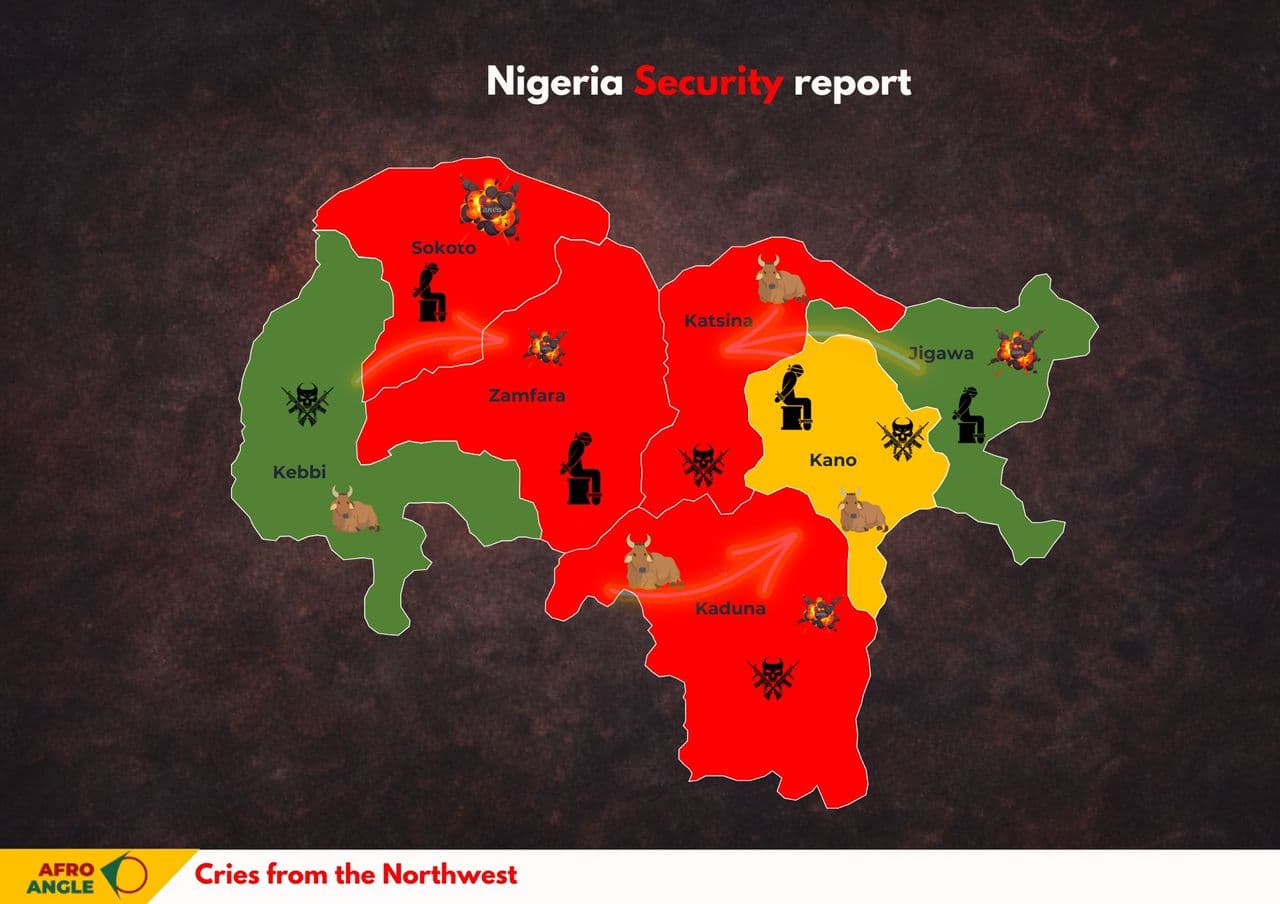
North-west Nigeria: Security Situation Report (May 10 – May 16, 2026)
Introduction
The reporting period was marked by a moderate resurgence in violent activity that disrupted the gradual decline in overt clashes previously tracked by Afroangle. This renewed escalation was accompanied by a noticeable increase in both the lethality and frequency of localised attacks across the region. Armed bandit groups and Lakurawa-linked insurgents sustained operational momentum throughout the week, with attacks concentrated largely in Katsina and Zamfara states. These incidents were characterised by recurring raids on rural communities, abductions, and targeted ambushes along major transit corridors.
A major driver of instability during the week was the sharp rise in cattle rustling activities. Although livestock theft has long remained central to the operational economy of armed groups in the North-west, the scale recorded during this period was particularly significant. While aggregate figures remain difficult to independently verify, nearly every major incident involved the large-scale theft of livestock. In Jibia Local Government Area of Katsina State, for instance, military troops on patrol recovered 62 rustled animals abandoned by fleeing bandits, while similar incidents were reported across Malumfashi, Matazu, and Kankia local government. These operations continue to serve as a critical revenue stream for armed networks, with stolen livestock often trafficked across porous borders into neighbouring countries or transported to markets in southern Nigeria. The timing of this surge is especially notable as it coincides with the lead-up to the Eid festival, a period typically associated with heightened livestock demand and rising market prices.
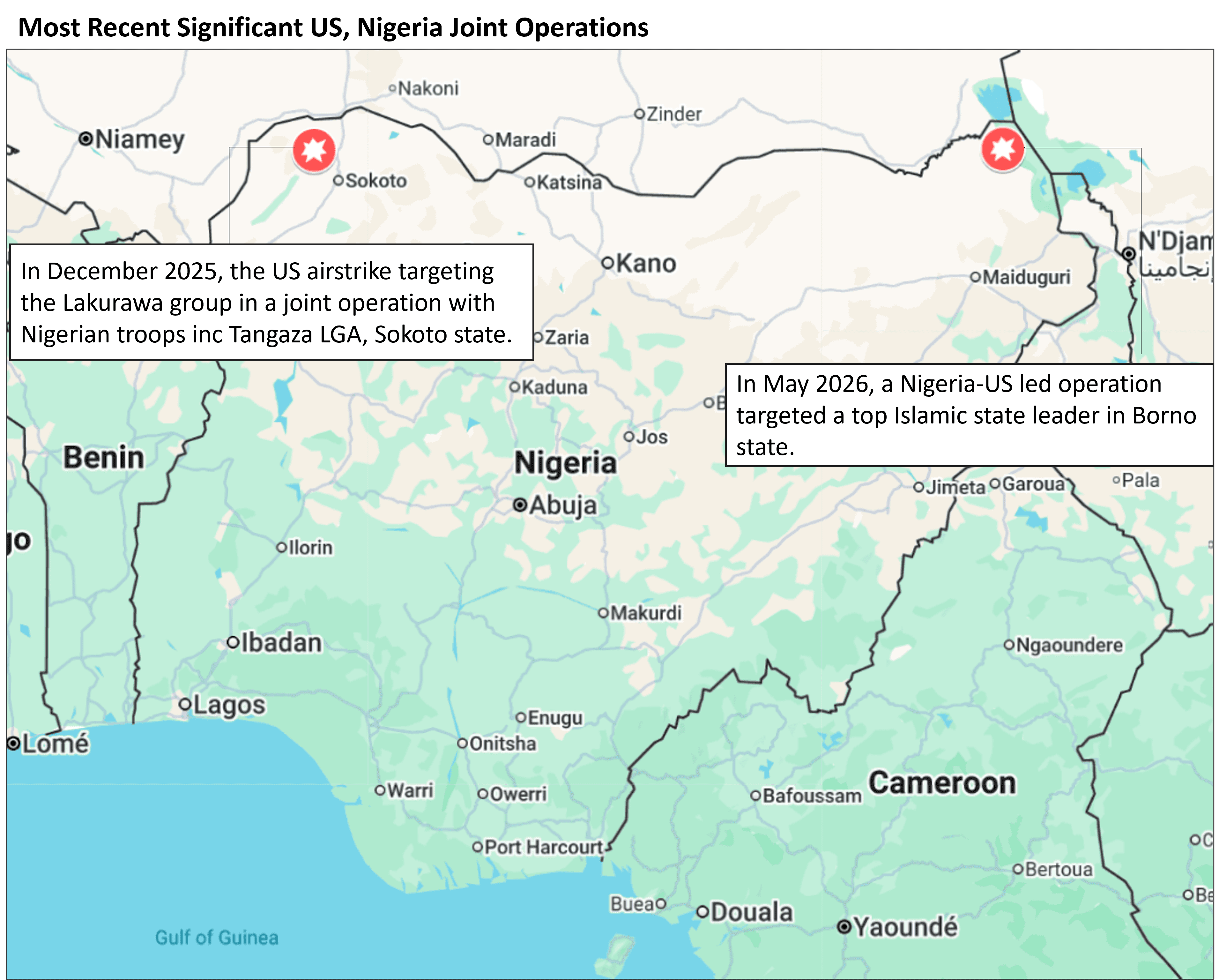
At the same time, a major security development with broader national and regional implications unfolded in the Northeast, where Nigerian and U.S. forces reportedly carried out a joint air-and-ground operation targeting a senior Islamic State leader in Borno State. According to reports, the operation targeted a high-ranking figure linked to one of the Islamic State’s regional directorates. While the mission represents a significant tactical and intelligence success for the evolving Nigeria-U.S. security partnership, its long-term implications remain uncertain. Much will depend on the exact role of the targeted commander within the broader Islamic State hierarchy and the extent to which his elimination disrupts operational coordination across Islamic State-linked networks in Nigeria and the wider Sahel.
Week in Review
A comparative assessment of this reporting period against the previous week indicates a moderate increase across all major security indicators in the region. Recorded incidents rose from 19 to 22, representing a 15.8% increase in the operational tempo of attacks. Abductions increased more sharply, rising from 28 to 76 cases — a 171.4% surge — reflecting intensified kidnapping activities targeting rural residents, vulnerable populations, and commuters along major highways.
Fatalities also increased significantly, climbing from 36 to 54, a 50% rise compared to the previous week. This simultaneous escalation across all tracked metrics underscores the increasingly volatile nature of the regional threat environment and highlights the sustained operational capacity of armed groups despite ongoing counter-terrorism pressure.
Geographically, Katsina State remained the epicenter of violent activity during the reporting period. The state alone accounted for 13 recorded incidents, 23 fatalities, and 47 abductions, reinforcing its position as one of the most heavily affected theatres in the North-west conflict landscape. The concentration of violence within Katsina further demonstrates the disproportionate burden being borne by frontline communities already struggling with repeated displacement, economic disruption, and weakening local security structures.
Analysis: Nigeria-U.S. Joint Operation Targets Senior Islamic State Figure
The United States military, operating in coordination with Nigerian special forces, reportedly neutralised a senior Islamic State figure identified as Abu Bilal al-Minuki, alongside several other commanders, during a high-profile operation in Northeast Nigeria. The mission, which reportedly involved U.S. Navy SEALs and Nigerian special operations units, combined precision ground assaults with coordinated air support to achieve the target elimination of over 20 militants in the general area of Metele.
Operationally, the mission represents a significant success for the expanding Nigeria-U.S. counter-terrorism partnership. However, important questions remain regarding Al-Minuki’s exact position within the Islamic State command structure and the broader implications of his death for insurgent operations across the region. Although security analysts continue to debate the full extent of his authority within the global Islamic State network, his presence in Nigeria underscores the growing strategic importance of the country within the organisation’s international architecture. ISWAP, the Islamic State’s strongest affiliate in sub-Saharan Africa, already hosts the Al-Furqan Office, a key regional structure reportedly responsible for coordinating activities across West Africa, the Sahel, North Africa, and parts of Sudan.
According to United Nations monitoring reports and multiple intelligence assessments, Al-Minuki had recently assumed a more prominent leadership role and was allegedly linked to the organisation’s General Directorate of Provinces, a body responsible for overseeing Islamic State affiliates globally. If accurate, this would indicate that a significant portion of the group’s operational coordination and strategic management has increasingly shifted toward the African theatre.
Should these assessments prove correct, his elimination could create short-term disruption within the group’s administrative and logistical coordination networks across multiple regions. However, historical patterns suggest that leadership decapitation alone rarely produces lasting degradation in insurgent operational capacity. Groups such as ISWAP have consistently demonstrated resilience following senior leadership losses, often responding with retaliatory attacks designed to project strength, sustain internal cohesion, and reaffirm operational relevance. As a result, while the operation marks a significant intelligence and tactical achievement, it may also elevate the risk of near-term retaliatory violence, particularly against military installations and vulnerable civilian targets across the Northeast.
Outlook
In the coming weeks, armed group activity across the North-west is expected to persist, although the region may continue to witness fluctuating levels of overt clashes as armed groups increasingly prioritise high-revenue criminal operations such as kidnapping-for-ransom, illegal taxation, and large-scale cattle rustling.
At the same time, the Northeast is likely to experience heightened insurgent activity as Islamic State affiliates potentially seek to avenge the loss of senior leadership figures through retaliatory attacks against both military and civilian targets. Such attacks may focus on demonstrating organisational resilience and undermining the perceived success of recent counter-terrorism operations.
Across both theatres, the Nigerian military is expected to increase its reliance on precision air campaigns to support ground operations, particularly as the rainy season begins to constrain vehicular mobility and complicate reinforcement logistics in remote areas. This growing dependence on airpower will likely become central to sustaining operational pressure on insurgent and bandit networks during the coming months.
Meanwhile, the Lakurawa group is expected to maintain pressure on rural communities across the North-west, particularly in areas where state presence remains limited. As the rainy season advances, the group may intensify efforts to consolidate territorial influence, expand taxation systems linked to agricultural activities, and deepen its control over vulnerable rural economies.
Afroangle Intel Admin
Northwest Nigeria Report Admin
comments
No comments yet