
Nigeria’s New Strategy Towards Mass Kidnapping
by
Northern Nigeria Security Situation Report (August 1–8, 2026)
Introduction
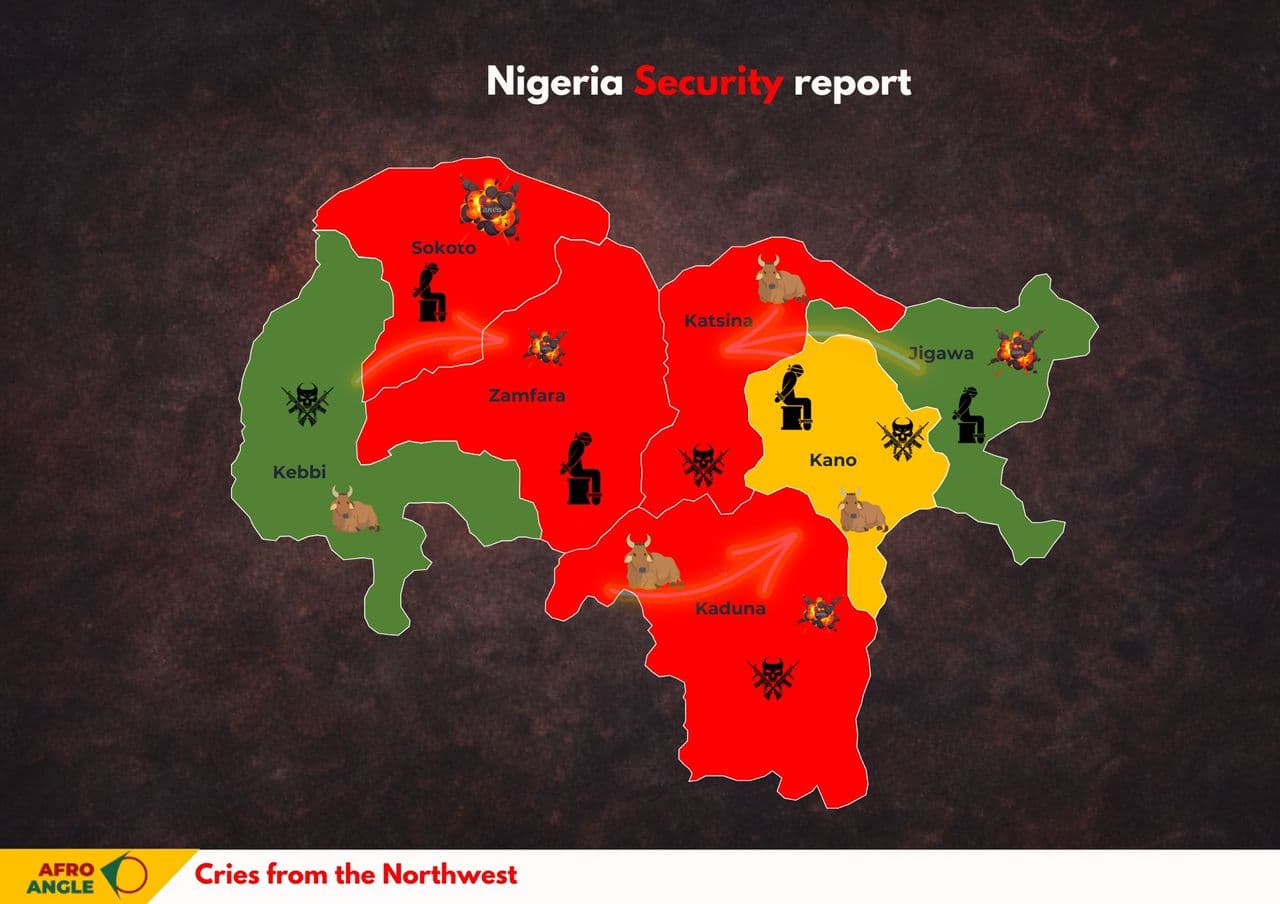
The North-west region was characterised by a surge in violent attacks attributed to the Lakurawa group, alongside continued attacks by armed bandit groups. The Afroangle intelligence team recorded three incidents reportedly linked to Lakurawa fighters, largely in Sokoto State, where the group targeted civilian communities, police patrols and community defence forces in Kebbe Local Government Area. This is significant given the recent decline in violence attributed to the group, which was largely associated with sustained military operations and internal challenges within the group. Its recent resurgence, however, raises concerns about whether ongoing efforts to contain its activities are beginning to lose momentum.
The region also continued to experience persistent attacks by bandit groups, with communities facing repeated abductions and disruptions along major highways. In one incident, armed bandits carried out coordinated raids in Shagari Local Government Area, rustling more than 100 cattle and injuring nine people. Security forces operating in the region also arrested suspected informants and logistics suppliers and defused an IED in Zurmi Local Government Area, a tactic that has become increasingly common among armed groups in the region. At the same time, counter-terrorism operations continued. In Zamfara State, troops rescued 33 passengers who had been abducted by armed groups in Tsafe Local Government Area.
In the North-central, violence in Plateau State continued to escalate, particularly within herding communities. Three herders were killed in Bangai, Riyom Local Government Area, while 14 cattle were also killed. Local communities attributed the attack to suspected Berom militias, amid a long-running conflict involving Berom and Fulani armed groups, with both sides increasingly claiming to be acting in defence of their communities. In another incident in Plateau State, unidentified gunmen ambushed a joint security patrol along the Ganawuri-Sabon Gida road in Riyom Local Government Area, killing two security personnel and taking their weapons. Local tensions also escalated in Kogi State following the killing of a suspected cattle rustler. Three communities, Abugi, Kuchinda and Mikugi in Lokoja Local Government Area, were subsequently targeted in an alleged reprisal attack by individuals suspected of supporting the slain herder. More importantly, the 176 victims abducted following the horrific incident in Woro were rescued by joint security forces, highlighting the increasing reliance on coordinated security operations to recover kidnapping victims.
On the policy front, the Federal Government approved salary increases of between 30 and 80 percent for Nigerian security forces. The measure is aimed at improving welfare and boosting the morale of personnel, particularly those deployed on frontline operations, as Nigeria continues to face a wide range of security threats.
Importantly, the rescue of 308 kidnapping victims across Kwara and Niger States through an intelligence-led operation also points to an emerging shift in the country's approach to tackling mass kidnapping. A similar approach was used in the rescue of victims in Oyo State, suggesting that intelligence-led operations and targeted rescue missions are becoming a more prominent part of Nigeria's counter-kidnapping strategy.
While this approach is encouraging, the growing scale and geographic spread of kidnapping suggest that rescue operations alone may not be sufficient. There is a need for greater investment in early warning systems, intelligence collection and local security networks that can identify kidnapping plots before they are carried out. The ability to rescue victims after an attack is important, but preventing large-scale abductions in the first place will be critical to reducing the long-term threat.
Weekly Review
Against the backdrop of the decline recorded across all tracked security metrics in the previous week, this reporting period saw a mixed trend, with some indicators increasing while others declined. Fatalities fell from 46 in the previous week to 35, representing a 24 percent decline. Most of the reported activity during the week was concentrated around abductions rather than fatal attacks.
Incidents, however, moved in the opposite direction, increasing from 14 in the previous week to 30, representing a 114 percent rise. More significantly, the region recorded no abduction incidents in the previous reporting period, while this week saw 112 people abducted. The sharp increase reinforces the continued reliance of armed groups on kidnapping as a means of generating revenue through ransom and gaining leverage during negotiations with victims' families.
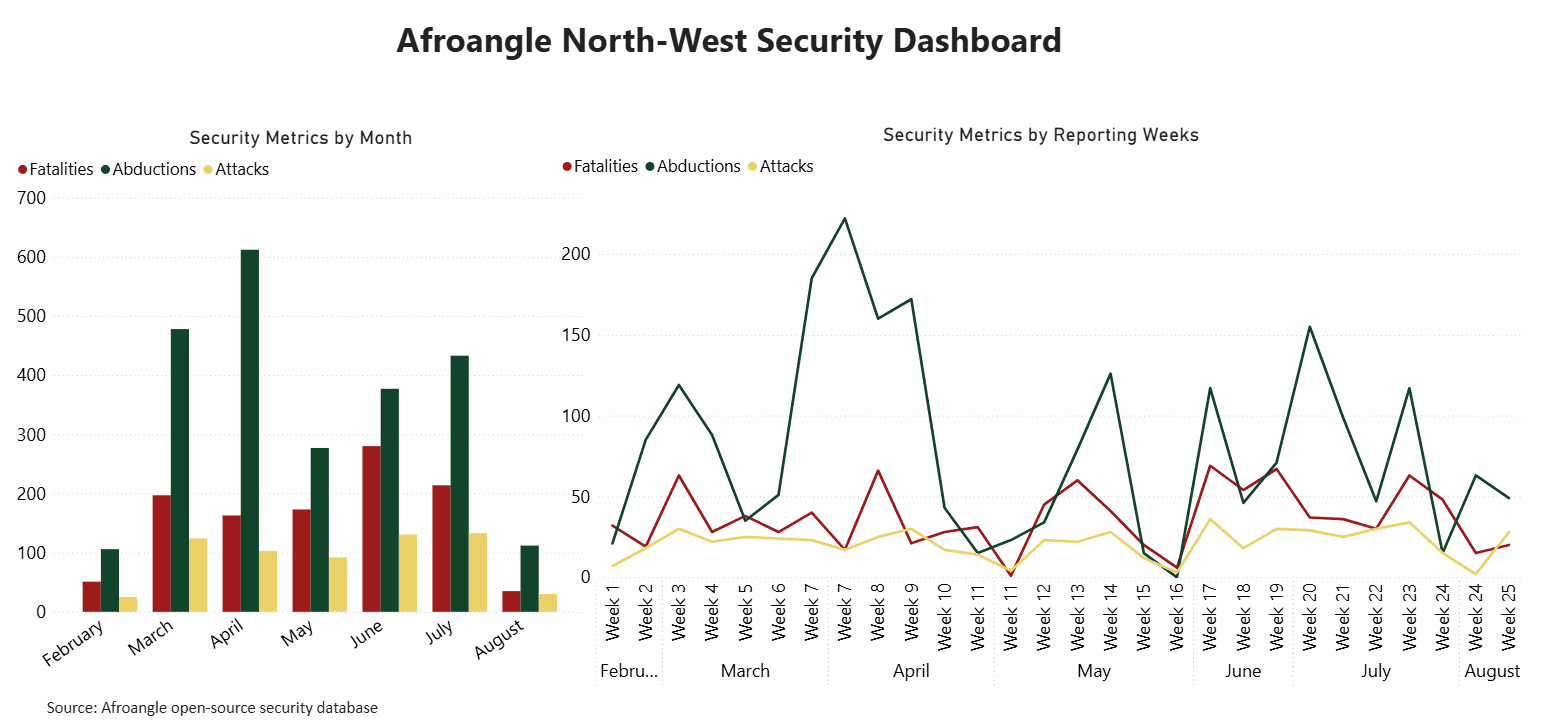
At the state level, violence remained concentrated in the region's main hotspots, particularly Katsina, Zamfara and Sokoto. Zamfara recorded the highest number of kidnapping victims, with 50 people abducted, followed by Katsina with 39. Fatalities were concentrated in Sokoto, which recorded 15 deaths, while Katsina recorded 11. Katsina also recorded the highest number of incidents, with 18, followed by Sokoto with six.
New Security Strategy Against Mass Kidnapping
Intelligence-led Counterinsurgency Operations
Nigeria has conducted one of its largest coordinated hostage rescue operations in recent months, culminating in the recovery of 308 victims from captivity across Kwara and Niger states. The operation was conducted by a joint security task force coordinated through the Office of the National Security Adviser, involving the Nigerian Armed Forces, the Department of State Services (DSS), operatives of the National Counter-Terrorism Centre (NCTC) under ONSA, the Nigeria Police Force and other security agencies. Of the rescued victims, 163 were freed after being abducted from Woro Community in Kaiama Local Government Area of Kwara State, while another 145 were rescued during coordinated operations in Niger State. Although the full details of the operation have not been disclosed for operational reasons, available reporting suggests that it followed sustained intelligence-led efforts involving multiple agencies operating under a coordinated command structure.
Reports from communities in the affected areas noted that military vehicles, including armoured platforms, moved into the Kainji forest where some of the victims were being held in the days preceding the rescue operation. This came after the families of some victims reportedly disclosed that more than N150 million raised for their release had been rejected by the abductors. This appeared to reduce the possibility of a ransom payment, although it remains unclear whether negotiations took place or whether any ransom was ultimately paid. As more details of the operation emerge, particularly if they confirm that the victims were recovered through a coordinated military operation rather than a negotiated release, it could point to an important shift in Nigeria's approach to dealing with mass kidnapping.
A similar intelligence-led approach was used during the rescue of victims in Oyo State. That operation reportedly involved coordination between several arms of the security forces, intelligence gathering and psychological operations intended to pressure the abductors into releasing the victims, alongside the deployment of a substantial security force. The latest operation appears to have followed a similar model, combining intelligence, force mobilisation and sustained pressure on the abductors to secure the release of hostages.
This approach is a positive development, particularly given the scale of mass kidnapping across Nigeria. However, the success of rescue operations should also be followed by greater investment in preventing these attacks from occurring in the first place. Nigeria has experienced too many large-scale abductions, and strengthening the capacity to rescue victims addresses only one part of the problem.
As capabilities for hostage rescue improve, similar resources should be directed towards early warning systems and intelligence networks within vulnerable communities. Security agencies should also develop better intelligence on locations and groups that are particularly exposed to mass attacks, including schools and other high-risk civilian targets. Technology can support this effort through improved surveillance and communication systems, while specialised units should receive the training and resources required to respond rapidly when mass kidnapping incidents occur.
These capabilities are important because the continued expansion of rescue operations without a corresponding investment in prevention risks leaving Nigeria with a largely reactive approach to mass kidnapping. The country would continue to respond after large-scale abductions have already taken place rather than disrupting the networks, movements and preparations that make such attacks possible. The long-term objective should therefore be to develop a security architecture capable of detecting and disrupting kidnapping operations before they reach the point of mass abduction.
Outlook
In the coming weeks, Nigerian security forces are likely to increase operations against the recent resurgence of Lakurawa attacks in the North-west, particularly in Sokoto State where the group has recently increased its activities. Troops should also maintain heightened vigilance for IEDs in volatile areas across the North-west and North-east, as armed groups are increasingly using explosive devices to disrupt troop movement and slow military advances.
In the North-east, ongoing military operations should continue to monitor clashes between JAS, also known as Boko Haram, and ISWAP. The rivalry between the two groups could create opportunities for security forces to exploit their divisions and weaken their operational capacity. Any intervention, however, will depend on the ability of security agencies to maintain accurate intelligence on the movements and intentions of both groups.
Civilian protection should also remain a priority in conflict hotspots in Plateau State, where attacks and retaliatory violence continue to increase tensions between ethnic and herding communities. Alongside security deployments, local conflict-resolution mechanisms should be strengthened to prevent existing communal tensions from developing into wider cycles of retaliatory violence.
Afroangel Intel Admin
Afroangle Intel Admin
comments
No comments yet