
We All Eat Breakfast and Die: Remembering Ogogo’s Nollywood Legacy
by
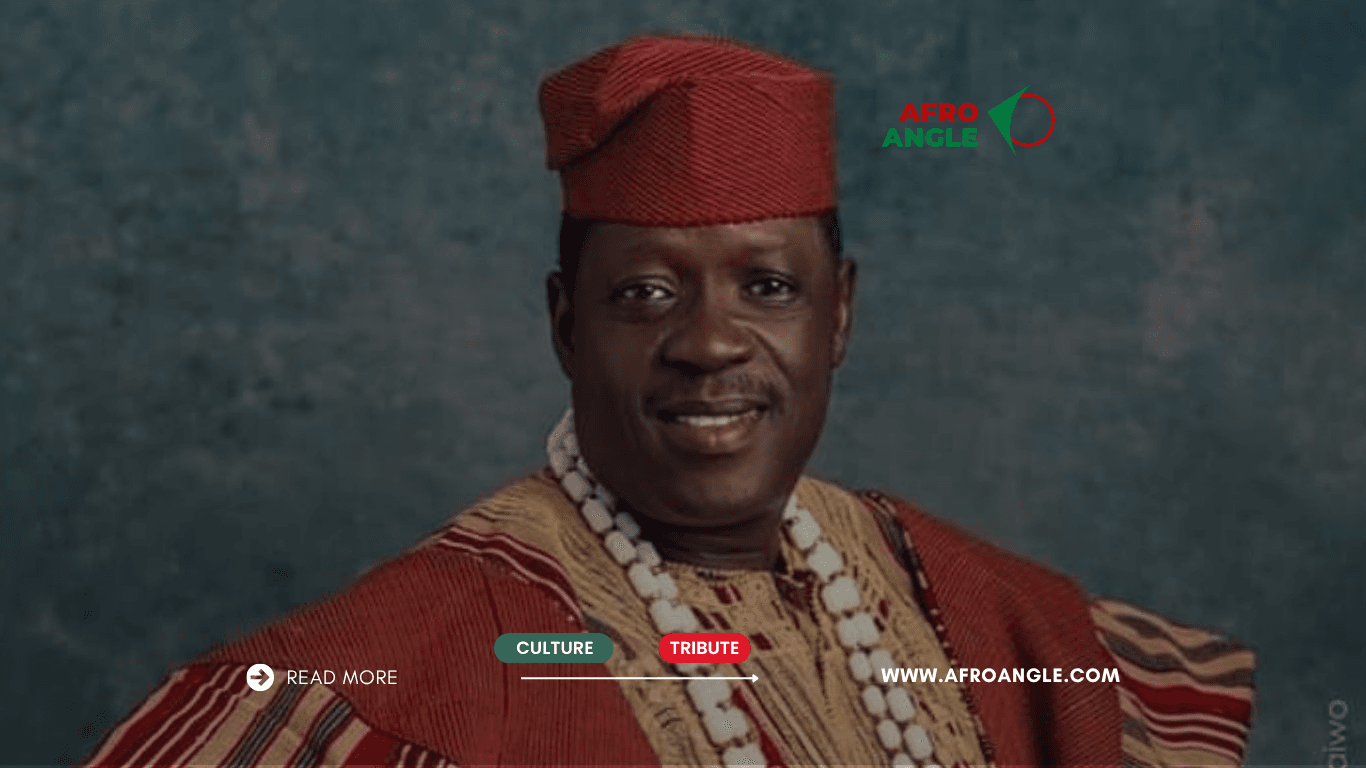
Taiwo Hassan, popularly known as Ogogo, died on Sunday, 23 August 2026, at the age of 66, leaving behind a career that stretched across more than four decades of Yoruba theatre and Nigerian cinema. His daughter, Kira Hassan, confirmed his death in an emotional live video as family, colleagues and fans mourned an actor whose face, voice and mannerisms had become embedded in popular culture. Over four decades, Ogogo developed a distinct screen identity, built around his command of Yoruba, a deep and measured voice, an imposing physical presence, and an ability to move between intimidating authority figures, traditional rulers, and comic characters without losing the qualities that made him recognisable. His moniker, Ògògó is a Yoruba term for Ostrich, a bird whose intimidating height affirms its status as the father of all birds, according to Yoruba people. This moniker was first used to capture his intimidating physical stature before it became synonymous with the unique presence he brought to the stage, and then to the screen.
The Making of Ogogo
Born Taiwo Hassan in 1959 in Ilaro, Ogun State, Hassan trained as an automobile mechanic and later worked for about 13 years at the Lagos State Water Corporation. In a 2024 conversation with City People Magazine, the late actor explained that “Ogogo” was originally part of his oríkì, a name that eventually became his stage moniker because of his frequent recitation of his oríkì during performances.
His entry into acting came through theatre in 1981, at a time when the Nigerian film industry had yet to take its present shape. His first performance was as a chanter in a stage play at the National Theatre, and later on joined Ayo Fabunmi Theatre Company. He later became associated with the Odunfa Caucus, a Yoruba theatre and film collective founded in 1987 by Yinka Quadri, Abbey Lanre and Rasaq Ajao (Arosan). The caucus which met at Odunfa Street in Lagos, played an important role in the transition of Yoruba performers from stage productions to the emerging home-video industry, providing a structure through which actors could learn, collaborate, and produce “home video” movies at the time.
Ogogo finally left his government job in 1994 to pursue acting full-time. The decision placed him within the growing Yoruba home-video industry, which was creating new opportunities for performers beyond the stage. What followed was a career that would move through theatre, home video, established Yoruba cinema and, eventually, contemporary Nollywood. His breakthrough-era acting in Owo Blow helped establish his place among the recognisable faces of Yoruba movie industry. From there, films including Agbelebu, Ekun Ayo, Idajo Olorun, Omin, Alase Aye, Aye Olorogun and Omo Iya Kan strengthened his reputation in the industry.
Beyond acting, Ogogo also worked as a producer, director and screenwriter. His contributions to the industry earned him a Movie Lifetime Award from City People Magazine and a Lifetime Achievement Award at the Best of Nollywood Awards, both in 2017. He had earlier received a THEMA award in 1997 for his role in Owo Blow.
The Ogogo Presence
What distinguished Ogogo was not merely the characters he played, but the way he embodied them. His command of Yoruba language was central to his performances. Although a devout Muslim, Ogogo’s body of work reflected a deep commitment to the preservation and representation of Yoruba language, traditions and cultural values. He used the rhythm of the language, its idioms, tonal variations and pauses to give his characters weight.
His voice was equally important. Deep and deliberate, it could make an ordinary statement sound consequential. In Owo Blow, where he featured as Wole Owolabi, his controlled delivery helped establish a character capable of commanding a gang without constantly resorting to unwarranted aggression. He carried that authority into roles such as Adesina in Omin, the DPO in Omo Ghetto and Hon. Kasali in Tenant of the House, using his posture, expressions and restrained delivery to make positions of power believable. His reputation for action eventually became part of popular language, with “action pọ̀ bí Ogogo” becoming shorthand for someone who brings plenty of action. Yet the Ogogo persona was not confined to intimidation. He could turn the same imposing presence into comedy, particularly when his stern characters were placed in situations that exposed their absurdity.
Ogogo in the Yoruba Nollywood Royal Court
Ogogo’s performances as kings, chiefs, and elders revealed another dimension of his craft. He understood that playing a Yoruba ruler required more than wearing a crown or sitting in a palace. Authority had to be heard in the language and seen in the composure of the character.
His traditional roles often relied on the deliberate use of Yoruba expressions and proverbs, with pauses carrying as much meaning as spoken words. He could issue a warning without shouting, settle a dispute without appearing hurried, and establish hierarchy without repeatedly declaring his position. Ogogo understood that language of authority and made it part of his performance.
This was particularly evident in Aníkúlápó, where he played Alaafin Ademuyiwa. The role placed him in a contemporary production while drawing on the same traditional performance language that had defined much of his earlier career. The crown and costume established the character visually, but it was Ogogo’s restraint, voice and command of Yoruba that exuded the fictional Alaafin of Oyo’s royal aura and panache. This portrayal of Alaafin Ademuyiwa earned him a Best Supporting Actor nomination at the 2023 Africa Magic Viewers’ Choice Awards (AMVCA) and brought his work to a new generation of audience encountering him through contemporary Nollywood and streaming platforms.
In Seven Doors, he appeared as an ancestor, performing ewì and prayer chants for the new king, Adedunjoye, at his pre-enthronement seclusion (ìpèbí). The performance offered a new generation of viewers an opportunity to discover the talent that had shaped Ogogo’s life and career, particularly his mastery of breath control and the distinctive vocal delivery that gives Yoruba poetry its character.
He also appeared in other contemporary movies like Gingerrr and Efunroye: The Unicorn. He is a cast member in Eleko: Oba Esugbayi and King Kosoko: The Battle for Lagos, two historical epics about the colonial era in Lagos. He played the role of a chief in both movies released in 2026.
How Ogogo Will Be Remembered
If remembrance is what follows death, Ogogo’s came the moment he died when King Kosoko premiered on August 23, the day he died. This moment reflected the impact he leaves behind in the Nollywood industry. His career captured the evolutionary phases of the industry from stage plays, through the home-video era and cinema, to the contemporary streaming platforms era.
Across these changes, his command of Yoruba, distinctive voice, imposing presence and mastery of traditional performance remained recognisable to successive generations. His influence equally extends to popular culture. For instance, Olamide’s Owo Blow did not just name the track after Ogogo’s breakout movie, but also used the phrase “action po bi Ogogo” to describe a distinctive charisma for “cool” men. Seyi Vibez also borrowed the same term in his 2023 hit song, Hat-trick. The peak of this popular influence is found in Burna Boy’s 2022 global hit, Last Last, which transformed Ogogo’s popular phrase “we will all eat breakfast” into a heartbreak song.
As days turn to a week and weeks become months and every day life proceeds like the screen never graced Ogogo’s legacy, our memory–either mental or archival–will be right there telling us how he participated in the making of an entertainment industry and transformed how viewers across generations engaged with Yoruba movies.
Samuel Omofala
Samuel Omofala is a journalist, law student, and award-winning essayist with a strong focus on entertainment, culture, and the economy. In 2025, he won the 7th edition of the prestigious Fisayo Soyombo Inter-varsity Essay Contest, beating over one hundred other entries. His contributions to campus journalism at the University of Ibadan have earned him significant recognition, including Most Energetic Campus Journalist (Administrative), a nomination for Most Promising Campus Journalist, and leadership of a local press organisation.
comments
No comments yet