
Salawa Abeni: 50 Years of Waka and Womanhood
by
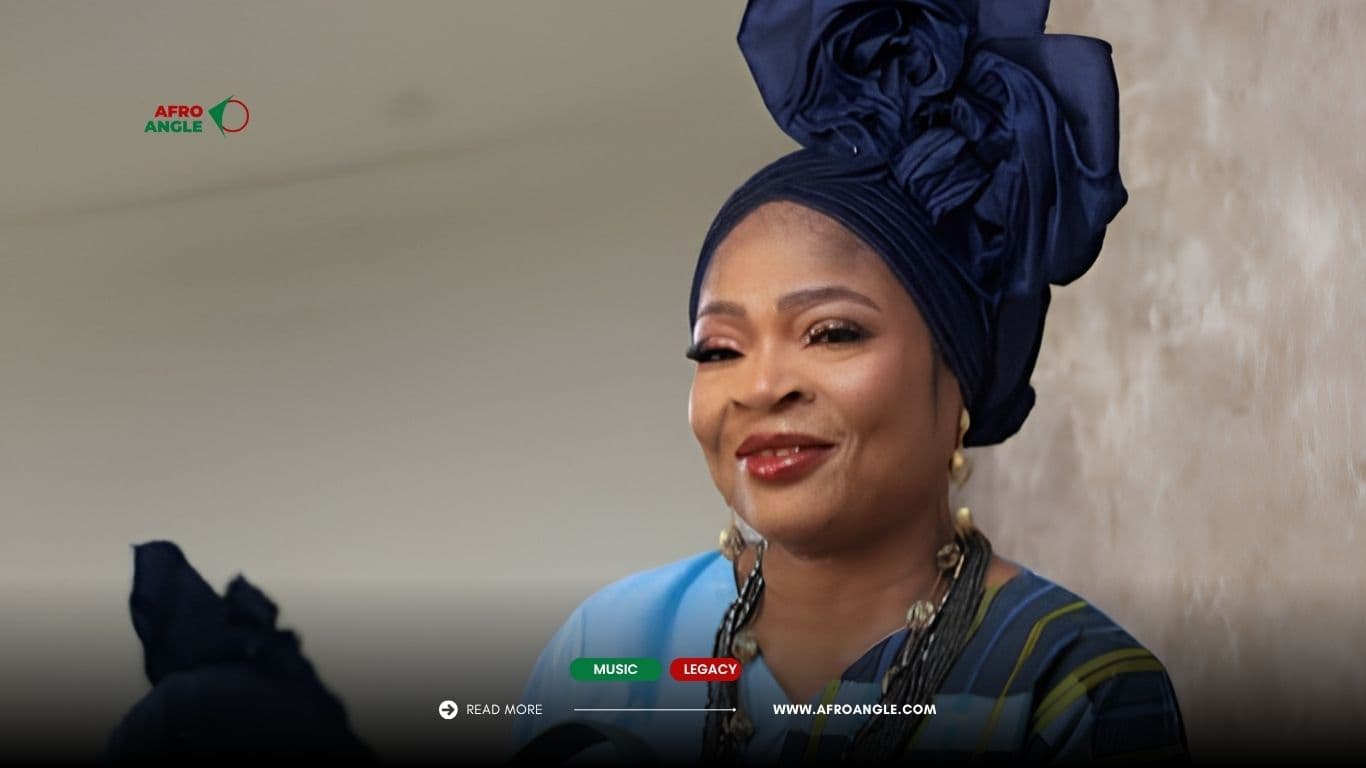
For five decades, Salawa Abeni has used Waka, a Yoruba musical tradition shaped by Islamic praise poetry and associated with women’s performances at religious and social gatherings,to sing about more than celebration. Her music has addressed motherhood, gender inequality, faith, political participation, and the everyday experiences of ordinary Nigerians. Emerging as a teenage recording artist in 1976, she helped transform a Yoruba musical tradition into a commercially successful genre while establishing herself as one of its defining voices. Her career offers a window into the changing place of women in Nigerian popular music and the enduring relationship between music and society.
A Triumphant Entry
In 1976, Salawa Abeni entered Nigeria’s recording industry as a teenager with an album dedicated to the late General Murtala Ramat Mohammed, the military head of state assassinated earlier that year. The album titled ‘Late General Murtala Ramat Mohammed' sold more than a million copies and announced the arrival of a performer whose influence would extend beyond her extraordinary debut.
Salawa Abeni’s success came as Waka was reaching a wider commercial audience. At a time when prominent male stars dominated much of Nigeria’s popular music industry, she demonstrated that a young woman could command a mass audience through a genre rooted in Yoruba cultural life.
Her debut, a tribute to Murtala Mohammed, connected her music to a national event and placed her within the public memory of a nation mourning a political leader. In her second album, Iba Agba, she paid homage to the music stars before her, including Haruna Ishola and Yusuf Olatunji. These early records established her place within an existing musical tradition while laying the foundation for her own influence. Over the following decades, Salawa Abeni would explore family, gender, faith, social conduct, and politics while transforming the sound and presentation of Waka. In 1992, the Alaafin of Oyo bestowed on her the title of Queen of Waka Music, after which she started using ‘Queen Salawa Abeni’ as her stage name.
Modernising Waka
Although Salawa Abeni did not invent Waka, she helped transform how it was performed. Building on the work of earlier practitioners, including Batile Alake and Adebukunola Ajao, she introduced piano, guitar, and electric organ to her music, describing the process as “funkifying” Waka. She also began performing while standing with her band, changing the stage presence associated with earlier female performers. Her group eventually adopted the name Queen Salawa Abeni and the Waka Funky Modernizers. The introduction of these instruments also coincided with the change in her vocals from the teenage voice she used when recording Late General Murtala Ramat Mohammed, Iba Agba, and Igba Agba, Igba Omode.
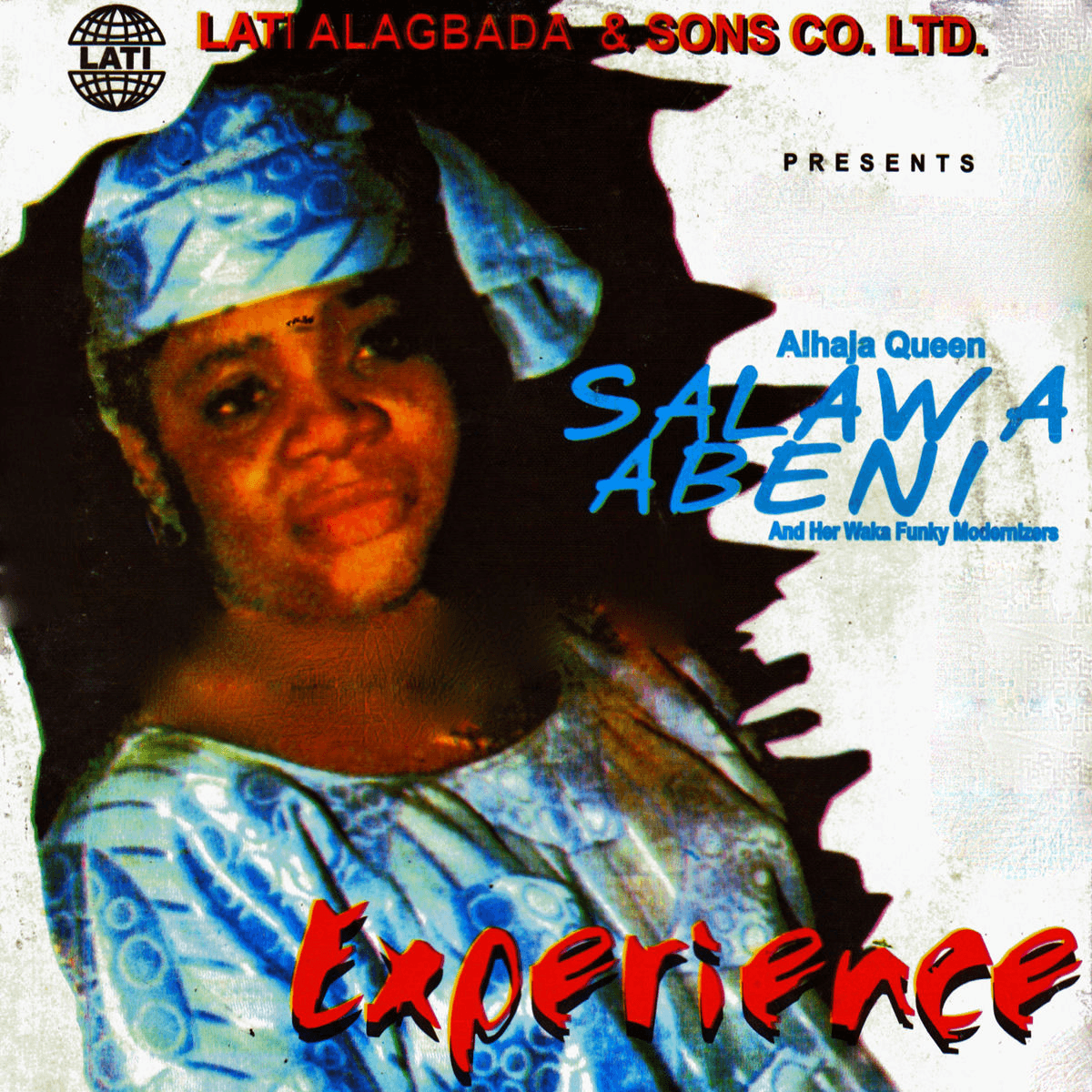
These changes broadened Waka’s sound without abandoning its Yoruba identity. Salawa Abeni’s approach showed that tradition could accommodate new instruments, performance styles, and audiences, transforming Waka, one of Yoruba Islamic musical traditions, into urban music. Her role can be likened to that of her contemporaries, King Sunny Ade and Ebenezer Obey for juju, and Sikiru Ayinde Barrister and Ayinla Kollington for fuji. Like Salawa Abeni, these figures modernised and popularised their respective genres and are regarded as pioneers.
Feminism: Equality in Her Own Voice
In Equal Rights, Salawa Abeni challenges gender inequality through a Yoruba proverb about a knife sharpened on one side while the other remains blunt. She asks what a man can do that a woman cannot before calling for equal rights. Her references to professions such as medicine and law bring the argument into everyday questions of education, employment, and social status.
The song takes on added significance when considered alongside Salawa Abeni’s account of growing up in a family where her father did not believe the female child should receive the same educational opportunities as the male child. Her demand for equality in the song thus resonates with the expectations she encountered growing up. Her success in music stands in contrast to those expectations, as she built a career in a competitive industry where women faced considerable barriers.
Motherhood, Family Life, and Personal Loss
Family occupies a tender place in Salawa Abeni’s life and music. One of her most enduring hits, Gentle Lady, was born out of an everyday confrontation. In an interview with City People, Salawa Abeni recalled that a bus driver hit her car while she was taking her children to school, then insulted her instead of apologising. She began singing that she was a gentle lady, not a fighter, and later developed the experience into the song. Released in the early 1990s, Gentle Lady became one of the records most closely associated with her, its refrain remaining familiar to generations of listeners. Salawa Abeni herself acknowledged that the song further boosted her popularity.
Beyond the circumstances that inspired the song, Gentle Lady also expresses Salawa Abeni’s love for her mother. She declares that there is no one like her mother and invokes the Yoruba expression “baba ni digi, iya ni wura”, contrasting the value of a father with that of a mother. Her prayer that her mother should live to enjoy her success connects personal achievement with the people who matter most. This sentiment reflects a cultural understanding of family in which parents hope to enjoy the fruits of their labour, while children regard caring for their parents in old age as an obligation.
Salawa Abeni’s own experience of motherhood was marked by both family life and profound loss. She had children with former record label boss, Lateef Adepoju, and fuji musician, Kollington Ayinla. Her son Lanre, whom she had with Adepoju, died in 2000. Salawa Abeni later connected the grief with a serious illness that left her unable to walk and kept her away from performing for several years.
The illness threatened a career she had built from adolescence. She has spoken about selling possessions to meet its demands and receiving support during her recovery. She eventually returned to performing in 2016.
Praise Singing, Prayer Chants, and Spiritual Life
Prayer and praise are central to Waka, where music can express devotion, honour others, and make sense of life’s uncertainties. Salawa Abeni draws on this tradition through prayers for loved ones, appeals to God, and Yoruba spiritual references.
In Gentle Lady, her prayers for her mother sit alongside appeals for protection against witches and wizards. Ijamba Moto, meanwhile, opens with an Ifa invocation, bringing indigenous Yoruba spiritual traditions into her music.
Salawa Abeni’s Muslim identity makes these references noteworthy because they reflect the layered religious and cultural environment in which many Yoruba people live. Yoruba religious life has long included interactions among Islam, Christianity, and indigenous spiritual traditions. Her music reflects aspects of this cultural environment, while her accounts of illness reveal the personal importance of prayer. She has spoken about relying on faith during her prolonged recovery, offering insight into how spirituality shaped her understanding of hardship.
Political Commentary, Civic Duty, and State Patronage
Political music can take the form of moral instruction rather than direct protest, and Salawa Abeni belongs to this school of thought. In Oro Oselu Nigeria, she addressed political participation during the period when General Ibrahim Babangida’s government restricted formal party politics to two parties: the Social Democratic Party (SDP) and the National Republican Convention (NRC).
The song urges Nigerians to cooperate and participate peacefully, warns against vote-buying, and calls on politicians to remember God and fulfil their promises. Its message places ethical conduct at the centre of political life, asking citizens to engage responsibly and office-seekers to recognise their obligations.

“It would be misleading to assume that Salawa Abeni identified with every idea associated with contemporary feminism. What her music makes clear, however, is her demand for equal opportunity and recognition for women.”
This approach differs from the confrontational political music associated with her contemporaries, such as Fela Anikulapo-Kuti, Sonny Okosun, and Majek Fashek, whose songs attacked corruption, military rule, and abuses of power. Political music, however, can take different forms, from denunciation and satire to moral appeals and calls for cooperation. Salawa Abeni’s work shows how Waka could engage with public affairs without adopting the language of direct confrontation.
Her song Itesiwaju Eko presents a different relationship between music and power. It praises Lagos State Governor Akinwunmi Ambode and refers to infrastructural development, including the administration’s 114-road programme. Salawa Abeni celebrated the government’s work and encouraged Lagosians to cooperate with the governor. She also acknowledged that musicians and theatre practitioners benefited from the administration’s support.
That relationship raises questions about praise singing and political patronage. Government support can provide opportunities for artists, but it can also shape how political leadership is represented in popular culture. Read together, Oro Oselu Nigeria and Itesiwaju Eko show two sides of her political music: one calls citizens and politicians to account, while the other celebrates a sitting administration and highlights the role of state support in the arts.
An Unchallenged Queen
Fifty years after her debut, Salawa Abeni’s legacy extends beyond commercial success and the title of Queen of Waka. She helped modernise a Yoruba musical tradition while using her songs to address gender, family, faith, and political life. From the demand for equality in Equal Rights to the civic appeals of Oro Oselu Nigeria, her work reflects an artist attentive to the world around her. Her career demonstrates that Waka can preserve its cultural roots while adapting to new audiences and carrying messages that remain relevant beyond the dance floor. Her dominance of Waka has endured, even during periods of inactivity. Although Salawa Abeni believes Waka music cannot die because modern-day musicians sample and interpolate old records in their songs, her stardom is yet to be rivalled, and her ‘queenship’ is yet to be threatened.
Samuel Omofala
Samuel Omofala is a journalist, law student, and award-winning essayist with a strong focus on entertainment, culture, and the economy. In 2025, he won the 7th edition of the prestigious Fisayo Soyombo Inter-varsity Essay Contest, beating over one hundred other entries. His contributions to campus journalism at the University of Ibadan have earned him significant recognition, including Most Energetic Campus Journalist (Administrative), a nomination for Most Promising Campus Journalist, and leadership of a local press organisation.
comments
No comments yet