
Seyi Makinde’s Playbook: Ambition, Succession and the Politics of 2027
by
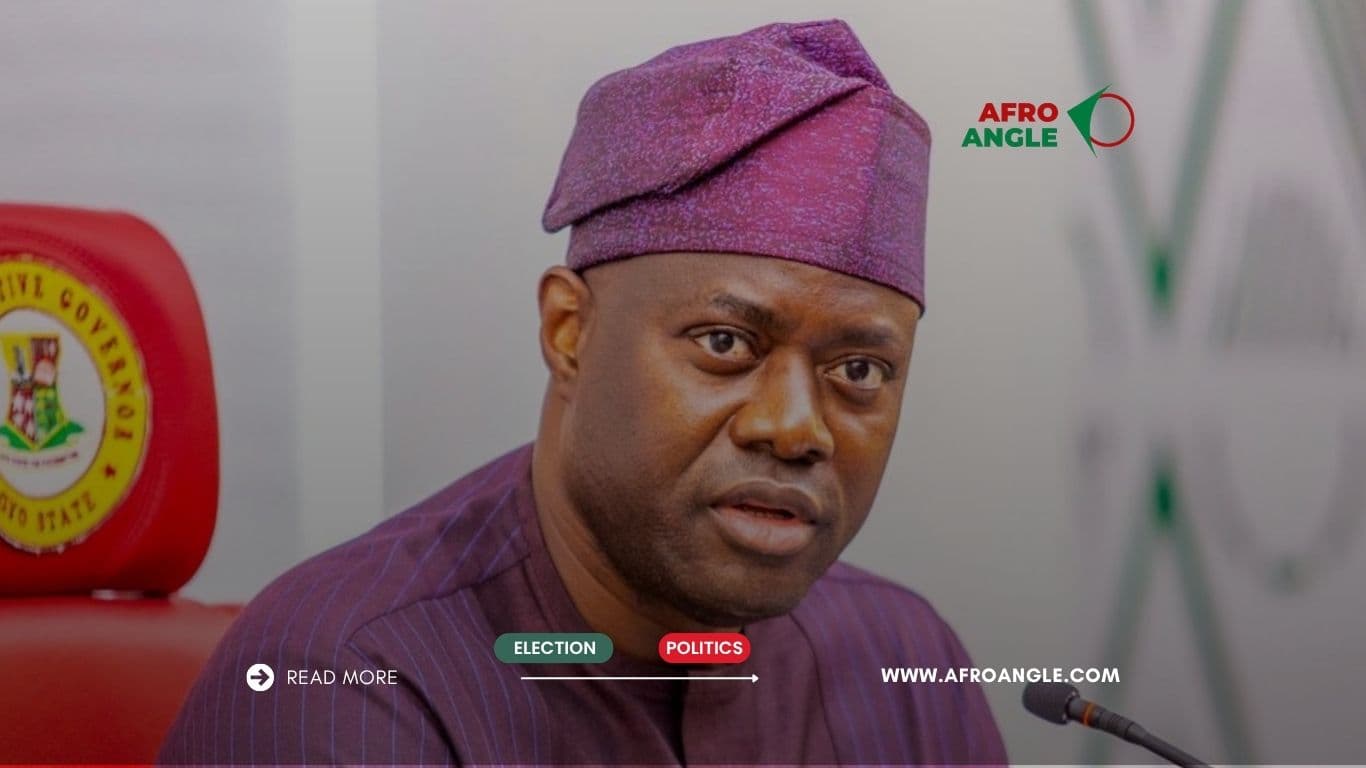
For much of Nigeria’s Fourth Republic, governors have often followed a familiar political trajectory. They complete two terms, attempt to install a preferred successor, seek relevance at the national legislative assemblies or acquire a ministerial portfolio. In other cases, they quietly retire into the role of political godfather. Governor Seyi Makinde appears to be following a different script. His recent political moves suggest a politician pursuing several ambitions simultaneously, each reinforcing the others.
At first glance, Makinde’s decision to seek Nigeria’s presidency in 2027 appears to be another addition to an already crowded field of aspirants. Yet, looking more closely, it reveals a wider political calculation. His presidential ambition is only one part of a larger strategy that includes preserving his political influence in Oyo State after leaving office, expanding his national profile beyond the South-West geopolitical region, and positioning himself as one of the region’s dominant political figures in the years after President Bola Ahmed Tinubu’s presidency.
The more revealing question is what exactly Makinde is building. To answer that question, it is necessary to look beyond the events leading up to the 2027 election and examine the political journey that brought him to this level of influence.
Unlike many influential politicians whose rise to power was defined by long careers in party structures or military service, Makinde entered politics from the private sector. Before becoming governor, he had established himself as an engineer and businessman. His path into office was far from being straightforward. After several unsuccessful attempts, he finally broke through in 2019, disrupting the established order in Oyo politics dominated by powerful godfathers and deeply entrenched political interests. Makinde presented himself as a technocratic alternative, less dependent on old political structures, with a strong focus on fiscal prudence and infrastructural development.
His first term consolidated that image. Investments in infrastructure, education, agribusiness and healthcare, alongside a relatively stable relationship with organised labour, strengthened his standing within the state. By the time he secured a comfortable re-election in 2023, Makinde was no longer a mere opposition governor; he had become one of Nigeria's most visible governors.
His national prominence increased further during the People’s Democratic Party’s internal crisis before the 2023 election. As a leading member of the G5 Governors, he challenged the party’s leadership over zoning, internal democracy and power sharing. Whether one agreed with the G5’s position or not, the episode transformed Makinde from a regional actor into one of the central figures in national opposition politics.
Since then, Makinde has been projecting himself as a politician with national aspirations. His interventions on national issues became more frequent. His decision to convene opposition leaders in Ibadan in April 2026 was significant. The summit was less about Oyo State than about positioning himself as a central figure in efforts to redefine opposition politics ahead of 2027.
The first layer of that strategy is obvious: the presidency itself.
Nigeria’s opposition landscape ahead of 2027 is fragmented. The PDP continues to struggle with internal divisions, the Labour Party battles prolonged internal disputes, while coalition politics continues to evolve. Such uncertainty creates opportunities for ambitious politicians seeking to reshape the opposition.
Makinde appears to recognise that moment. Compared to older opposition figures, he represents a relatively younger generation with executive experience and a record of electoral success. This allows him to project himself as a bridge between Nigeria’s established political elite and a growing electorate searching for alternative leadership.
Yet the road to the presidency remains steep. Before defeating an incumbent president, he must first emerge as the consensus candidate within a divided opposition. Politicians such as Atiku Abubakar and Peter Obi already command nationwide recognition, loyal political constituencies and extensive campaign structures. Building a comparable national organisation within a compressed political timeline requires far more than popularity in one state.
This explains why Makinde’s presidential ambition should not be viewed solely through the lens of winning the 2027 election. Presidential campaigns also expand political networks, attract new alliances and propel politicians onto the national stage. Even an unsuccessful campaign can redefine a politician’s place within Nigeria’s political hierarchy.
The second layer of Makinde’s strategy lies much closer to home.
As he approaches the end of his constitutionally permitted tenure, succession politics has become increasingly important. Like many outgoing governors, Makinde understands that national influence depends on retaining a strong political structure at home. Discussions surrounding his preferred successor therefore go beyond determining who governs Oyo after 2027. They are fundamentally about preserving the political coalition he has spent years building.
Should that structure survive his departure from Government House, Makinde would retain a formidable political base from which to negotiate national politics. If it collapses, even a credible presidential campaign could leave him politically weakened. His presidential ambition and succession plan are therefore two sides of the same political project.
The third, and perhaps most intriguing, dimension of Makinde's calculations concerns the future leadership of the South-West.
For more than two decades, Bola Ahmed Tinubu has remained the region's dominant political figure. Through coalition-building, strategic alliances and the cultivation of political protégés, he evolved from governor of Lagos State into one of Nigeria's foremost political power brokers before eventually becoming president.
This creates an unusual dilemma for Makinde. He is a Yoruba politician seeking national office while another Yoruba politician occupies the presidency. However, political moves transcend the present. Politicians often position themselves for realities that may emerge years later.
Viewed from this lens, Makinde's recent moves appear less like an attempt to immediately displace Tinubu's dominance and more like an investment in the political landscape that will emerge after the current administration. Just as previous generations of South-West leaders influenced national politics beyond their states, Makinde appears determined to ensure that his name features prominently in conversations about the region's next political leadership.
The strategy comes with its own challenges
The first challenge is geography.
Since Nigeria's return to democratic rule in 1999, informal power-sharing arrangements have remained an important, though unwritten, feature of presidential politics. Although the Constitution places no restrictions on where a president should come from, political parties have often considered regional balance in selecting candidates.
President Tinubu's emergence in 2023 reinforced the expectation in some quarters that the South-West would retain the presidency for two terms. Against that backdrop, Makinde's ambition inevitably raises difficult political questions. Would Nigerians, particularly political elites from other regions, support another Yoruba presidency immediately after Tinubu? Would opposition parties consider such a ticket capable of attracting the wide national coalition required to defeat an incumbent administration?
The second challenge is competition within the opposition itself.
Unlike previous election cycles where one or two dominant opposition figures emerged early, the race towards 2027 is increasingly crowded. Atiku Abubakar brings decades of national political experience and an extensive political network. Peter Obi continues to command significant support among young and urban voters; his alliance with Rabiu Kwankwaso, who remains influential in Kano and parts of the North-West is also something significant. Other candidates too are equally seeking relevance within an evolving opposition coalition.
Makinde enters this field with strengths that are distinct but also limited.
His appeal largely rests on his governance record, his image as a relatively pragmatic administrator and his reputation for political calculation. Those qualities have earned him admiration beyond Oyo State, but admiration does not automatically translate into nationwide electoral support.
Presidential elections in Nigeria are rarely won on performance records alone. They are won through a combination of party structures, elite negotiations, regional balancing, financial resources and broad geographical acceptance. Even the most accomplished governor must build alliances across Nigeria's diverse political landscape before becoming a serious presidential contender. Some observers argue that Makinde's national ambition may be arriving too early. Others contend that it is precisely the right moment to establish himself before the post-Tinubu political era begins. In politics, timing often matters as much as ambition itself. Politicians who wait too long risk irrelevance, while those who move too early risk isolation.
Whether he will succeed remains uncertain. Nigerian politics has repeatedly demonstrated that carefully laid plans can be disrupted by unexpected alliances, judicial interventions and shifting public sentiment. Yet even if the presidency remains beyond his reach in 2027, Makinde may still emerge with something equally valuable: a stronger claim to national relevance in a political landscape where influence is often accumulated long before power is eventually attained. The more revealing question, therefore, is not whether Seyi Makinde becomes Nigeria’s next president, but whether 2027 marks the moment he successfully transformed himself from a popular governor into one of the country’s defining political actors.
Olanshile Ogunrinu
Olanshile Ogunrinu is a Nigerian freelance journalist and graduate of Communication and Language Arts from the University of Ibadan. His works have appeared in notable local and international media platforms, where he reports on education, governance, politics, and human rights. He is interested in public-interest journalism, social justice, and accountability reporting, using storytelling to amplify underrepresented voices and contribute to informed public discourse.
comments
No comments yet