
Widespread Abductions Across the North-west, as Bandit Activity Deepens Mobility and Economic Costs.
by
North-west Nigeria: Security Situation Report (April 12–18, 2026)
Introduction
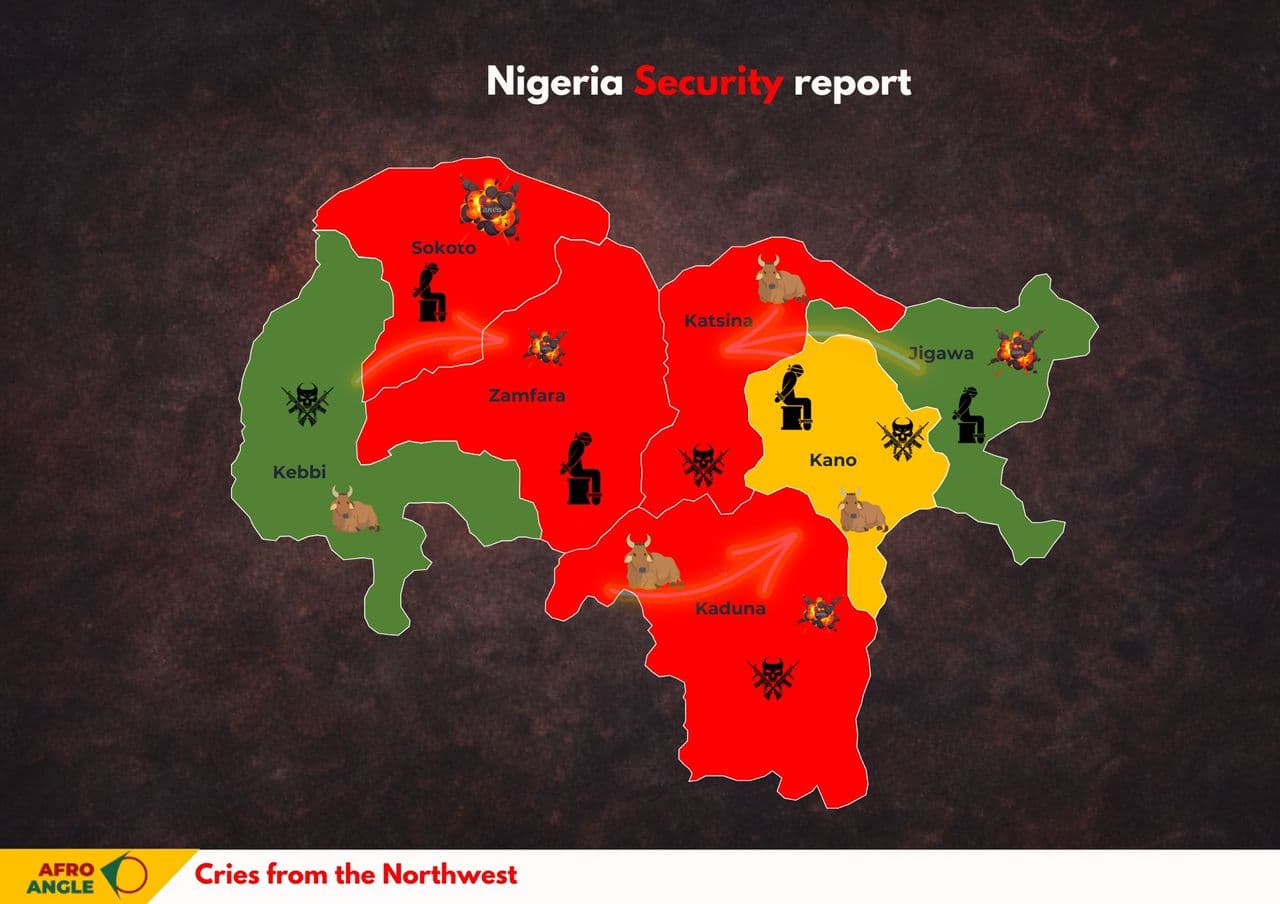
The North-west continues to face a persistent and intensifying cycle of violence, driven by the activities of bandit and insurgent groups. Despite ongoing counter-terrorism operations, the security environment remains fragile, with armed actors adapting and sustaining pressure on civilian populations. During the reporting period (April 12 and 18), the Nigerian military conducted targeted operations against the Lakurawa faction in and around Sokoto State, aiming to dislodge the group from established sanctuaries. Nonetheless, attacks intensified across rural communities, reinforcing patterns of displacement and deepening fear among residents. Operationally, the period was marked by coordinated attacks and mass abductions, reflecting entrenched patterns of violence. These incursions disproportionately affected vulnerable populations, including women and children. Communities were subjected to looting, while livestock, central to rural livelihoods, was systematically rustled. The killing of residents and vigilante operatives further exposes the weakening of community-level defence structures and raises concerns about the erosion of the first line of local security.
In Kebbi State, insurgent activity linked to the Lakurawa group re-emerged following a period of relative inactivity. This resurgence potentially prompted the deployment of additional security forces across Sokoto and Kebbi states, supported by new military hardware that has contributed to localised tactical gains. However, parallel developments point to a more concerning trend; the growing sophistication of logistics and support networks underpinning armed groups. The recent arrest of an explosives supplier in Zamfara highlights the expanding ecosystem sustaining bandit operations, blurring the distinction between direct perpetrators and enabling actors. While similar supply networks have been aggressively targeted in the North-east in recent weeks, a comparable and sustained focus is now required in the North-west to counter this evolving threat.
Week in Review
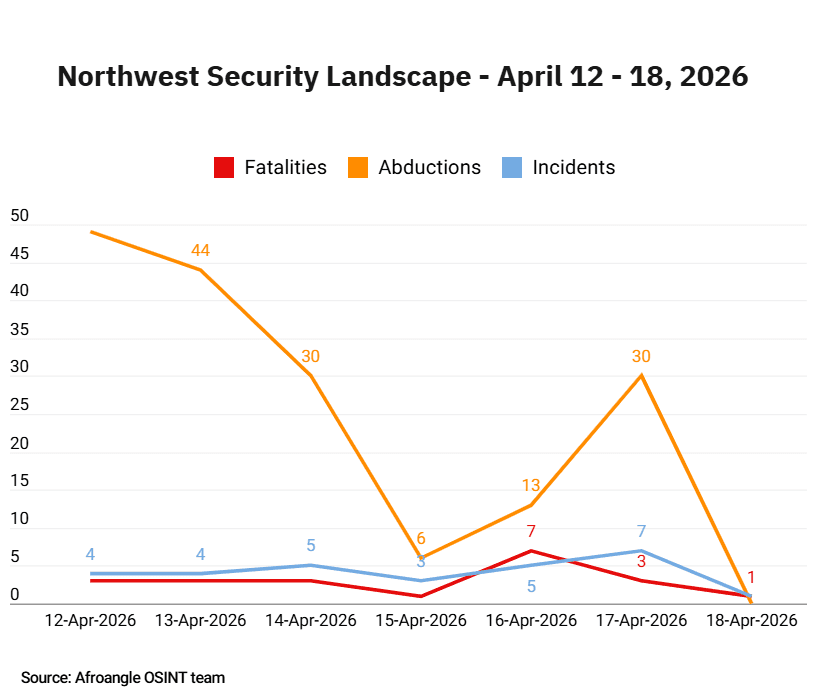
A comparative analysis of this reporting period against the previous week indicates a modest increase in overall activity, alongside a sharp decline in fatalities. Recorded incidents rose from 25 to 29, a 16% increase, suggesting a slight uptick in operational tempo. Abductions also increased, from 160 to 172, reflecting an 8% rise and reinforcing the continued centrality of kidnapping within bandit operational strategy.
In contrast, fatalities dropped significantly from 66 to 21, representing a 68% reduction. While this decline suggests a temporary decrease in lethality, it should be interpreted with caution. Geographically, Zamfara State remains the focal point of violence, recording 17 incidents, 115 abductions, and 12 fatalities during the period. This sustained concentration underscores its role as the primary epicentre of instability in the region.
View interactive chart here
The simultaneous rise in abductions points to a possible tactical recalibration, with armed groups placing greater emphasis on kidnapping-for-ransom as a revenue-generating mechanism or as a bargaining chip or human shield, particularly under increased military pressure. Importantly, the reduction in fatalities does not signal a broader improvement in the security landscape. The upward trend in abductions, particularly targeting vulnerable populations and highway commuters, suggests a deliberate effort by bandit groups to offset operational pressure by expanding revenue streams. This dynamic reinforces the persistence of the threat and highlights the likelihood of continued volatility in the near term.
Analysis: Highway Vulnerabilities increase Mobility and Economic Cost
Escalating bandit activity is increasingly constraining mobility across the North-west, disrupting both civilian movement and the flow of goods. Key inter-state corridors, particularly those linking Katsina with Kaduna, Zamfara, and Sokoto, are now widely perceived as unsafe. As a result, motorists are avoiding major highways and shifting to longer, more costly alternative routes to reduce exposure to attacks. This has led to extended travel times, higher transport fares, and growing uncertainty around road use.
In several high-risk areas, especially across Katsina and Zamfara, critical routes are becoming effectively isolated. Corridors through Dutsinma–Kankara, Matazu, and Musawa are now widely regarded as insecure due to persistent bandit presence. In some cases, motorists delay travel until military convoys are available, an option that is both irregular and insufficient to meet demand. These conditions are not only restricting civilian movement but are also imposing significant friction on regional economic activity.
The economic consequences are becoming more pronounced. Traders and transport-dependent businesses are facing rising costs, disrupted supply chains, and heightened risk exposure. Many have been forced to scale back operations or suspend them entirely, eroding income levels and weakening local markets. The cumulative effect is a contraction in inter-state trade and a reduction in the circulation of goods across the region.
Agricultural activity is similarly affected. As communities prepare for the planting season, insecurity is limiting access to farmlands and increasing the risk of abduction. Even where cultivation proceeds, farmers face growing difficulty transporting produce to markets, particularly to southern destinations, due to unsafe transit corridors. This combination of production and distribution constraints is compounding economic strain and underscores a less visible but critical dimension of the crisis. If sustained, these dynamics are likely to reshape both the economic structure and social stability of the region over the longer term.
Outlook
In the coming weeks, armed group activity is expected to persist, with continued attacks on civilian communities and sustained pressure on key economic corridors. The Nigerian military is likely to intensify operations, particularly along the Sokoto–Kebbi axis, targeting Lakurawa elements and associated bandit networks.
However, increased military pressure may prompt adaptive responses from armed groups. There is a credible risk of displacement, with elements potentially shifting toward the North-central region in search of alternative sanctuaries. This would expand the geographic scope of the threat and further strain already stretched security resources. As the offensive intensifies, preemptive measures will be necessary to deter such movement and contain spillover effects, especially given the North-central’s own rising volatility.
At the same time, greater emphasis should be placed on disrupting the logistical and financial networks sustaining bandit operations. Targeted action against suppliers, transport channels, and local support systems would impose meaningful constraints on armed groups’ operational capacity. Without a sustained focus on these enabling structures, the broader bandit economy is likely to remain resilient, even in the face of intensified military operations.
Adam Abass
Adam Abass is a graduate student of political science and international relations. His research focuses on Middle Eastern politics, counter-terrorism, peace, and security in Africa.
comments
No comments yet