
Islamic State (IS) Militants Claim Violent Attack in Nigeria’s North-West Region
by
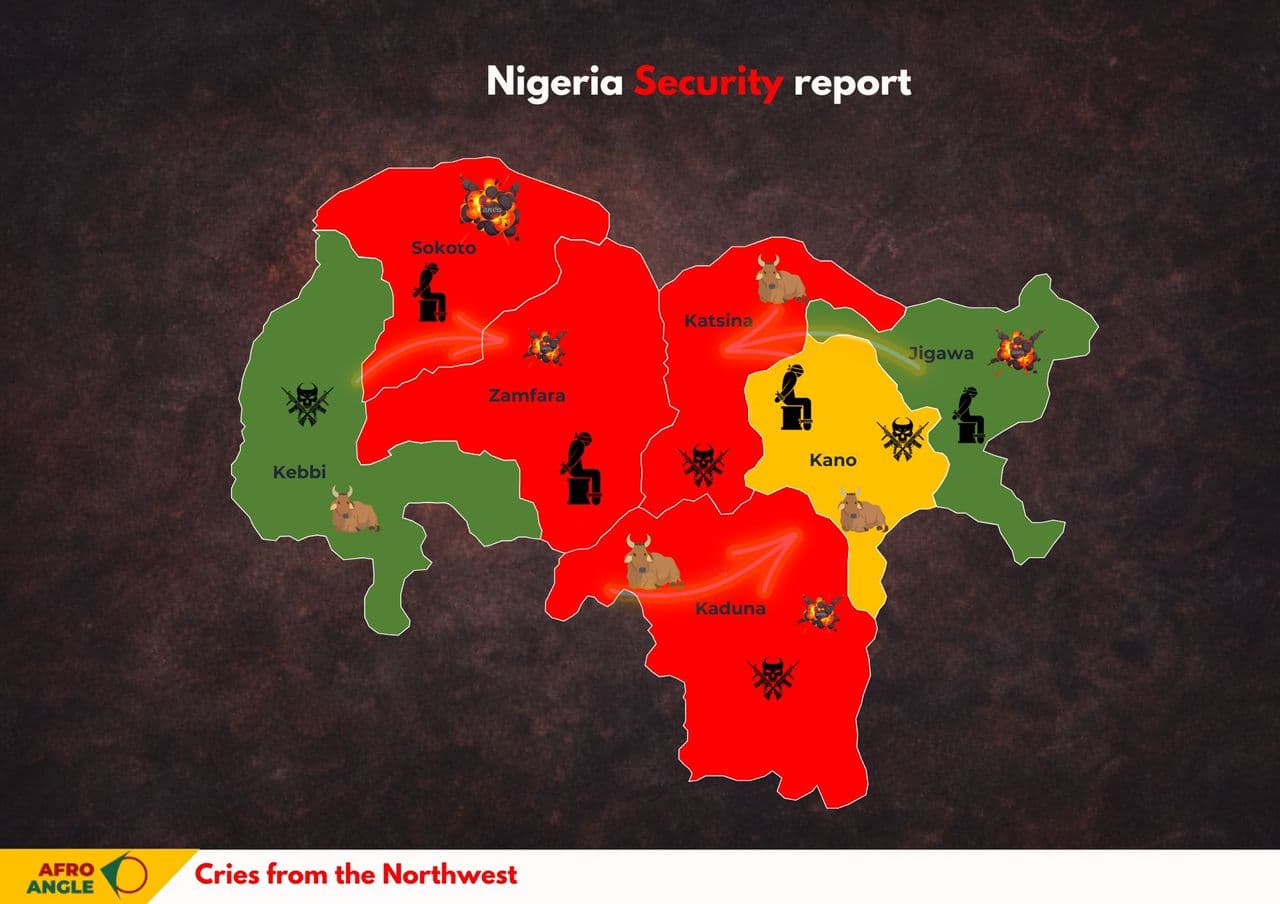
North-West Nigeria: Security Situation Report (May 25–30, 2026)
Introduction
Afroangle's monitoring of the security landscape in the Northern Region suggests a moderate reduction in violent incidents, partly due to the sustained intelligence, surveillance, and reconnaissance (ISR) activities conducted by Nigerian and United States security assets. Nevertheless, the North-West, which remains the focus of this report, continues to experience persistent violence driven by armed bandit groups and ongoing counter-terrorism operations.
More significantly, concerns continue to grow over the expansion of jihadist activities across the region. While Lakurawa fighters have maintained an entrenched presence in parts of Sokoto and Kebbi states, their influence has increasingly extended toward Niger and Kwara states in the North-Central region.
Week in Review
In the course of the week, the Islamic State (IS) claimed its first known attack in Nigeria's North-West through propaganda material that showcased an assault on military personnel in Rumji Dan Doto, Sokoto State, which reportedly resulted in the deaths of seven Nigerian soldiers and the capture of military equipment.
This claim follows a series of developments over recent months that analysts have linked to jihadist networks operating in the region. Although debates persist regarding Lakurawa's affiliation, whether with Jama'at Nasr al-Islam wal-Muslimin (JNIM), the Islamic State (IS), or as a distinct local movement, the latest developments reinforce a broader trend: the gradual emergence of the North-West as a fertile environment for jihadist expansion. Combined with entrenched banditry, weak governance, and persistent insecurity, this evolving threat landscape continues to deepen an already severe security crisis across the region.
On the other hand, the Nigerian security forces recorded several operational successes. In Zamfara State, troops rescued 31 kidnapped victims during a clearance operation in Anka Local Government Area. Similarly, a joint operation involving the Nigerian military and the Katsina State Community Watch Corps resulted in the elimination of fighters linked to a notorious bandit kingpin in Katsina State.
Furthermore, security agencies arrested Nuru Aliyu Garwa, a former aide to the Katsina State Governor, over alleged links to a kidnapping syndicate. The arrest reinforces longstanding concerns about insider networks and local collaborators who continue to undermine counter-terrorism efforts by providing intelligence, logistical support, and operational assistance to armed groups. However, armed bandits also carried out a deadly attack in Dutsinma Local Government Area of Katsina State, killing 16 people and abducting several others.
Islamic State Reaffirms Its Presence in the North-West
Despite sustained Nigeria-United States counter-terrorism operations that have eliminated several senior Islamic State (IS) leaders and degraded key components of the group's operational and media infrastructure, Islamic State networks appear determined to demonstrate continued relevance and operational reach.
In its latest propaganda release, the Islamic State claimed responsibility for the attack in Rumji Dan Doto, Sokoto State, under the banner of the Islamic State Sahel Province (ISSP). If verified, this would represent the first publicly acknowledged ISSP attack inside Nigeria's North-West. The claim also follows a previously disputed attack in Shanga, Kebbi State, which the group's media outlet, Al-Naba, attributed to its fighters.
Initial reports linked that operation to Lakurawa elements. However, the Islamic State's subsequent attribution of the attack to ISSP has further complicated efforts to accurately map the evolving jihadist landscape across Nigeria and the wider Sahel. Consequently, the latest claim adds another layer of complexity to an already fragmented security environment. Beyond the immediate tactical implications, it raises important questions about the relationship between ISSP, Lakurawa, and other jihadist actors operating across the Nigeria-Niger border corridor.
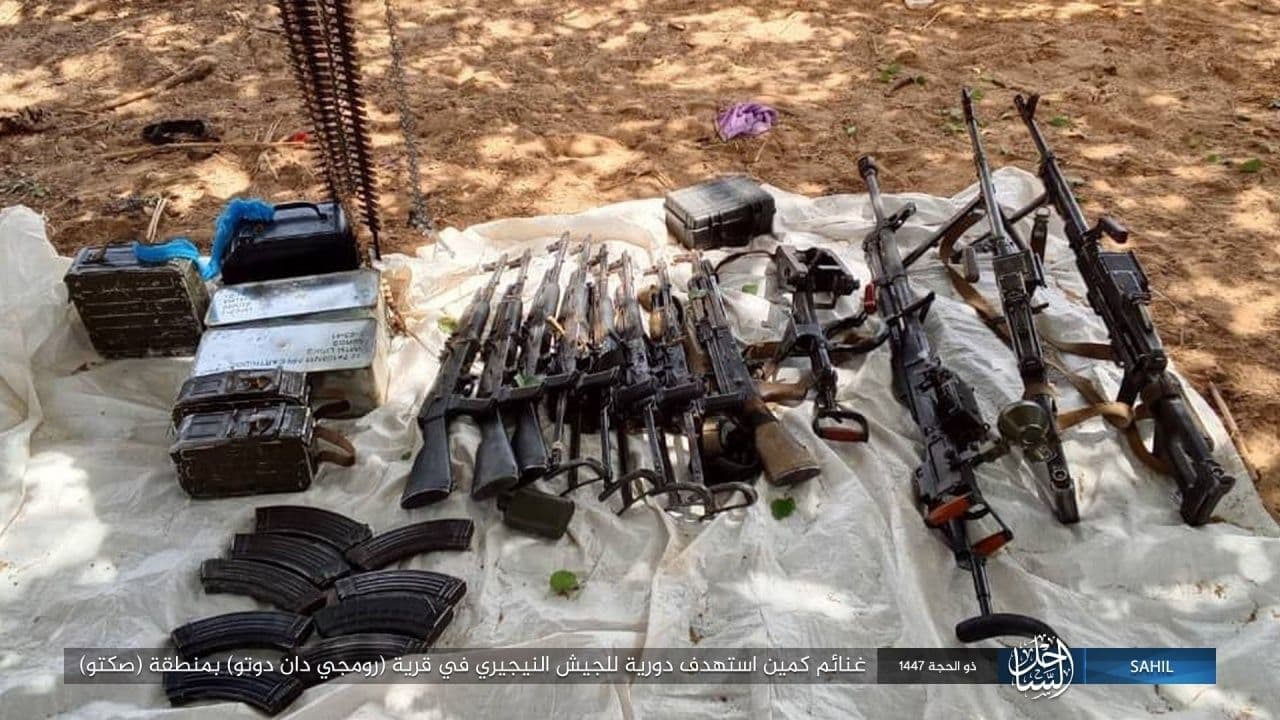
These developments also unfold against the backdrop of the intensifying rivalry between JNIM and the Islamic State across the Sahel. Both groups have increased their activities around the Tahoua and Dosso regions of Niger, areas that border Nigeria and serve as critical transit corridors. Security analysts increasingly describe this competition as a "race to the border," reflecting efforts by both groups to establish influence, secure recruitment networks, and control strategic cross-border routes.
Nevertheless, questions remain regarding the credibility of the group's claims. Terrorist organisations frequently deploy propaganda to exaggerate their capabilities, project resilience, and maintain relevance, particularly during periods of intense military pressure. The timing of the latest announcement is therefore noteworthy. Recent Nigeria-United States operations significantly disrupted the Islamic State West Africa Province's media and propaganda apparatus, weakening its ability to communicate and project influence.
However, the emergence of the claim through ISSP channels suggests two possible scenarios. First, the group may be attempting to project strength and reassure supporters despite recent battlefield losses. Alternatively, the claim may indicate the reactivation or expansion of dormant jihadist cells in the North-West, particularly within border communities that remain vulnerable to infiltration.
Regardless of which explanation proves accurate, the announcement reinforces a critical reality: sustained military pressure in the North-East may encourage jihadist networks to diversify their operational footprint and seek opportunities elsewhere. Consequently, the possibility of increased jihadist activity in the North-West warrants close monitoring. Any successful expansion by ISSP would further complicate an already crowded conflict environment characterised by banditry, communal insecurity, and weak state presence.
Outlook
The coming weeks will remain strategically significant. Nigerian and United States ISR platforms will likely maintain sustained surveillance over ISWAP operational zones in the North-East. Furthermore, the reported emergence of ISSP activity in the North-West may prompt security agencies to expand surveillance and intelligence collection efforts across parts of Sokoto, Kebbi, and adjacent border areas.
At the operational level, the Nigerian military will continue counter-terrorism campaigns against both insurgent and bandit groups across the region. Simultaneously, armed bandit attacks against rural communities, vulnerable populations, and other soft targets will likely persist despite ongoing military pressure.
Most importantly, security agencies must closely monitor the evolution of ISSP activities in the North-West to prevent the group from establishing a durable operational foothold. Achieving this objective will require the deployment of additional security personnel along key border corridors, enhanced intelligence-sharing mechanisms with Nigerien authorities, and stronger regional coordination frameworks.
Equally important, authorities must strengthen community resilience and address the structural vulnerabilities that extremist groups frequently exploit for recruitment, influence, and expansion. Without a coordinated strategy that combines military pressure, intelligence operations, border security, and community engagement, jihadist actors may continue to exploit existing security gaps and expand their presence across the region.
Afroangle Intel Admin
Northwest Nigeria Report Admin
comments
No comments yet