
Banditry persists as Lakurawa-linked attacks resume
by
Listen to this article
Security Situation Report
(15–22 March 2026)
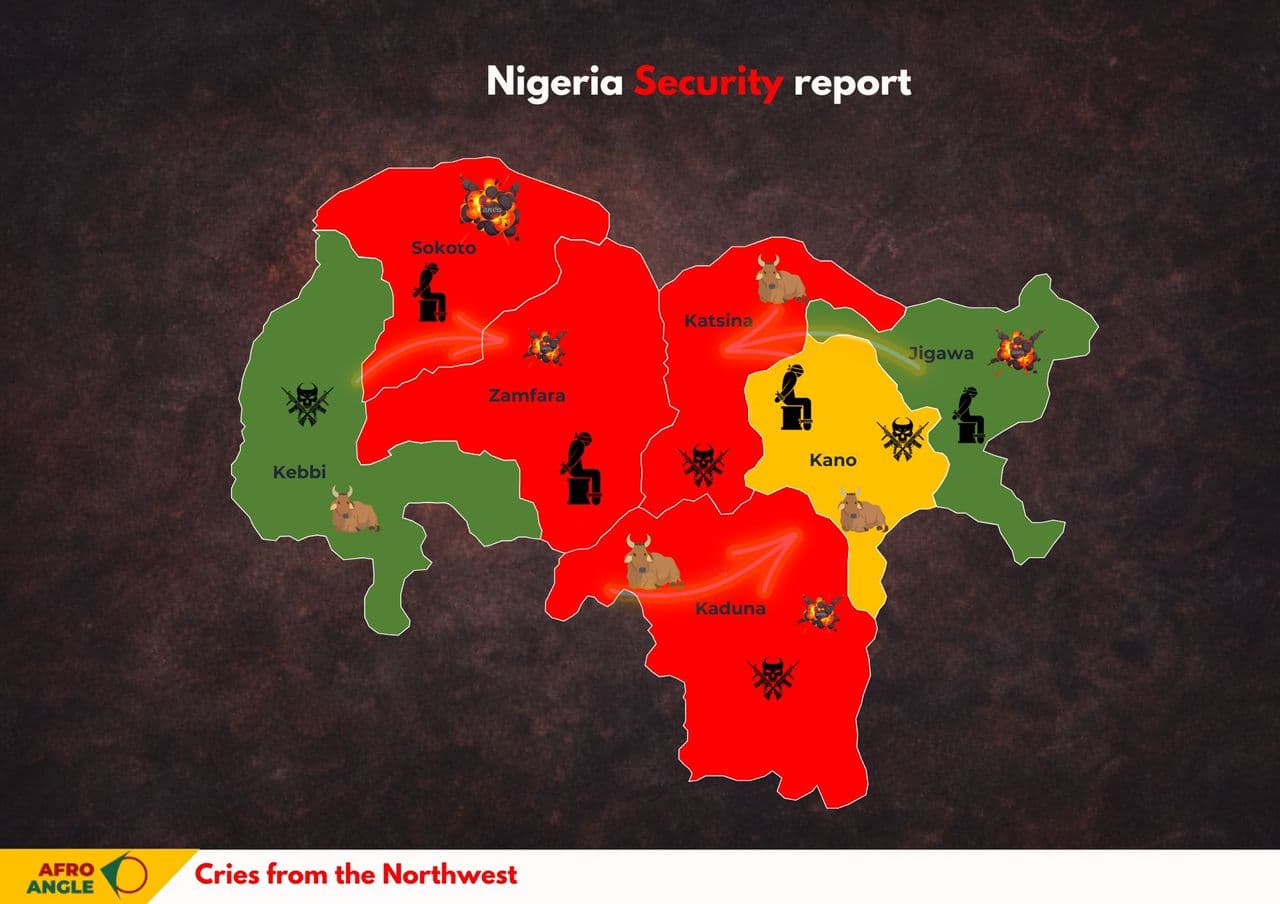
Bandit operations in the Northwest region remains a deeply entrenched and evolving security crisis, as armed bandit groups intensify their assaults through increasingly lethal, coordinated, and strategically targeted attacks. Compared to last week, the security situation this week saw a significant increase in recorded incidents and victims, marking a reversal of the trend observed in the earlier period. Overall, incidents rose sharply, from 16 in the previous week to 25 in this week, representing a 56.25% increase in the frequency of attacks. This upward trend was also seen in the impact metrics, with fatalities increasing from 25 to 38, a rise of 52.0%. The one metric that saw a decline was abductions, which fell from 42 to 35, marking a 16.67% decrease.
Despite the overall increase in violence, the regional concentration of insecurity remained heavily focused on a single state. In this week, Katsina State was uniformly the most affected state across all three categories: incidents (8), fatalities (20), and abductions (21). In summary, the raw numbers indicate a more violent period in the week of March 15-22, with the data suggesting that attacks continued to be severe, and the security focus remained heavily centered on Katsina State and its surrounding regions.
Kidnapping for ransom continues to drive bandit operations, despite the slight drop in overall abduction numbers. There were high-profile abductions of civilians recorded in Sabon Gero (Chikun) in Kaduna State, Dinya (Kibiya) in Kano State, Kofar Fada (Kankara) in Katsina State, and along the Tsafe–Magazu Road (Tsafe) in Zamfara State.
The most significant escalation occurred on 17 March in Falale, Jibia Local Government Area (LGA) of Katsina State, where armed bandits launched a coordinated assault that left 15 male civilians dead, six others injured, and at least 20 residents abducted. Reports indicate that the attackers operated for an extended period without immediate resistance, underscoring both their numerical strength and the vulnerability of rural settlements lacking sustained security presence.
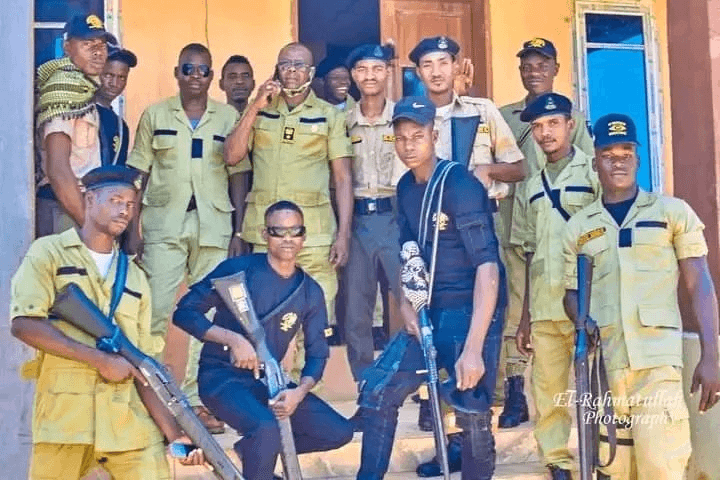
At the same time, there were indications of increasing resistance from local security actors. On 20 March in Fakai Forest, Shinkafi LGA of Zamfara State, a joint operation involving the Civilian Joint Task Force (CJTF), Zamfara Community Protection Guards (ZCPG), and vigilante groups targeted a camp associated with a notorious bandit leader. The operation reportedly resulted in the killing of several bandits and the recovery of weapons, signaling a gradual shift toward proactive, intelligence-driven local security responses, albeit still limited in scope.
In a separate but equally concerning development, on 19 March in Kangiwa, Bagudu LGA of Kebbi State, suspected Lakurawa militants carried out a violent raid that resulted in the deaths of five civilians, injuries to another, and the rustling of livestock. This incident highlights the continued geographical diffusion of armed groups, particularly into border communities that serve as strategic corridors for movement, logistics, and evasion.
History of Lakurawa’s Operation in the Region
Notably in this week, we saw an attack linked to the Lakurawa bandit group. The rise of a militant group known as Lakurawa in 2024 reflects the worsening intensity of armed conflict in Northern Nigeria. On November 6, 2024, the Sokoto State government officially acknowledged the group’s existence, raising concerns about its violent activities across parts of the state. Although the group had reportedly been active for over six years, it was only recently designated as an emerging terrorist organization. The Defence Headquarters reinforced this position by declaring the group’s leaders wanted. Shortly after these announcements, Lakurawa militants launched attacks in neighboring Kebbi State, killing at least 15 people and displacing many others. Since being officially proscribed, the group has carried out multiple incursions, including attacks involving Improvised Explosive Devices (IEDs).
Historically, Lakurawa is believed to have originated in 1997 as a self-defense force aimed at protecting Fulani communities, particularly herders, from Tuareg attacks. By 2018, local authorities in Gudu and Illela Local Government Areas of Sokoto State allegedly invited the group to help combat escalating banditry. At the time, the group gained local support for defending communities against armed bandits and cattle rustlers, especially across Sokoto, Kebbi, and Zamfara states. Over time, however, Lakurawa transformed into a more radical and destabilizing force. By 2012, elements within the group had aligned with extremist organizations such as al-Ansar al-Sharia, leading to the emergence of factions driven by extremist ideologies. The group began influencing local youths by imposing radical beliefs and offering financial incentives, while also strengthening ties with larger insurgent networks, further deepening insecurity in the region.
Credible reports suggest that following the 2023 coup in Niger, which removed President Mohamed Bazoum from power, some members of the group were allegedly recruited by a foreign actor to destabilize Northern Nigeria. These recruits were reportedly promised payments of up to ₦15 million each, along with motorcycles and advanced equipment.
Lakurawa’s composition is notably diverse, including individuals of Malian, Arab, Tuareg, and Fulani origin. The group has leveraged shared linguistic and cultural connections to blend into local communities, enabling its expansion. Some factions have also been linked to cross-border smuggling networks operating from areas such as Dole-Kaina in Kebbi State. These networks facilitate the movement of fuel, weapons, and other supplies to insurgent groups across the Sahel and West Africa, including regions like Kompienga Province in Burkina Faso, a known hub of terrorist activity.
Given its deep historical roots, operational adaptability, and connections with established insurgent groups such as Boko Haram, Lakurawa, alongside other bandit factions remains a complex and persistent threat to regional stability. In response to the group’s spread across multiple communities in the Northwest, the Nigerian Army has conducted a series of operations in Sokoto State aimed at disrupting and weakening its activities.
The evolving security landscape in Northwest Nigeria suggests that the resurgence of Lakurawa-linked attacks could further intensify and complicate the region’s already volatile banditry ecosystem. As the group reasserts itself through violent raids such as the Kangiwa incident, its operations appear increasingly intertwined with broader bandit networks, blurring the lines between ideologically driven militancy and profit-oriented criminality. This convergence is particularly concerning, as Lakurawa’s historical ties to extremist groups, combined with its cross-border mobility and access to smuggling routes, provide bandits with enhanced tactical capabilities, including the potential use of more sophisticated weaponry and coordinated assaults. If this trajectory persists, Northwest Nigeria may witness a transition from fragmented bandit violence to a more hybridized threat environment, where insurgent-linked groups and bandit factions mutually reinforce each other, leading to higher lethality, expanded geographic spread, and prolonged instability across already vulnerable communities.
Temitayo Oladejo
Temitayo Oladejo is a corporate security analyst and development policy professional with over four years of experience working with private security firms and energy companies, providing strategic and risk-focused analysis in complex operating environments. He is a graduate of the Master’s program in International Public Policy at Johns Hopkins University. His research interests spans international security, African development, and U.S.–Africa relations, with focus on risk management, security governance, and geopolitical competition. He is an Associate Fellow at the Center for African Conflict and Development and a member of ASIS International.
comments
No comments yet