
Beyond Surveillance: Why Justice, Not Technology, Will End the Jos Crisis
by
Listen to this article
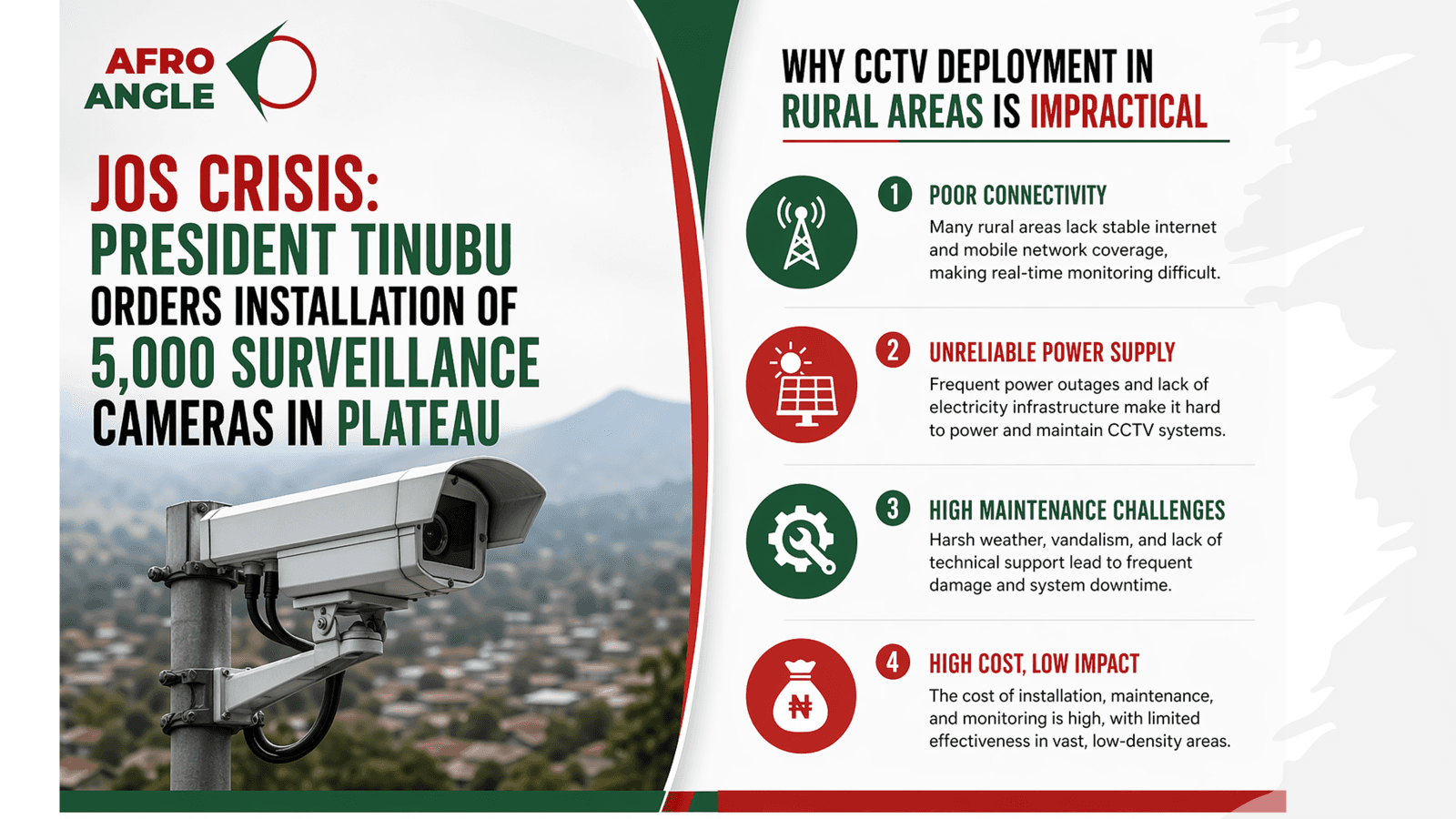
The latest wave of violence in Jos, resulting in the killing of at least 27 people in Anguwan Rukuba on March 29, 2026, reflects a familiar and deeply entrenched pattern in Plateau State. Localised attacks continue to escalate quickly into cycles of reprisal and counter-reprisal, particularly during the dry season. The incident quickly drew national attention and prompted a presidential visit, followed by renewed calls for stronger security measures, including the proposed deployment of 5,000 AI-enabled surveillance systems across the state. This response, however, reflects a persistent misunderstanding of the crisis. The violence in Jos is not primarily a failure of surveillance. It is rooted in contested identity, unequal access to resources, and a long-standing deficit of justice and accountability.
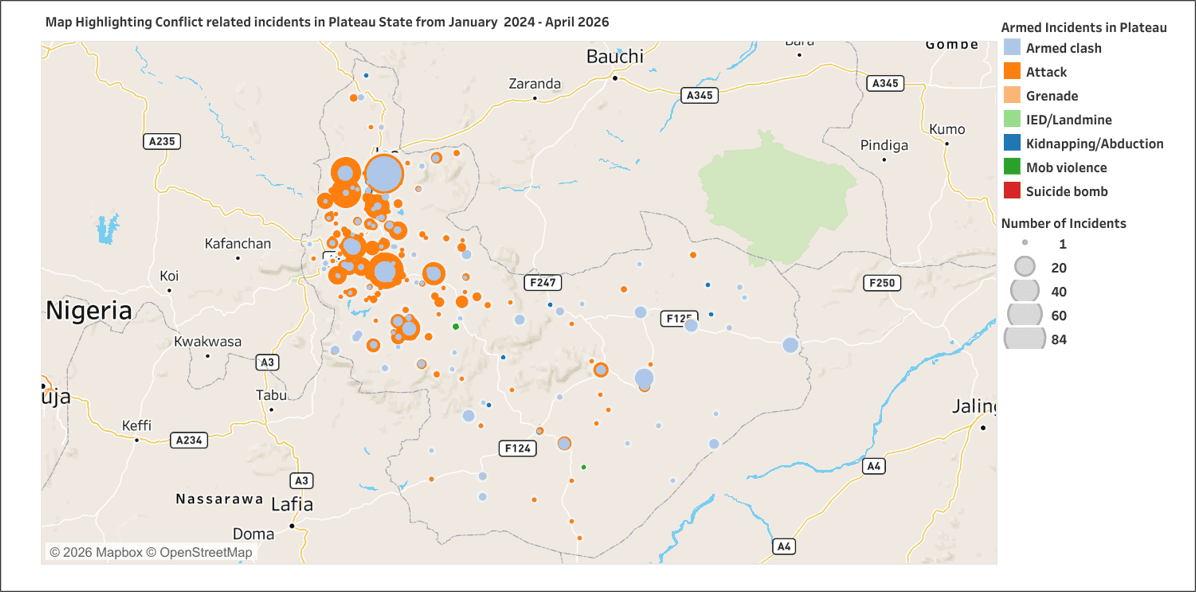
This map highlights the spread of armed incidents in Plateau State with Jos North and South LGA, Barkin Ladi LGA, and Bassa LGA being the most impacted by violent attacks between 2024 and 2026.
Although the conflict is often framed along religious lines, its core drivers lie elsewhere. The indigene-settler divide remains central. This identity posture determines access to land, political representation, and economic opportunity. Communities classified as indigenes benefit from formal recognition and privileges, while others, often labelled as settlers regardless of how long they have lived in the area, remain excluded. Over time, this imbalance has deepened grievances and turned disputes over land and governance into entrenched identity-based conflict. In this context, communal identity shapes access to power, protection, and opportunity.
Environmental pressures have further intensified these tensions. Plateau State lies within Nigeria’s Middle Belt, where farming and pastoral livelihoods intersect. As desertification advances across northern Nigeria, pastoralist groups, mainly Fulani herders, have moved southward in search of grazing land. This shift has increased competition with farming communities, particularly the Berom and other indigenous groups. Disputes that were once manageable have hardened into recurring violent confrontations, especially in Barkin Ladi, Riyom, Bassa, and Mangu. The pattern of violence reflects the combined effects of climatic stress and identity politics.
Additionally, violence persists because a clear logic of reprisal sustains it. Attacks are rarely isolated. They form part of a chain of retaliation that communities increasingly see as necessary and justified. During the dry and harvest season of late 2025 to early 2026, we have witnessed multiple tit for tat attacks across the states, involving Fulani militias and Berom. The Anguwan Rukuba killings followed this pattern, with initial violence quickly triggering counterattacks. Similar dynamics were evident in earlier incidents, including the 2025 killings in Riyom and the 2024 attacks in Mangu, where entire communities were targeted despite the presence of security forces. Over time, this cycle has normalised violence as a method of responding to disputes. In the absence of effective state protection, communities have turned to self-help mechanisms, including identity-based vigilante groups, which further entrench insecurity.
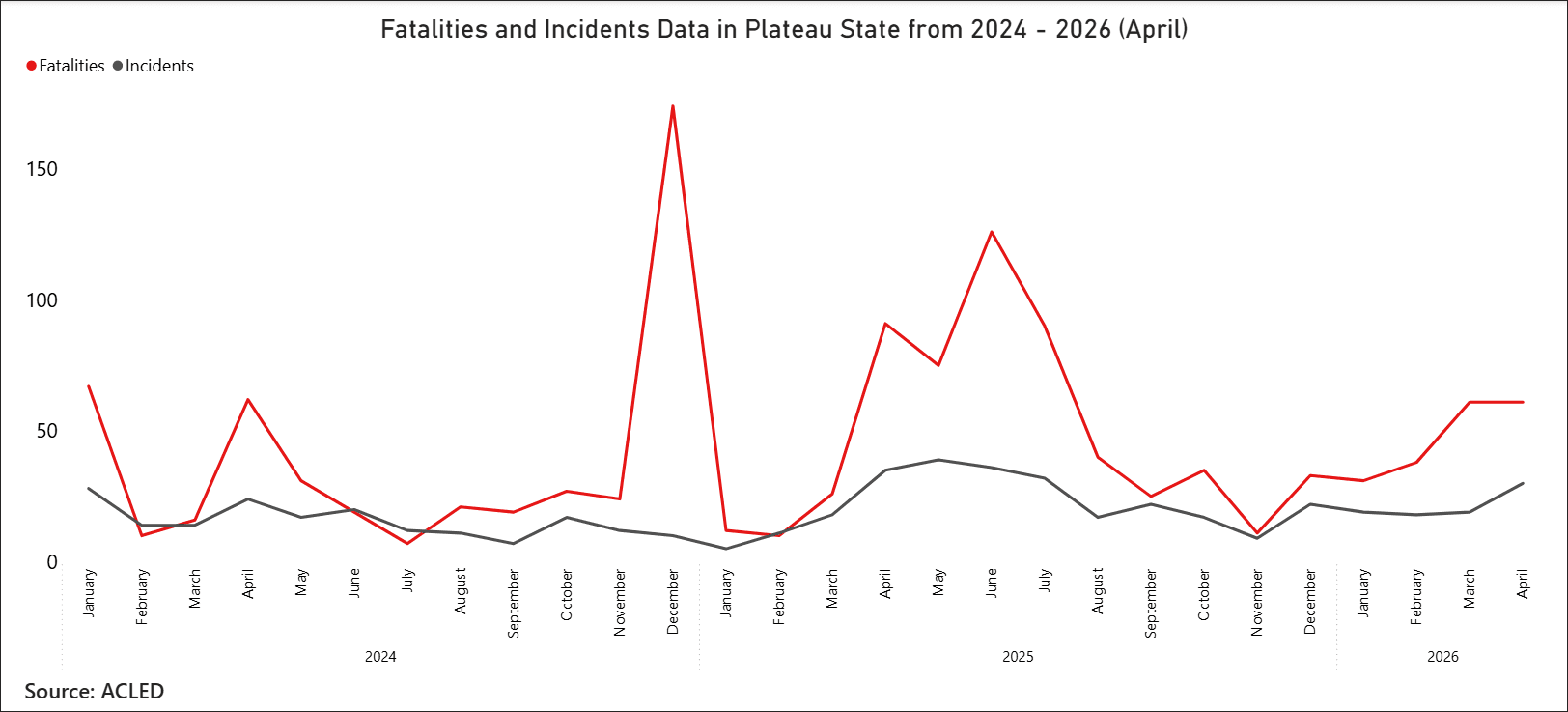
In December 2024, there was a spike fatalities due to a series of attacks across Riyom and Bokkos LGAs, including one incident that resulted in the deaths of approximately 15 residents. Similarly in June 2025, the upshoot in death toll was related to attacks across Bassa, Riyom, Mangu, and Bokkos LGAs. For example, on June 19, at least 22 people were killed in Bokkos and Mangu LGAs. These trends still persist as seen in the chart as of 2026.
At the centre of this cycle is a persistent failure of accountability. Successive governments have established judicial commissions of inquiry after major outbreaks of violence in Plateau State. These commissions have documented abuses, identified perpetrators, and proposed measures to prevent recurrence. However, their recommendations have rarely been implemented. Individuals linked to organising or inciting violence are seldom prosecuted, and victims rarely receive justice. This gap between investigation and enforcement has created a culture of impunity in which violence carries little consequence, and grievances remain unresolved.
At the same time, the conduct of security forces has also complicated the situation. While deployed to restore order, they are often seen as ineffective or partial. Reports of delayed responses to attacks and complacency with one group have weakened public trust. In some cases, communities no longer view security personnel as neutral actors but as participants in the conflict. This perception undermines the legitimacy of state intervention and reinforces reliance on self-defence and retaliation.
Against this backdrop, the focus on surveillance technology appears misplaced. The proposed deployment of AI-enabled cameras aims to improve intelligence-gathering and response times. Such measures are laudable; however, they address only the operational aspects of the conflict and not its underlying drivers. Most attacks occur in rural or semi-urban areas where surveillance coverage is likely to be limited. Even where intelligence is available, the main challenge has often been the failure to act on it. The recurrence of large-scale attacks in areas with an existing security presence highlights this problem; the kidnapping of 25 school girls in Kebbi state late 2025 reinforces this argument.
More importantly, surveillance cannot resolve disputes over land, identity, or political exclusion. It cannot rebuild trust between communities or address perceptions of injustice. At best, it may provide some level of deterrence. At worst, it risks becoming a symbolic measure that creates the appearance of action without addressing the real causes of instability. In this sense, the focus on technology risks prioritising visibility over substance.
“The violence in Jos is not primarily a failure of surveillance. It is rooted in contested identity, unequal access to resources, and a long-standing deficit of justice and accountability.”
A more sustainable path to peace requires a shift from control to justice. This begins with implementing the recommendations of past judicial commissions, especially the prosecution of those responsible for organising or inciting violence. Holding perpetrators accountable would signal a clear break from the current culture of impunity. Without such action, responses to the crisis will remain reactive and limited in impact. Similarly, strengthening oversight of security forces is equally important; security personnel must be seen as impartial enforcers of the law if they are to play an effective role in stabilising the situation.
Addressing the needs of victims is another critical step. Compensation and restitution can help reduce the incentive for revenge among communities and demonstrate a real commitment to justice. In communities that have experienced repeated violence, these measures are essential for rebuilding livelihoods and restoring a sense of security. These efforts must be supported by sustained engagement at the community level. Dialogue between farmers, herders, and local leaders can help manage tensions and prevent further escalation. While dialogue alone cannot resolve structural inequalities, it provides a platform for rebuilding trust and promoting coexistence. Its success depends on consistent support and integration into broader governance reforms.
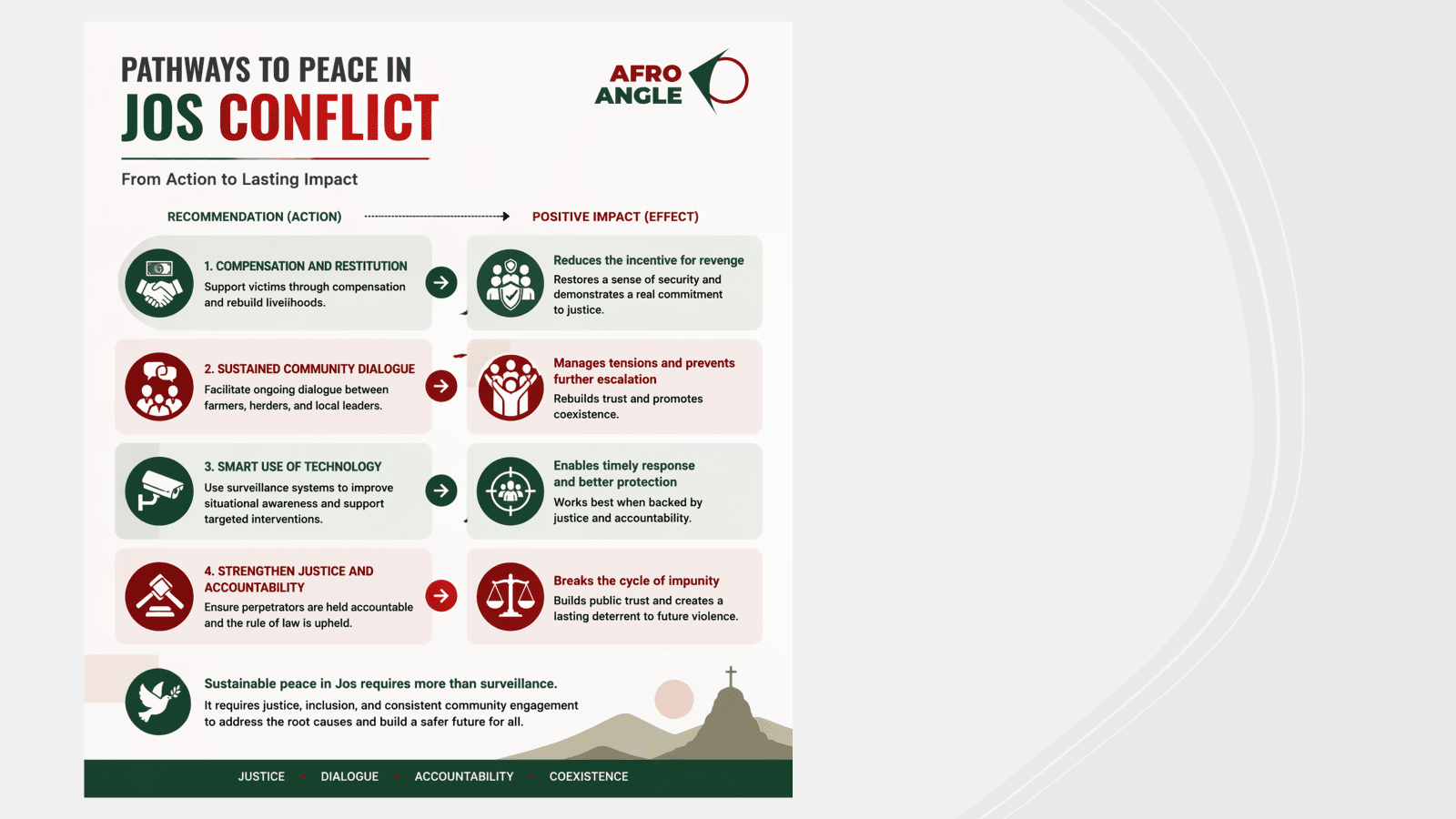
Technology still has a role to play, but it is limited. Surveillance systems can improve situational awareness and support targeted interventions, but only when combined with a broader framework that prioritises justice and accountability. Without these foundations, technological solutions are unlikely to produce meaningful change. The crisis in Jos reflects deeper governance failures. It is sustained not by a lack of monitoring, but by a lack of consequences. As long as perpetrators remain unpunished and victims remain unsupported, the cycle of violence will continue. Breaking this cycle requires more than improved surveillance. It requires a sustained commitment to the rule of law and to addressing the structural inequalities at the heart of the conflict.
In conclusion, lasting stability in Plateau State will depend not on expanding technological capacity, but on restoring institutional credibility. Justice, understood as accountability for perpetrators and protection for victims, remains the most important foundation for peace.
Related Articles
Clash Abroad, Cries at Home: US-Iran Conflict Is Deepening Economic Hardship in Nigeria
Widespread Abductions Across the North-west, as Bandit Activity Deepens Mobility and Economic Costs.
Adam Abass
Adam Abass is a graduate student of political science and international relations. His research focuses on Middle Eastern politics, counter-terrorism, peace, and security in Africa.
comments
No comments yet