
Escalating Violence Against Civilian Communities in the North-west as Armed Bandits Adopt Insurgent IED Tactics
by
Listen to this article
Northwest Nigeria: Security Situation Report (April 5 – April 12, 2026
Introduction
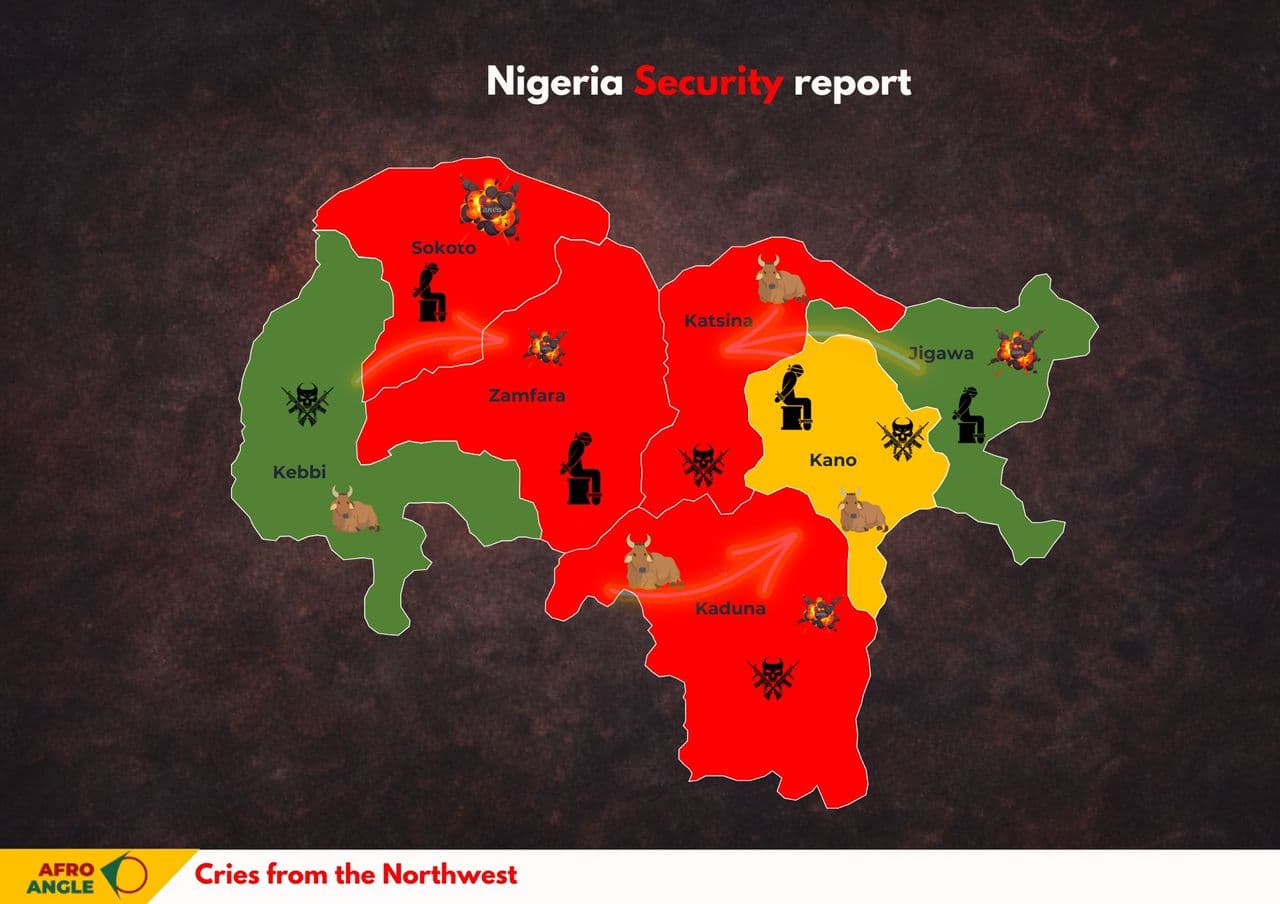
The opening weeks of the second quarter of 2026 indicate a continued deterioration in the security environment across Nigeria’s North-west. Civilian populations remain the primary victims, bearing the brunt of persistent bandit activity marked by killings, abductions for ransom, and widespread intimidation. Between April 5 and 12, attacks intensified across rural communities, triggering fresh displacement and reflecting an ongoing evolution in the operational patterns of armed groups.
The reporting period was defined by a surge in coordinated attacks and mass abductions. Dozens of civilians were killed or kidnapped, while livestock, an essential economic asset for rural households, was systematically rustled. In several instances, attacks extended beyond violence to include the looting of property and the burning of homes, compounding the humanitarian strain. This has accelerated population movements, with affected communities, particularly in Katsina State, fleeing to safer areas under increasingly precarious conditions.
While insurgent activity in the North-west maintains its momentum, emerging dynamics point to a more complex threat environment. Reports of clashes between the Islamic State in the Sahel Province (ISSP) and Jama’at Nusrat al-Islam wal-Muslimin (JNIM), potentially involving Lakurawa elements, suggest growing competition and interaction among jihadist actors. This reinforces concerns about the region’s deepening vulnerability as a convergence point for multiple armed groups.
Most notably, bandit factions are exhibiting clearer tactical adaptation. Recent incidents in Zamfara and Katsina indicate a shift toward the use of improvised explosive devices (IEDs), a development that could significantly alter the operational landscape. This transition signals not only an escalation in capability but also a potential shift toward more asymmetric and lethal tactics. Current state responses appear insufficiently calibrated to this evolution, raising concerns about the widening gap between threat dynamics and policy adaptation.
Week in Review
A comparative assessment of this reporting period against the previous week indicates a decline in overall security activity, albeit alongside a rise in lethality. Total recorded incidents fell from 36 to 25, a 31% reduction, suggesting a drop in the frequency of kinetic events. However, this decrease in volume does not reflect an improvement in the threat environment. On the contrary, the human cost remains significant.
Abductions declined from 398 to 160, a 60% reduction, but the absolute number of victims continues to underscore the persistent and systemic nature of the kidnapping threat facing civilian communities. More concerning is the increase in fatalities, which rose from 55 to 66, representing a 20% uptick. This divergence between frequency and lethality points to a shift toward fewer but more violent incidents.
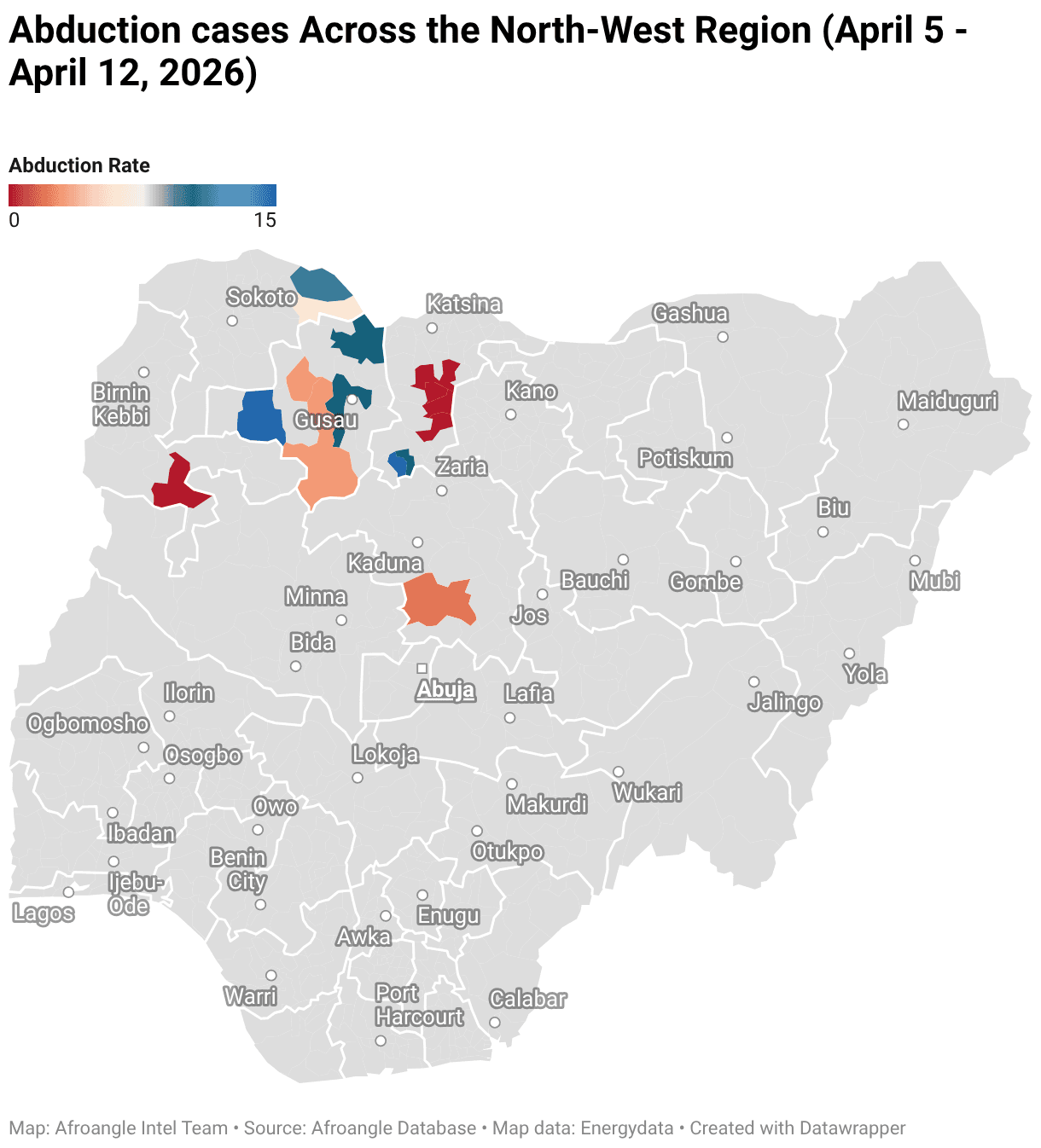
Geographically, violence remains heavily concentrated in Zamfara State, which recorded 8 incidents, 36 fatalities, and 81 abductions. This concentration reinforces Zamfara’s position as the operational epicentre of bandit activity and highlights the intensifying severity of violence despite fluctuations in incident counts. The cumulative effect is a worsening humanitarian situation, with sustained pressure on already vulnerable communities. At the same time, evolving bandit tactics suggest a trajectory that could further degrade both civilian security and the effectiveness of ongoing military operations.
Analysis: Armed Bandit Tactics and Implications for Civilian and Military Operations
Armed groups across the northern region are demonstrating a marked increase in the use of improvised explosive devices (IEDs), signalling a clear phase of tactical adaptation. While IEDs are not new to the region’s conflict environment, their growing frequency in the North-west represents a significant shift in operational behaviour.
This trend appears to have intensified following a recent U.S. airstrike in Sokoto targeting Lakurawa camps and associated bandit strongholds. In the aftermath, there has been a noticeable rise in the deployment of explosives along key roadways in Zamfara state. These devices have targeted a broad spectrum of actors, including civilians, military personnel, infrastructures such as bridges and in some cases, rival armed factions, indicating both tactical experimentation and expanding operational intent.
Recent incidents illustrate this shift. In Anka, an IED attack on a military convoy forced troops to abandon an Armoured Personnel Carrier (APC), which was subsequently looted by bandits, highlighting both the disruptive and opportunistic dimensions of these tactics. In a separate incident within the same area, an IED blast reportedly killed the wife of a prominent bandit leader alongside several of his bodyguards, underscoring the indiscriminate and unpredictable nature of these devices.
The implications for civilian life and military operations are significant. Critical transport corridors are increasingly at risk. An explosion along the Gusau–Funtua highway in Zamfara in early February disrupted the movement of goods and commuters, while another incident along the Takalafiya–Gadar Zaima road injured multiple civilians. These attacks are likely to constrain the flow of agricultural produce and humanitarian supplies, exacerbating existing economic and food security pressures in rural areas.
For security forces, the proliferation of IEDs presents a growing operational constraint. The presence of explosives along key routes is likely to slow troop movements, limit rapid response capabilities, and increase reliance on cautious, time-intensive clearance operations. This erodes operational tempo and creates tactical advantages for armed groups.
More broadly, the diffusion of IED tactics, long associated with insurgent activity in the North-east, into the North-west and North-central regions marks a critical evolution in the conflict landscape. This convergence of banditry and insurgent operational mode signals a more complex and potentially protracted threat environment.
In response, there is an urgent need for policymakers to scale up counter-IED capabilities, including the deployment of specialised detection and clearance units along high-risk corridors. Without a corresponding adjustment in strategy, armed groups are likely to continue refining and expanding the use of these tactics, further complicating both civilian protection efforts and military operations.
Outlook
In the coming weeks, armed bandit activity is expected to persist across the region, with continued focus on civilian communities and the systematic erosion of local livelihoods. At the same time, security forces are likely to intensify operations in an effort to increase tempo before the onset of the rainy season constrains mobility. This convergence, heightened military pressure alongside entrenched bandit presence, will likely sustain a volatile operating environment.
A key risk within this context is the continued expansion of improvised explosive device (IED) use. Armed groups will potentially increasingly deploy these tactics to disrupt military movements, impose costs on advancing forces, and shape the battlefield to their advantage. As a result, both civilians and security personnel, as well as rival armed factions, are expected to face an elevated threat from IED incidents in the near term.
In parallel, reported clashes between Jama’at Nusrat al-Islam wal-Muslimin (JNIM) and Islamic State Sahel Province (ISSP) elements in Kebbi State warrant close monitoring. Such inter-group competition has the potential to recalibrate local power dynamics, introducing an additional layer of instability as multiple armed actors contest influence. This dynamic risks further stretching already limited military capacity, particularly as forces contend with overlapping security challenges across multiple theatres.
Against this backdrop, there is a clear need to sharpen the focus of military operations. Intelligence-led targeting of insurgent networks operating along the Kebbi–Niger border should be prioritised, with the aim of disrupting these cells before they consolidate. Early targeted intervention will be critical to preventing their evolution into a more entrenched and operationally sophisticated threat that would prove significantly more difficult to contain over time.
Adam Abass
Adam Abass is a graduate student of political science and international relations. His research focuses on Middle Eastern politics, counter-terrorism, peace, and security in Africa.
comments
No comments yet