
Egbaliganza 2026 has renewed debates on the limits of innovation in expressing Yoruba cultural heritage
by
Listen to this article
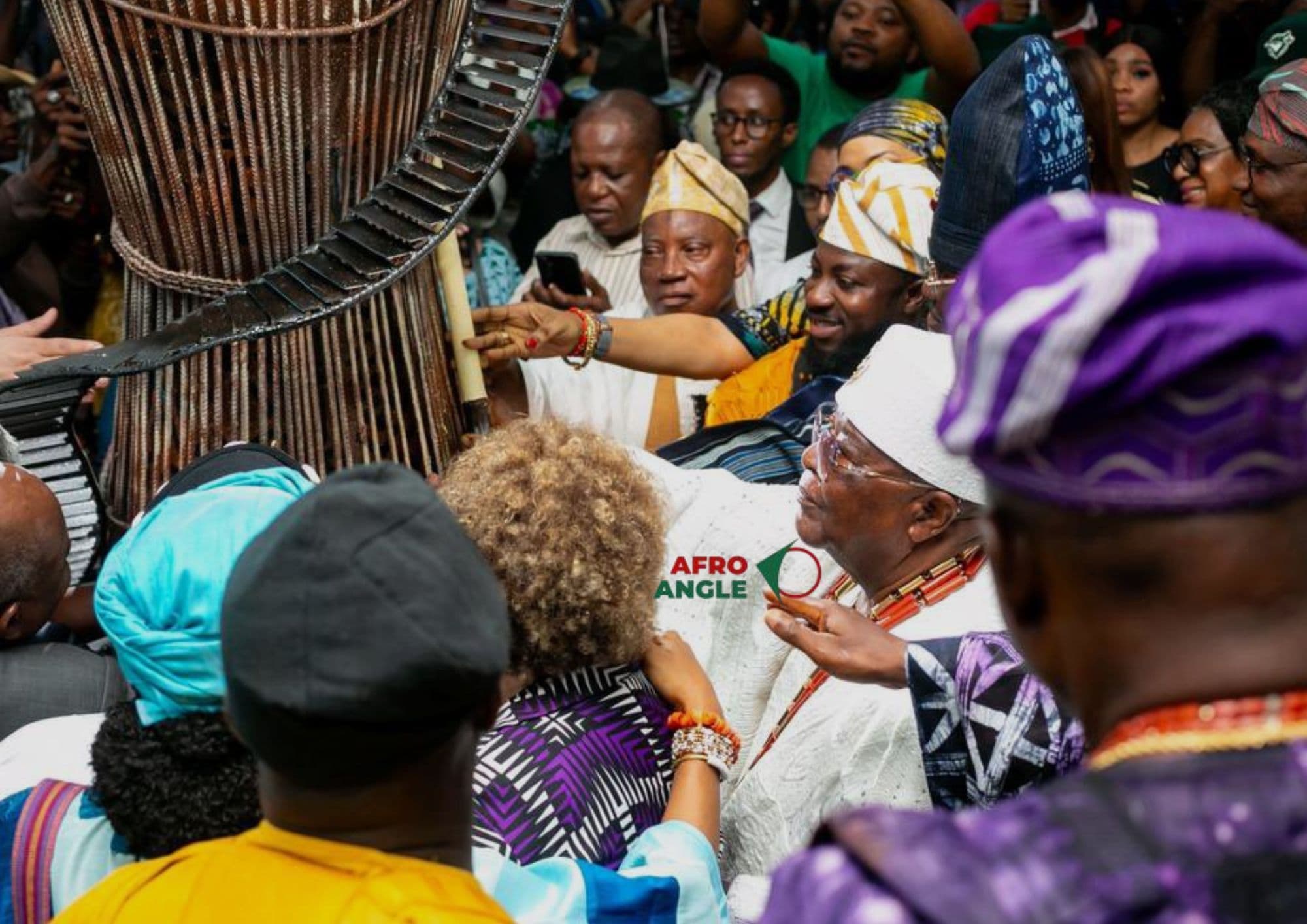
When the 39th Lisabi Festival ended on 28 March 2026 at Ake Palace in Abeokuta, it did more than honour Lisabi Agbongbo Akala, the 18th-century Egba warrior who led his people's revolt against the Oyo Empire's oppression. Rebranded as Egbaliganza 2026 under the vision of Aare Lai Labode and his Heritage Foundation, this week-long event closed with a Parade of Nations involving over 50 countries, an 80-man orchestral band, the unveiling of the world's tallest “Unity Drum,” and a high-profile fashion runway.
But what appeared to be the ultimate expression of Egba sartorial taste has also raised questions about the permissibility of innovation in preserving cultural heritage and whether it might inevitably dilute it. While these are important questions to ask, the festival’s blend of ancient reverence and contemporary flair offers a compelling case that thoughtful evolution is not only permissible but essential for keeping traditions alive in a globalised age.
For many years, Lisabi Day has been the heartbeat of Egba identity. Celebrated annually to commemorate freedom, resilience, and communal unity, the festival traditionally features warrior reenactments, homage-paying rites, and gatherings of the four Egba subgroups: Ake, Owu, Oke-Ona, and Gbagura. This standard practice for the Egba people has been a sacred space for drumming, dancing, and ancestral veneration.
In 2026, however, Labode's Egbaliganza introduced a new development: a full-scale cultural fashion exchange that insisted every showcased outfit — from Àdìrẹ to Aṣọ Òkè — be conceived, woven, dyed, cut, and stitched by Abeokuta artisans. The aim, according to him, is to turn heritage into hard currency, empower thousands of local tailors and creatives, and position Egbaland as a global fashion and tourism hub. Labode himself explained that it is about building an economy, with diaspora investments exceeding $2 million and ambitions to dramatically expand Africa's culture-and-fashion valuation.
The Social Media Debate
On X (formerly Twitter), reactions were swift and divided. Some users praised the festival as a masterclass in cultural rebranding, arguing that it has made Egba heritage attractive to a younger and more global audience, noting that it also drew dignitaries including former President Olusegun Obasanjo.
Meanwhile, some critics described the event as an adulteration of culture and a social miscarriage of Yoruba identity, pointing to outfits that struck them as theatrical and dissonant with Yoruba tradition. What these critics raised highlighted the need to scrutinise modernisation that risks erasing the ancestral heritage and spiritual essence at the heart of this remembrance of Lisabi's legacy.
This tension between cultural preservation and innovation is not new. Cultures evolve in response to changing social, political, and economic realities. In fact, UNESCO's framework for intangible cultural heritage explicitly emphasises that living traditions must adapt to survive. From this standpoint, Egbaliganza's transformation can be seen as an adaptation strategy, one that ensures cultural continuity by making heritage relevant to contemporary audiences. What emerges from these debates is a more nuanced understanding of cultural preservation. The challenge, therefore, is not whether innovation is permissible, but how it is guided. Innovation anchored in historical consciousness can deepen cultural engagement. Innovation that detaches from context, however, risks hollowing out the very traditions it seeks to celebrate.
The Comparison Between Egbaliganza Costume and Roman Empire Soldiers
This comparison was the most widely aired on X in regard to this year's Lisabi Day celebration. The argument, however, is less about historical accuracy than about anxieties over authenticity and representation. In the case of the Roman Empire, military dress was highly codified and functional. Roman soldiers wore the lorica segmentata(segmented metal armour), short tunics, leather sandals (caligae), and distinctive helmets often crested with horsehair plumes. These elements were not merely aesthetic; they reflected the empire's bureaucratic discipline, technological organisation, and emphasis on uniformity.
By contrast, Egba cultural expression, rooted in the history of the Egba people of southwestern Nigeria, has historically been far less about uniformity and more about symbolism, hierarchy, and individuality within a shared tradition. Traditional Egba attire, like broader Yoruba dress, emphasises flowing fabrics such as agbada, bùbá, and ìró, often made from handwoven textiles like aso-oke. These garments signal status, lineage, and occasion rather than conformity. Even in moments of collective identity such as festivals, ceremonies, or war mobilisation, dress was expressive rather than standardised, shaped by local aesthetics, climate, and social meaning.
So while some Egbaliganza outfits evoke Roman imagery, they are not inherently Roman. Instead, they draw on a broader, global visual language of power and spectacle. When applied to Egba-inspired designs, however, they can create a hybrid aesthetic that feels unfamiliar, even dissonant, to those expecting strictly traditional forms. The lesson here is that Egbaliganza's sartorial expression must always be grounded in indigenous symbols, so that the line between reinterpretation and distortion is not blurred; the costume must retain its purpose of communicating something recognisably Egba.
Ultimately, the conversation around Egbaliganza reflects a broader cultural moment across Africa, where societies are reimagining how to preserve heritage in the face of globalisation and digital transformation. Innovation is inevitable, but the real question is whether it remains accountable to the histories and communities it represents.
Abdulkabeer Tijani
Abdulkabeer Tijani is a Nigerian freelance journalist and visual storyteller with expertise on Nigeria’s media landscape. He has written for leading international media outlets including Al Jazeera, Minority Africa, International Journalists Network, The Continent, University World News and The Republic.
comments
No comments yet