
EID-AL-FITRI IN PICTURES: HOW MUSLIMS CELEBRATED IN NIGERIA
by
Listen to this article
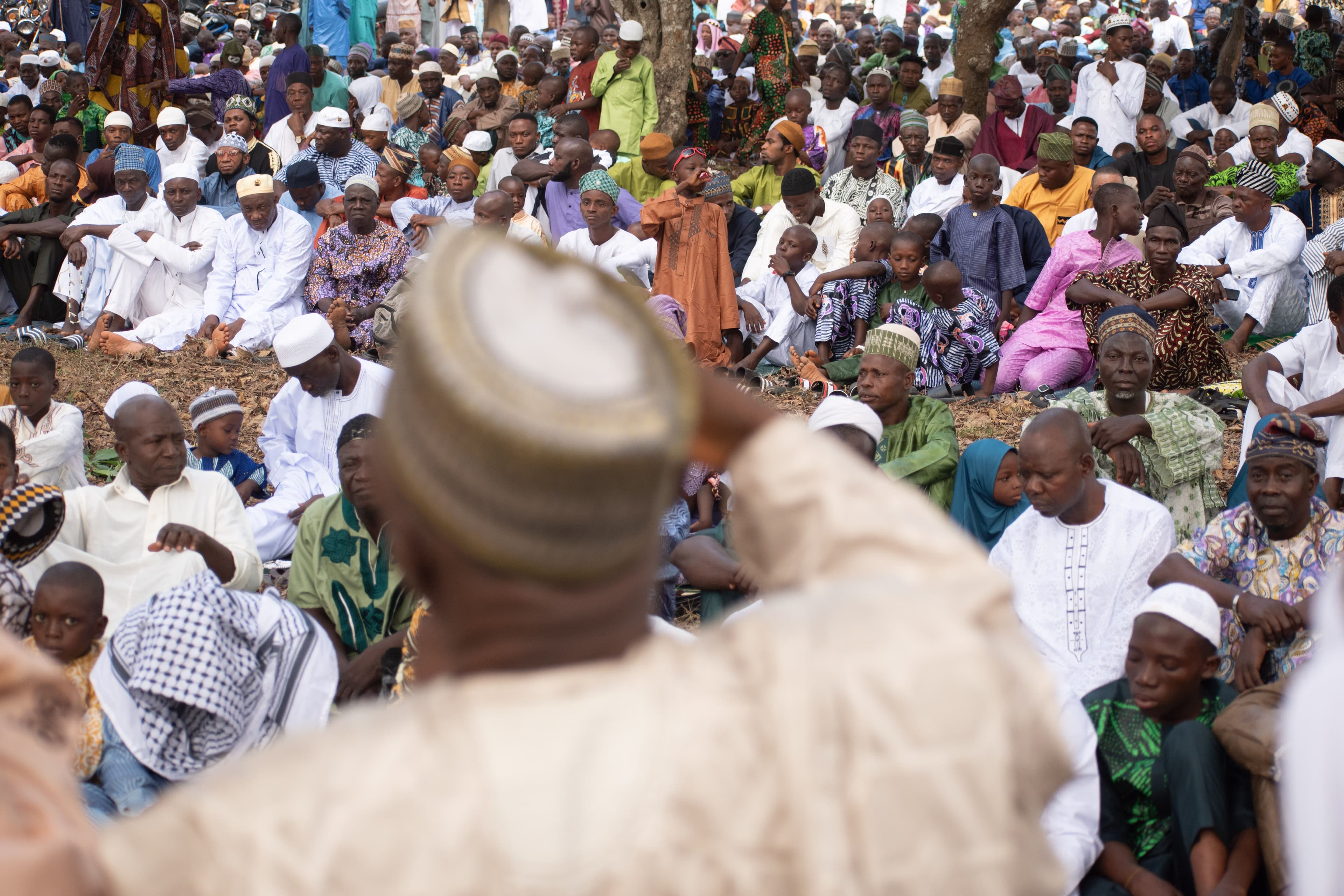
On Friday, March 20, 2026, Muslims across Nigeria joyfully marked the celebration of Eid al-Fitr, the festival that concludes the holy month of Ramadan with communal prayers, reflection, and renewed spiritual commitment. Following the Sultan of Sokoto's official declaration after no crescent moon was sighted for Shawwal 1447AH, thousands gathered in mosques, open fields, and Islamic centers nationwide for the special Eid salah. The Federal Government had already designated Thursday, March 19, and Friday, March 20, as public holidays, allowing families and communities to come together in celebration after a month of fasting, increased worship, and charity.
In cities and towns from Ibadan to Lagos, Abuja to Maiduguri, worshippers dressed in their finest traditional attire flowing white robes, colorful embroidered caps, agbada, and jalabiyas, filled mosque courtyards in scenes of profound unity and devotion. Large congregations, assembled under open skies or within arched architectural spaces, sitting shoulder-to-shoulder in anticipation of the two-rakat prayer led by imams. The air resonated with takbir (Allahu Akbar chants), sermons emphasizing gratitude, forgiveness, and social harmony, while the diverse crowd reflected Nigeria's rich ethnic and cultural diversity within the shared bond of faith.
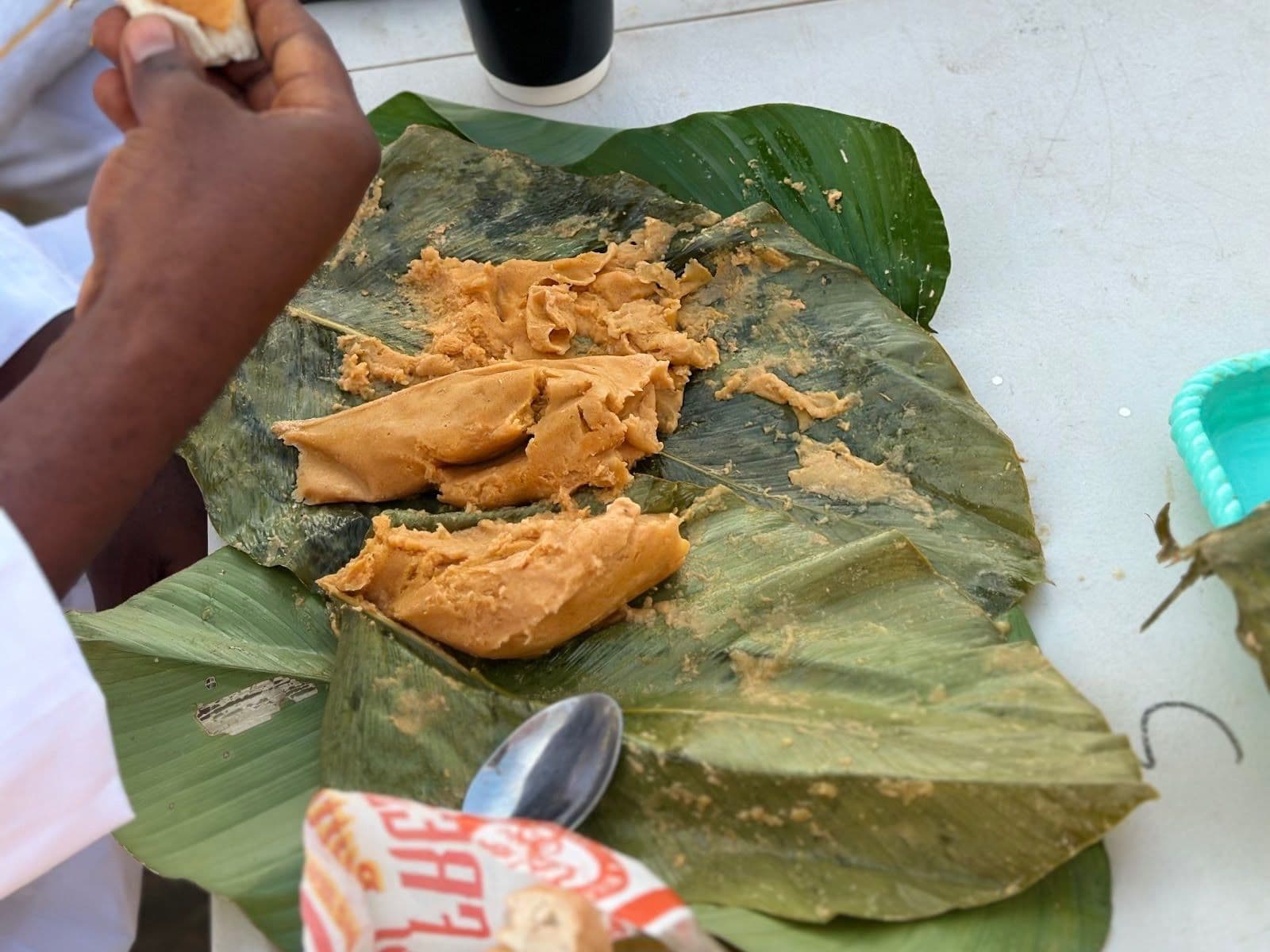
IBADAN: This tells a story of what begins the day in a Yoruba house during Islamic festival. Some people eat omelette and bread, an English breakfast. But here, it's a proper Yoruba meal. A moment of family bonding a culinary taste amplifies.
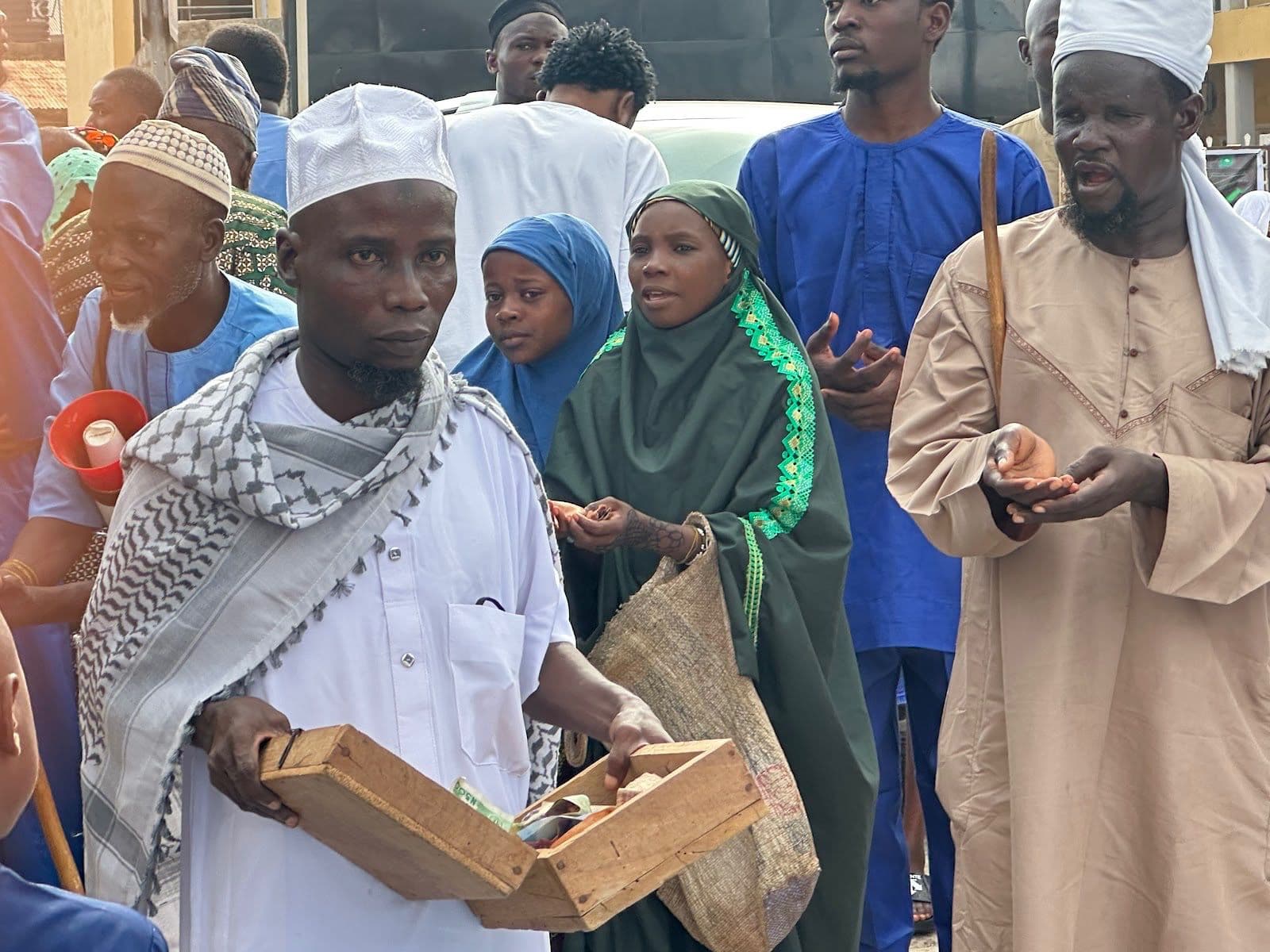
IBADAN: A Muslim man holds the offering box after prayer, signaling to the congregations that they should contribute to the cause of Allah in cash.
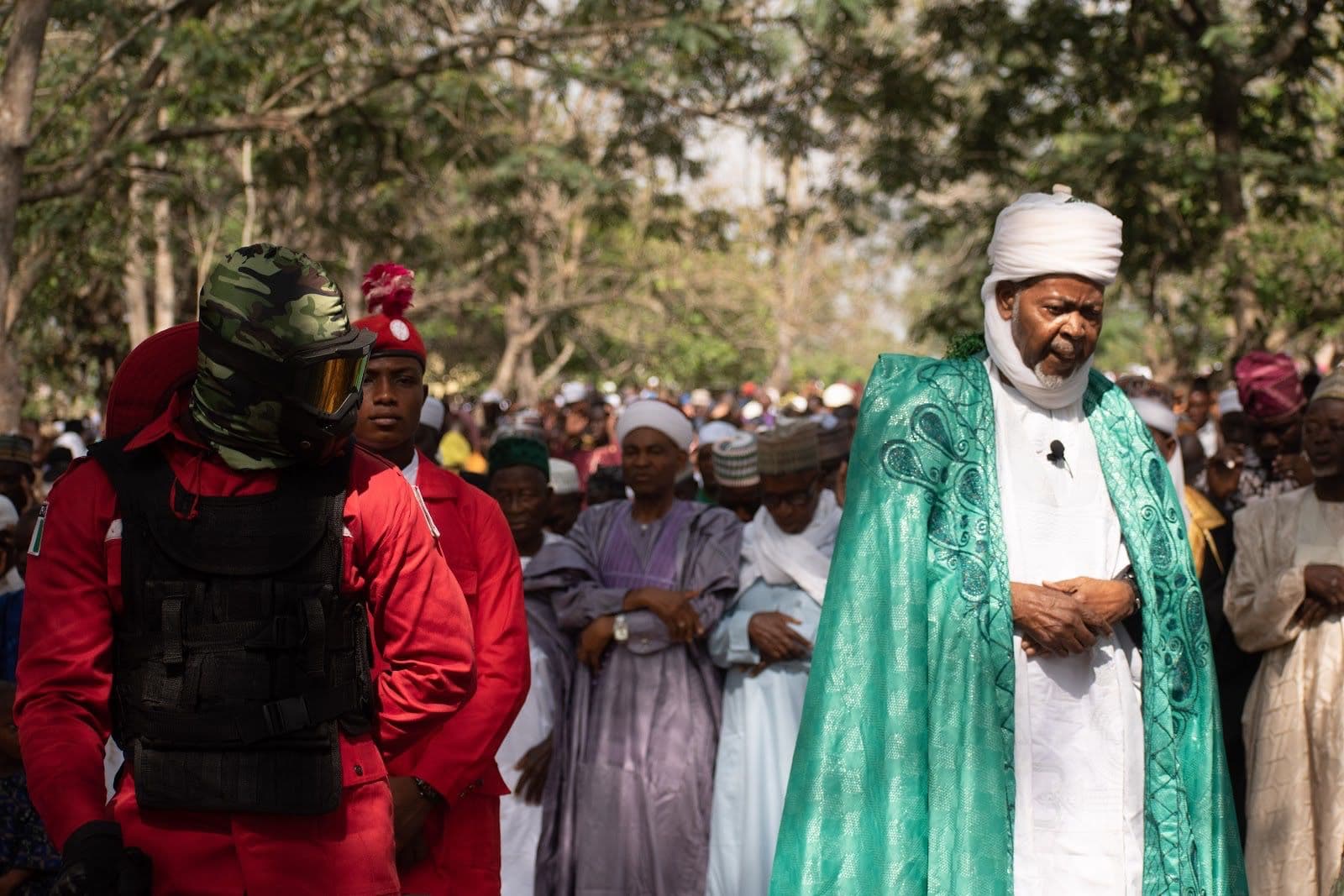
EJIGBO: A moment of Muslim Eid prayer under watchful eyes, where faith, authority, and security coverage in a fragile balance of reverence and tension.
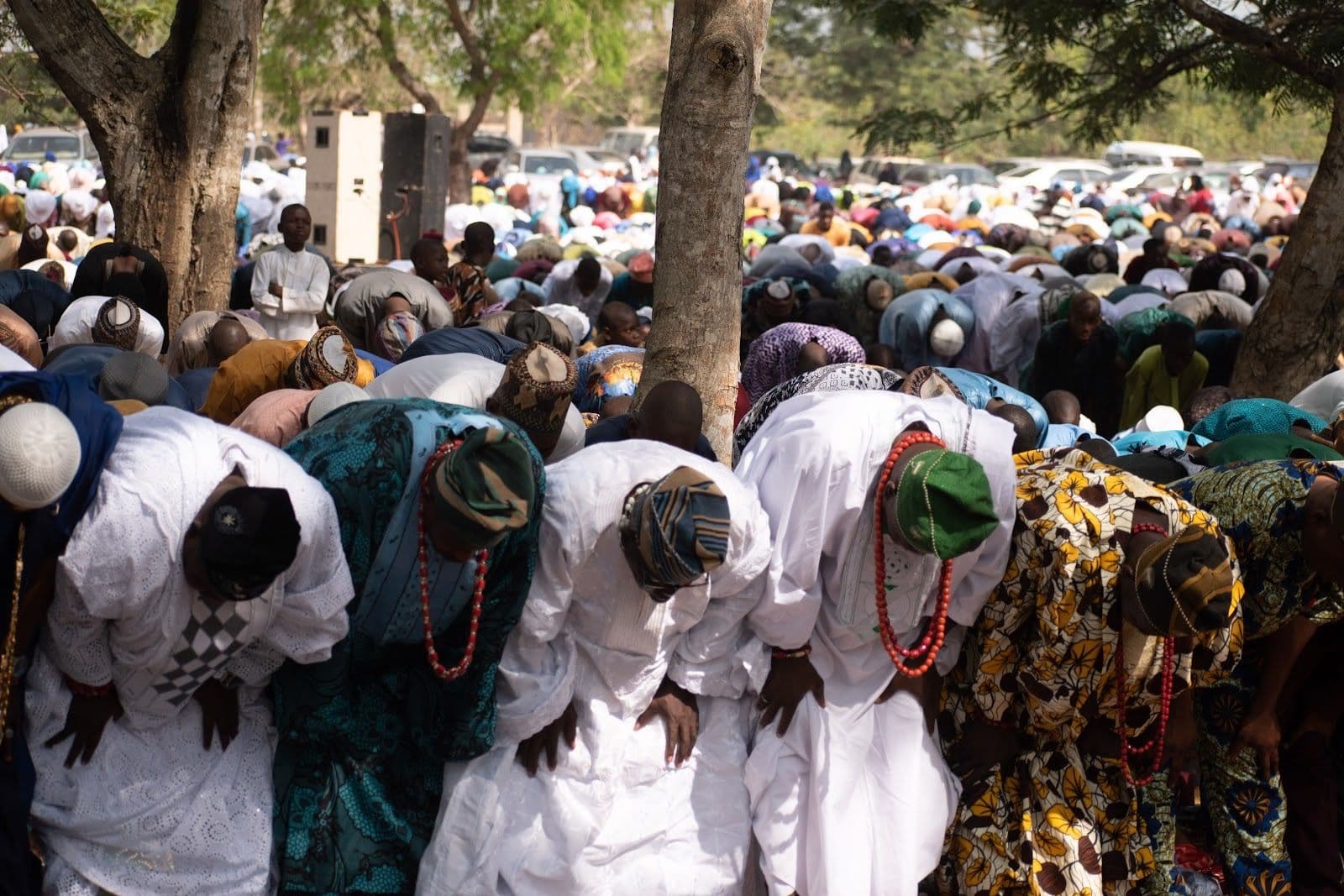
EJIGBO: Thousands gather for Eid prayers in an open field, their devotion creating a sea of white and color under the shade of acadia trees.
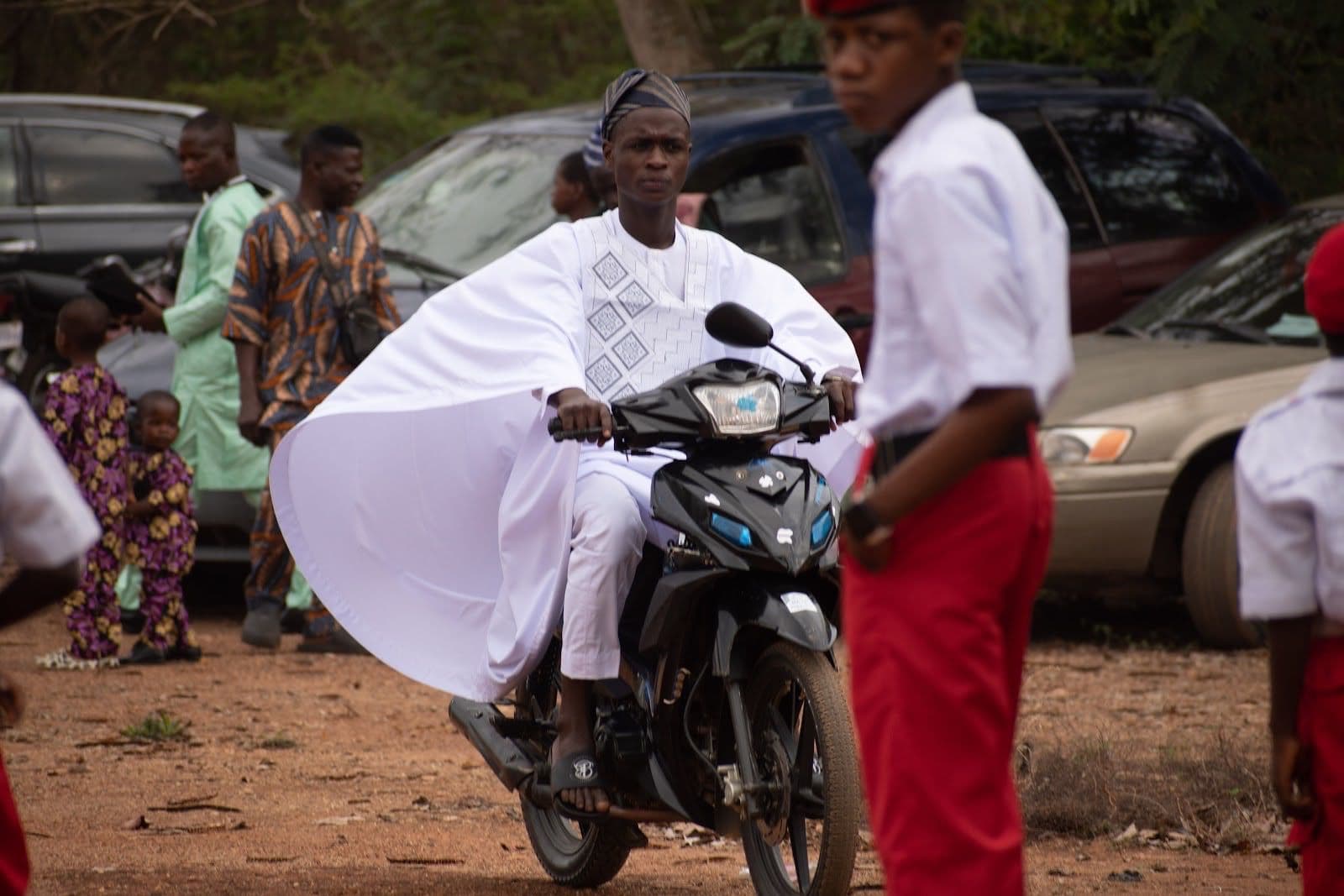
EJIGBO: A man in flowing white traditional attire arrives on a motorcycle at Eid prayer gathering in Nigeria, his robe billowing dramatically as he navigates the dusty ground amid parked vehicles and waiting attendees.
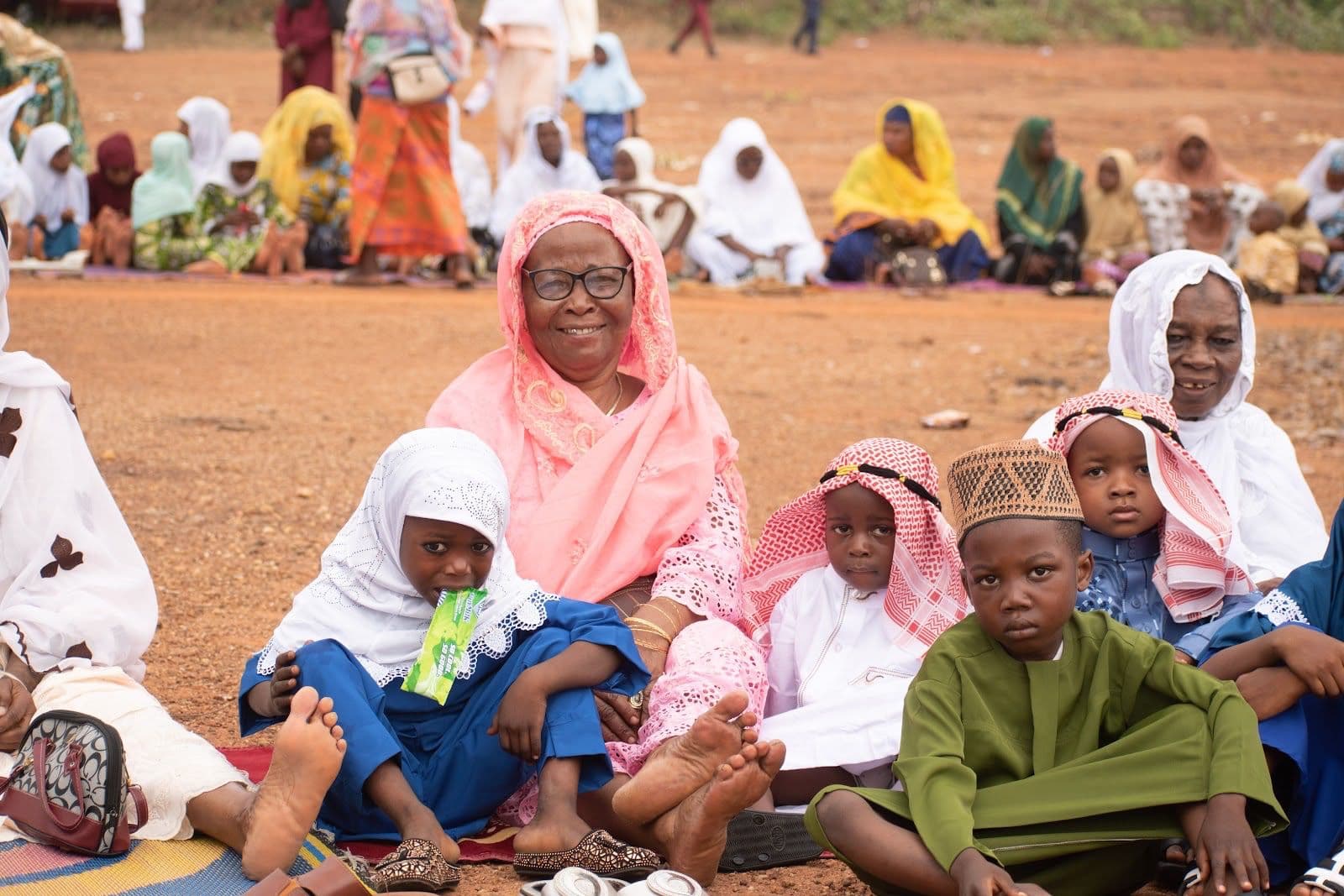
EJIGBO: A generation of families come together on the dusty ground during Eid celebrations in Nigeria: an elderly woman in a pink headscarf smiles warmly beside young children in colorful traditional outfits, as women in vibrant hijabs and wrappers sit in the background under the open sky.
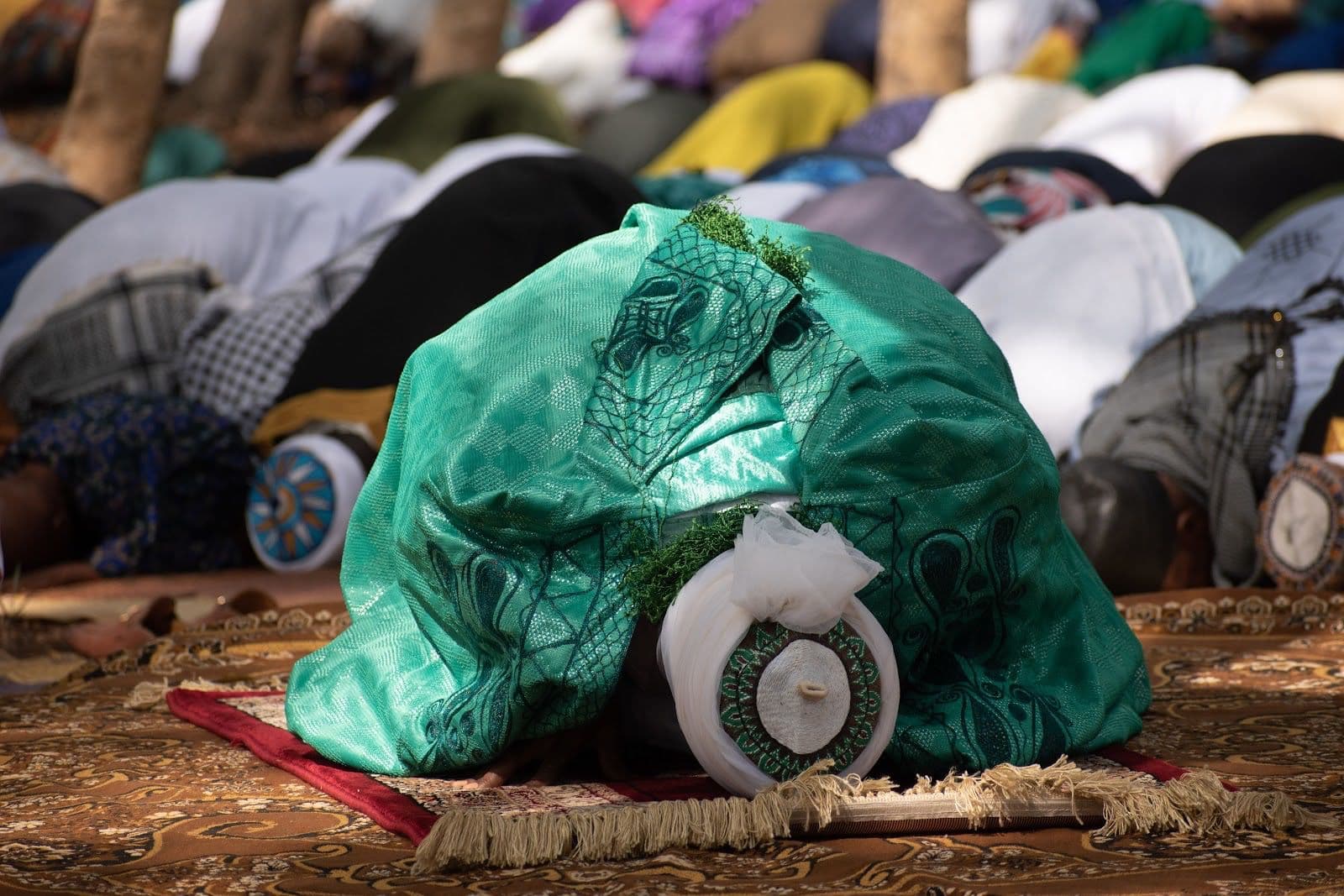
EJIGBO: The image captures a profound moment of collective devotion during eid prayer in Nigeria where worshippers perform “sujud (prostration), the ultimate act of submission in Islam.
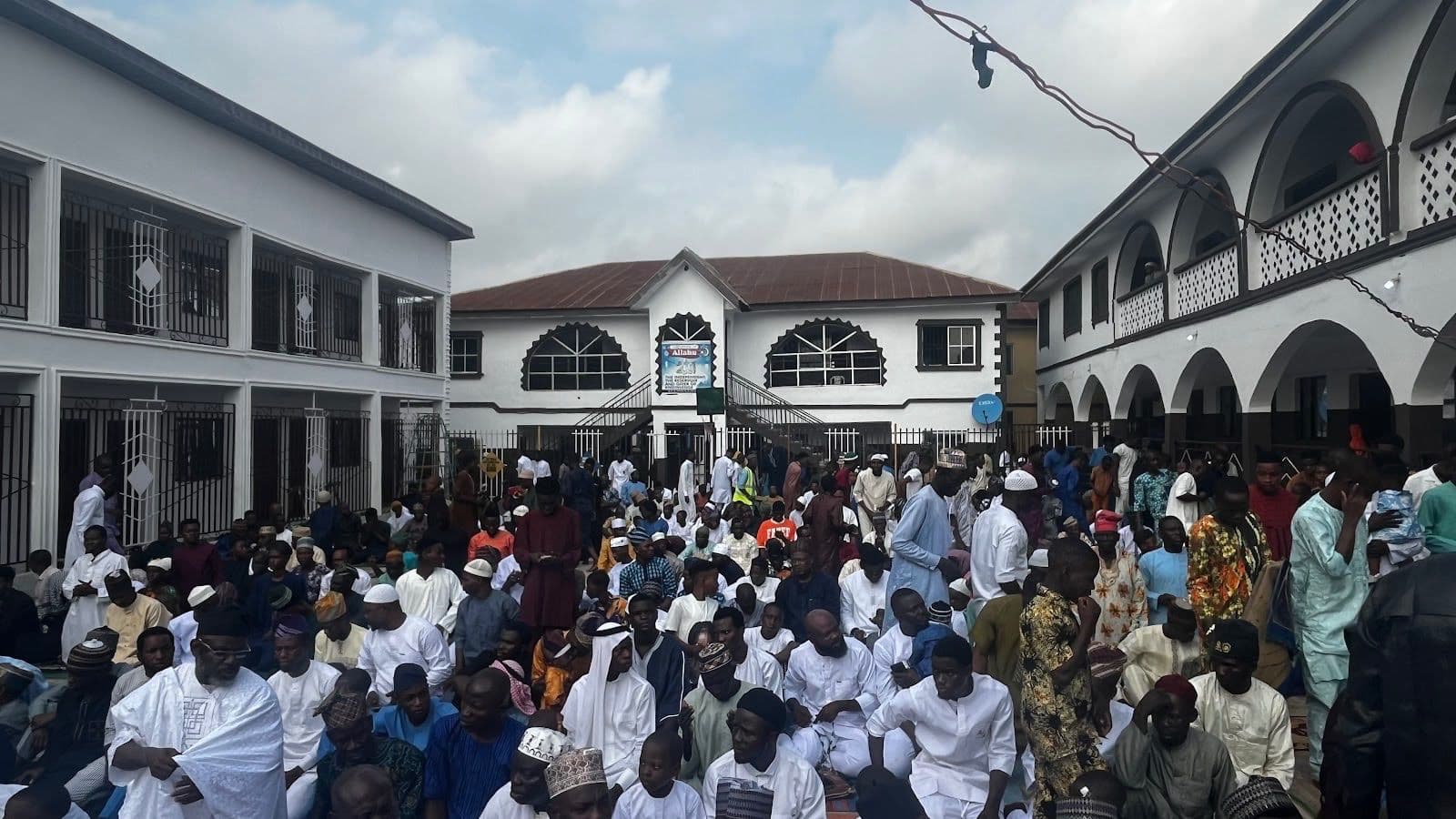
IBADAN: The image depicts a large congregation of Muslim men gathered for prayer in the courtyard of an Islamic center in Nigeria. Hundreds of worshippers, dressed in diverse traditional attire, ranging from flowing white jalabiyas and embroidered caps to colorful agbada, babanriga, and simple robes sit closely together on prayer mats under an open sky, facing the qibla toward the building's arched facade.
This fusion of culture and religion is no accident but a hallmark of Nigerian Islam's enduring strength. Islam, introduced centuries ago through trade routes and scholarly migrations, has absorbed and elevated local customs whether in the elaborate headwear that signifies status and devotion, the communal feasting that follows prayers, or the intergenerational participation that includes children cradled among elders. In a diverse nation like Nigeria rooted in ethnic division, these gatherings underscore how religion serves as a unifying force, harmonizing indigenous artistry, social norms, and Islamic piety into something distinctly local yet universally profound.
Ultimately, today's Eid embodies hope and continuity: a reminder that culture and religion enrich each other to foster community, generosity, and peace. As families return home to share meals, exchange gifts, and extend charity, the spirit of Eid al-Fitr lingers beyond the prayer mats, reinforcing bonds that bridge differences and affirming Nigeria's vibrant Islamic heritage as a source of national cohesion in an ever-changing world.
Abdulkabeer Tijani
Abdulkabeer Tijani is a Nigerian freelance journalist and visual storyteller with expertise on Nigeria’s media landscape. He has written for leading international media outlets including Al Jazeera, Minority Africa, International Journalists Network, The Continent, University World News and The Republic.
comments
Abdulrauff Bushrah Temitope
27w
Awesome ✨✨