
How Foreign Militants are Reshaping Insurgent Operational Capabilities
by
Northern Nigeria Security Situation Report (July 19 – July 26, 2026)
Introduction
The Nigerian military continued to sustain their air campaign against ISWAP across the Lake Chad Basin, maintaining the operational pressure that has characterised the military's counter-terrorism strategy since the decapitation of the group's leader, Abu Mainuki, in May. The latest airstrike reportedly killed 15 ISWAP fighters in Marte, further extending a campaign that appears to be generating tangible operational effects. Beyond battlefield losses, sustained military pressure has continued to trigger defections within the group's leadership. During the reporting week, a senior ISWAP finance operative reportedly surrendered alongside 46 fighters and family members, reinforcing a trend that has persisted in recent weeks. The growing wave of defections continues to place pressure on ISWAP's command structure and operational cohesion. Notably, the group has reportedly not conducted any major attacks against military formations in the North-East in recent weeks, suggesting that the current campaign is constraining its ability to organise large-scale offensive operations.
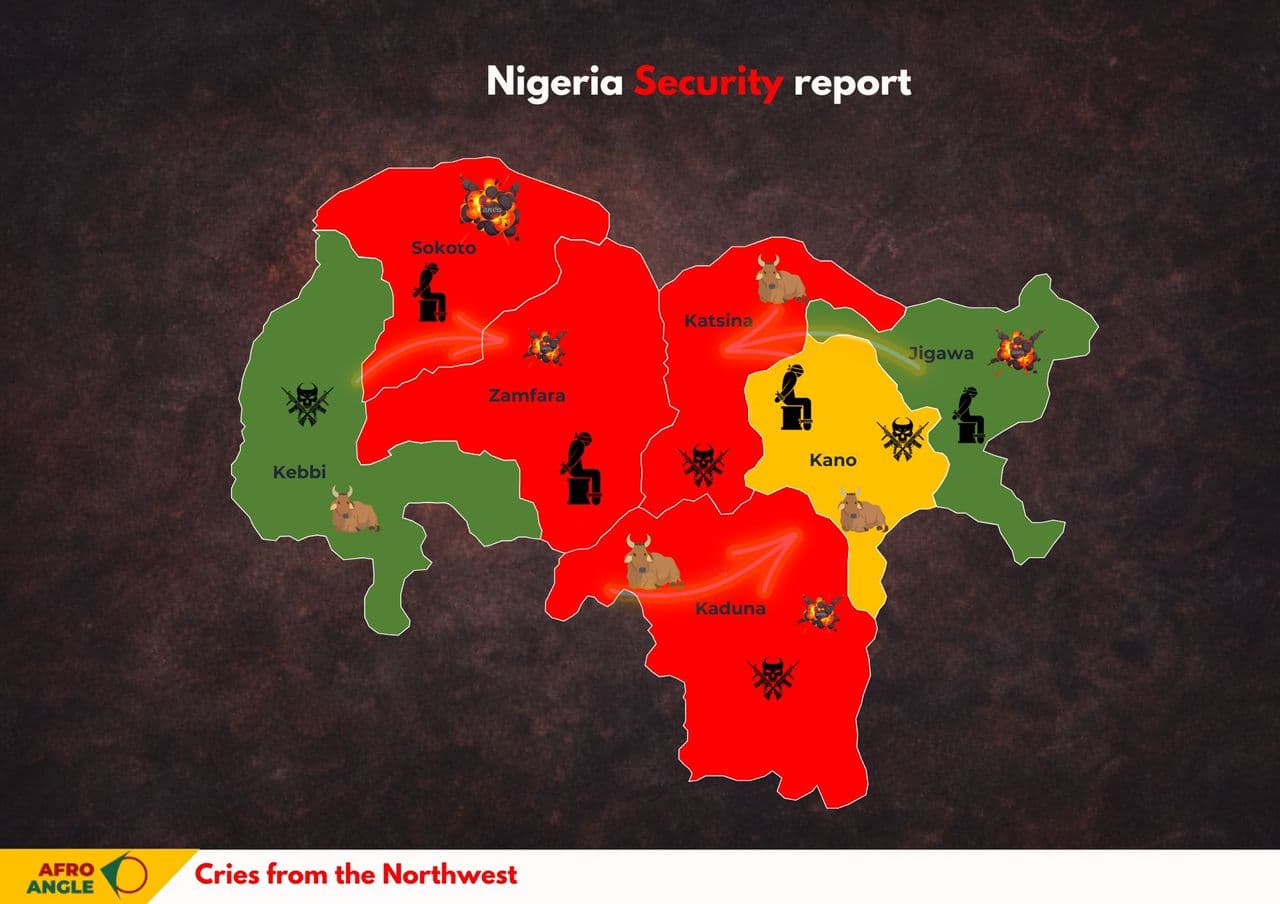
The North-West, meanwhile, remained highly volatile as armed bandit groups sustained attacks against civilian communities through killings, kidnappings, and looting. A notable trend during the reporting period was the increasing targeting of influential local figures, indicating that armed groups may be expanding their target selection beyond rural civilians. In Kebbi State, a High Court judge was abducted in Bunza Local Government Area, while in Zamfara State, the Chairman of Bungudu Local Government was kidnapped in a separate incident.
During the week, the Federal Government also announced a significant expansion of the Nigerian Army's force structure, increasing the number of army divisions from eight to twelve with the establishment of new divisions in Ilorin, Makurdi, Jalingo, and Benin City. The expansion reflects an effort to position military assets closer to emerging security hotspots, improve force projection, and shorten response times across multiple theatres.
Another notable development was the military's continued crackdown on foreign fighters operating within insurgent networks in the North-East. Recent operations reportedly identified and neutralised several foreign operatives while leading to the arrest of others linked to terrorist activities. The presence of foreign fighters within Nigeria's insurgency is not new, but recent findings suggest they increasingly serve as trainers, technical specialists, facilitators and sometimes leading battlefield operations. Their roles reportedly include providing expertise in areas such as explosives, drone operations, and other specialised capabilities. Continued efforts to disrupt these networks could therefore have implications beyond reducing insurgent manpower by limiting the transfer of technical knowledge, weakening external support networks, and constraining the group's ability to adapt operationally over the longer term.
Weekly Review
Open-source data collected across the North-West indicates a further deterioration in the region's security environment, with increases recorded across all major security indicators during the reporting week. Security incidents rose from 28 to 31, representing an 11% increase from the previous week. Fatalities more than doubled, increasing from 30 to 61, a 103% rise, while abductions surged from 46 to 107 victims, marking a 132% increase. The sharp increase in fatalities and kidnapping suggests that armed groups are sustaining high operational tempo in attacks against civilian communities.
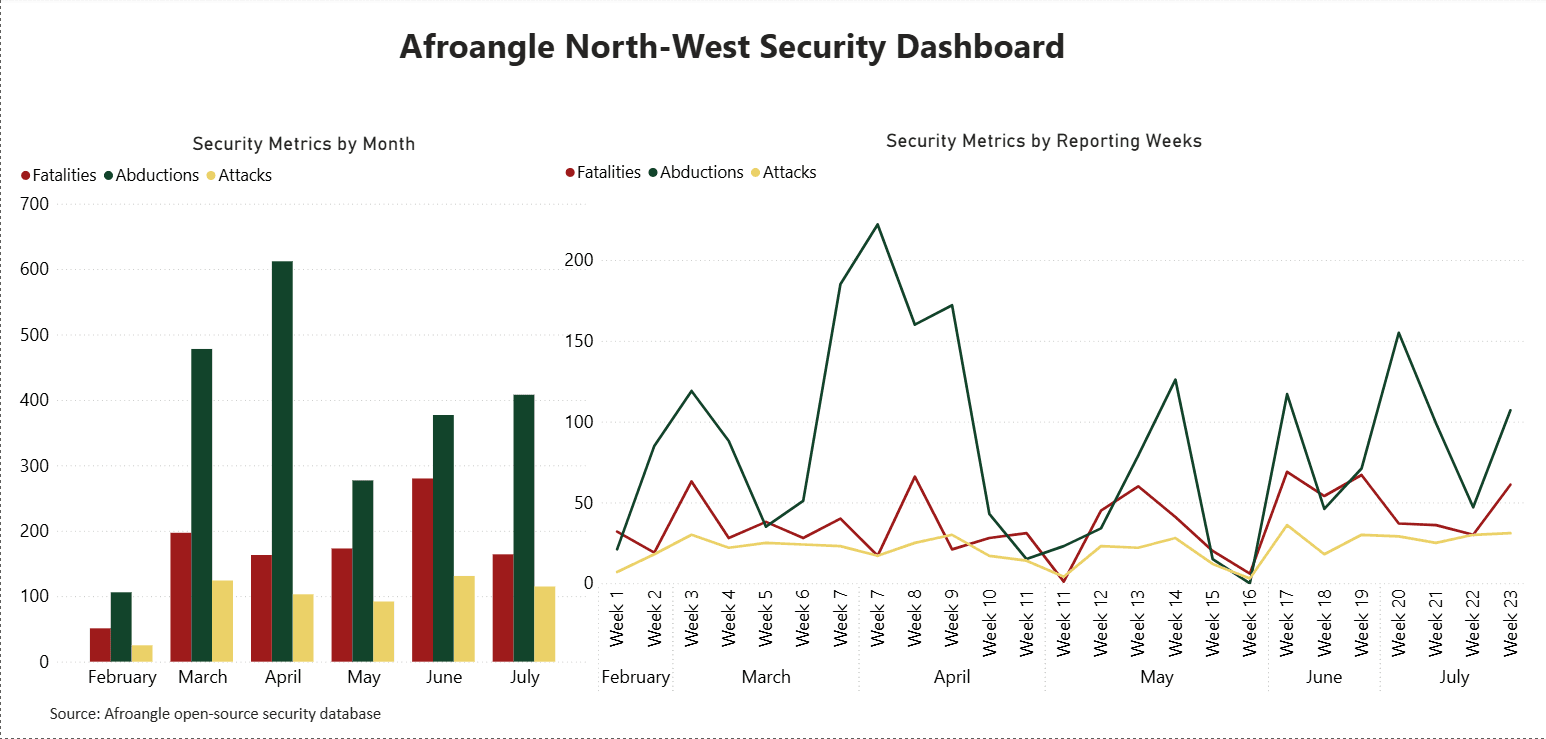
At the state level, Sokoto and Katsina remained the principal centres of armed group activity, recording 12 and nine incidents respectively. Zamfara accounted for the highest number of fatalities with 35 deaths, followed by Sokoto with 18, reinforcing both states' position as the region's most violent theatres during the reporting period. Abduction remained concentrated in Sokoto and Katsina, which recorded 62 and 43 kidnapped victims respectively, underscoring the continued reliance of armed groups on kidnapping as both a revenue-generating activity and a means of exerting control over vulnerable rural communities.
Analysis: Foreign Fighters are reshaping the insurgency landscape
The recent recovery of ISWAP propaganda materials following the killing of one of the group's cameramen offers another reminder that foreign involvement within Nigeria's insurgency remains both active and operationally significant. Forensic analysis of the recovered equipment reportedly identified propaganda footage alongside evidence linking several foreign nationals to the group, including a Palestinian Arab identified as Abu Ishaq, believed to be ISWAP's chief trainer, a Moroccan reportedly serving as the group's medical doctor, and another unidentified Arab operative whose identity remains under investigation. Days earlier, Nigerian troops reportedly killed a Syrian national during a failed ISWAP attack, while a suspected Arab fighter escaped. The arrest of a Nigerien national accused of espionage in Borno further reinforces indications that foreign operatives continue to play diverse roles within the insurgency.
The presence of foreign fighters in Nigeria is not a new phenomenon. Since the emergence of Boko Haram, the insurgency has attracted operatives from Algeria, Sudan, Mauritania and neighbouring Sahelian states. Figures such as Khaled al-Barnawi and Abu Muhammed Amir al-Masri illustrate how foreign militants have long contributed to the ideological development and organisational growth of jihadist groups operating in the Lake Chad Basin. Recent reports indicate that approximately 16 foreign terrorist fighters have been arrested in Nigeria over the past 14 months suggesting this network remains active.
What appears to be changing, however, is the function these foreign fighters perform. Earlier generations were primarily associated with spreading extremist ideology, providing religious legitimacy and facilitating links with transnational jihadist movements. The current wave appears increasingly specialised. The reported presence of foreign trainers, medical personnel and technical operatives suggests ISWAP is seeking expertise rather than simply additional manpower.
This trend is likely being sustained by long-standing structural weaknesses along Nigeria's borders. Porous frontiers, limited biometric screening, and inconsistent intelligence sharing with neighbouring states continue to provide opportunities for foreign operatives to move across the region with relative ease. While military pressure has disrupted parts of ISWAP's leadership structure, preventing the continued inflow of foreign expertise will require a stronger regional intelligence architecture alongside more coordinated border security operations. If left unchecked, the growing presence of specialised foreign operatives could enhance ISWAP's technical capabilities even as the group experiences leadership losses.
Outlook
In the coming weeks, the North-East is likely to remain the focus of sustained counter-terrorism operations, particularly across the Lake Chad Basin, as Nigerian forces continue targeting ISWAP leadership and operational strongholds. Continued military pressure may trigger additional surrenders among mid- to senior-level ISWAP commanders, particularly if ongoing operations further disrupt the group's command structure and leadership succession.
The North-West is expected to remain highly volatile, with armed bandit groups continuing attacks on civilian communities, particularly in vulnerable rural areas across Sokoto, Katsina, and Zamfara. Kidnapping for ransom is likely to remain a key operational tactic, while security forces are expected to sustain offensive operations targeting known bandit enclaves and forest hideouts. Across the North-Central, security forces are expected to maintain an elevated operational presence in flashpoints vulnerable to communal violence, particularly in Plateau, Benue, and parts of Niger State.
Afroangel Intel Admin
Afroangle Intel Admin
comments
No comments yet