
Patterns Driving the Violence Cycle in Plateau
by
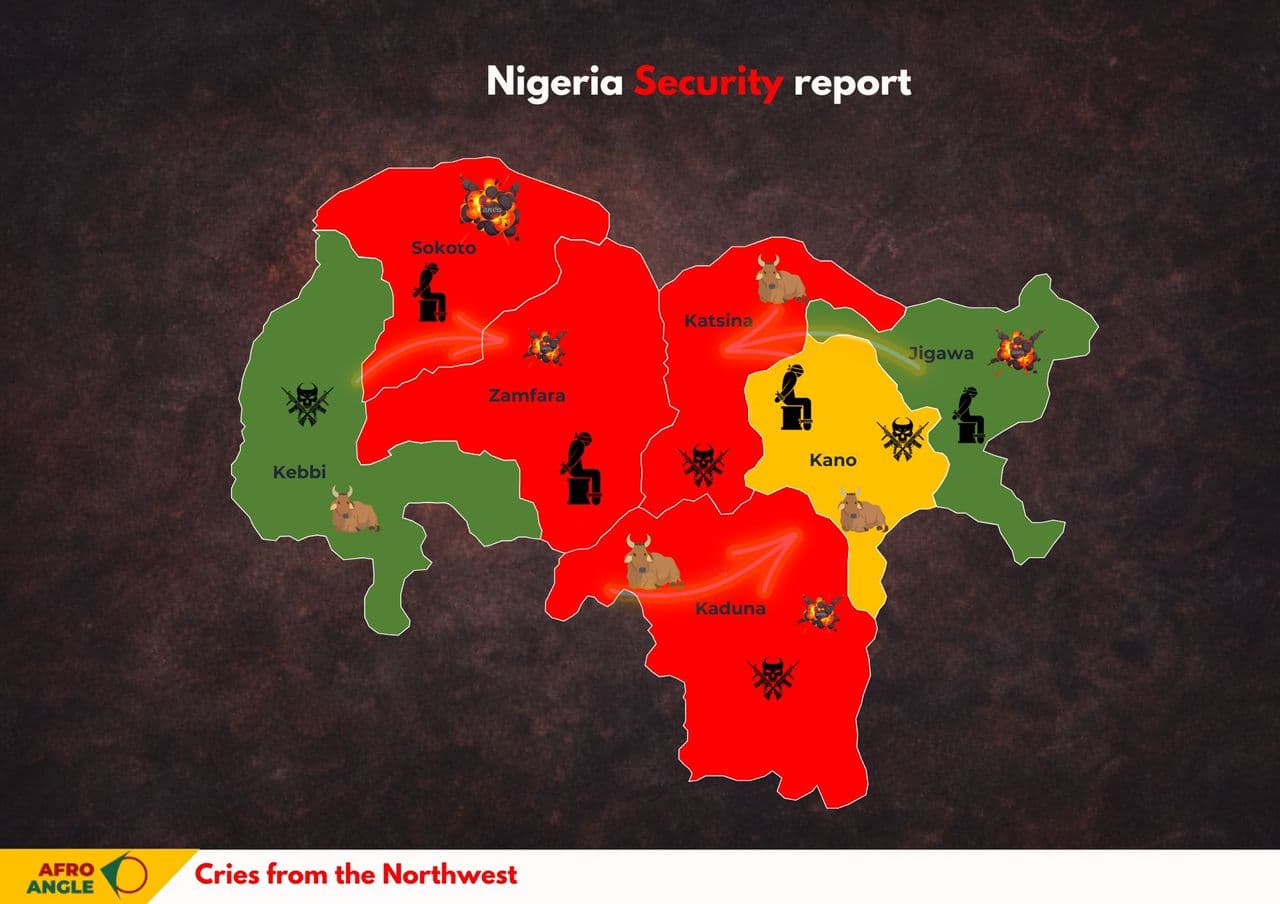
Northern Nigeria Security Situation Report (August 23–30, 2026)
Introduction
The north-eastern theatre continues to experience increased military pressure, with the Nigerian military conducting intensified ground and air operations against ISWAP around the Kukawa axis and extending towards the wider Lake Chad area. The offensive has increasingly disrupted the movement of fighters and the group's logistical corridors and supply chains. In a precision airstrike in Kangarwa, Kukawa Local Government Area, the military reportedly neutralised several terrorists and destroyed 12 logistics boats.
Although the destruction of these boats may appear relatively minor, they serve an important role in the group's ability to move personnel, weapons, food and other supplies between operational locations, particularly across the Lake Chad waterways. Disrupting these routes therefore affects more than the group's immediate mobility. It also puts pressure on the wider logistics system that sustains its operations. The offensive forms part of Nigeria's continued effort to maintain the operational gains from the May Nigeria-US joint operation and further weaken ISWAP's ability to operate around the Lake Chad area.
A similar insurgent turf war that has characterised the north-east is also emerging in the north-central region. Reports indicate clashes between Mahmuda and Lakurawa around the Kainji-Borgu axis in Niger State, reportedly driven by competition over control of communities and resources in the area. Some reports also claim that senior Lakurawa commanders, including Abu Sufyan, who was reportedly in charge of operations in Kebbi State, and Mukhtar Bin Al-Jasi, the group's chief in Illela, were killed during the clashes. However, the Afronagle intelligence team could not independently verify these reports.
Meanwhile, The New York Times reported that the United States Pentagon is preparing to withdraw the 200 US troops deployed to Nigeria to support counter-terrorism operations in the north-east. The reported withdrawal comes after several months of operational cooperation that produced notable gains against ISWAP.
Since the beginning of August, Plateau State has also experienced a renewed wave of ethnic and communal violence, shaped by the state's complex ethnic and religious composition. The violence reflects existing structural drivers and recurring patterns that have characterised conflict in the state for years. This week's report examines these patterns and the response from state authorities, with a particular focus on how the cycle of violence continues to reproduce itself across communities.
Weekly Review
The reporting period recorded a significant increase in security activity, particularly in the north-west, alongside continued military pressure against ISWAP in the north-east. In Katsina State, an incident in Funtua Local Government Area resulted in the abduction of at least 15 civilians working on their farms. Two separate incidents in Kaduna and Zamfara states also resulted in the abduction of 20 civilians each. The Kaduna incident occurred along the Giwa-Yakawada road and also resulted in the killing of one civilian, while the Zamfara incident occurred along the Tsafe-Funtua road. The attacks highlight the continued vulnerability of major road corridors to bandit attacks.
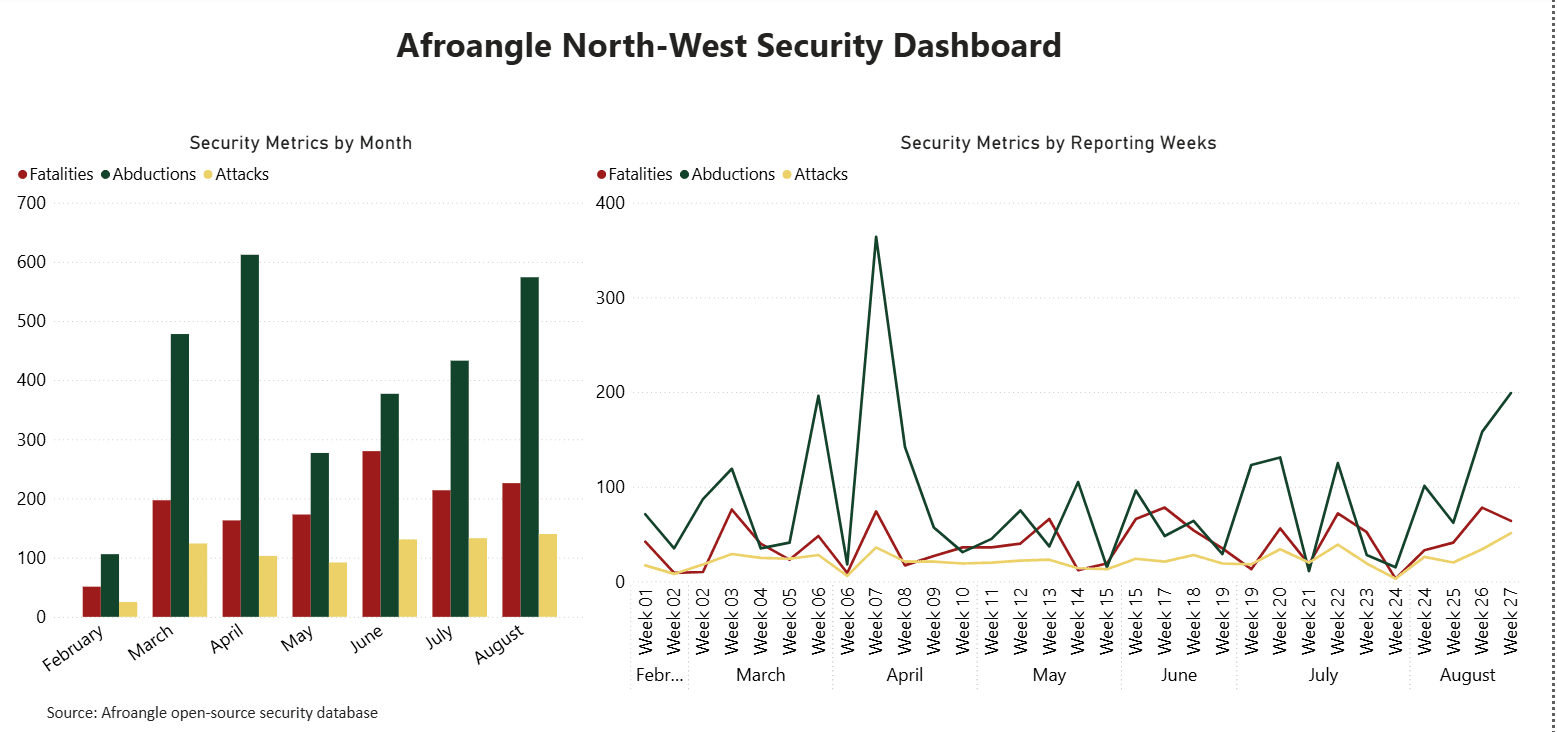
Data from the north-west shows the scale of the deterioration during the reporting period. All tracked security metrics increased significantly compared with the previous week. Security incidents increased from 25 to 54, representing a 116% rise. Fatalities increased from 32 to 62, a 93% increase, while abductions increased from 125 to 235, representing an 88% rise. The sharp increase across all three indicators highlights the volatility of the region during the reporting week. At the state level, Katsina and Zamfara dominated the tracked metrics. Katsina recorded 28 fatalities compared with 19 in Zamfara. The state also recorded 32 security incidents, while Zamfara recorded 22. For abductions, Katsina recorded 113 victims, while Zamfara recorded 85.
Analysis: The Violence Patterns in Plateau State
On August 18, armed men attacked communities in Bwai and Mangu Halle District, killing at least 20 people, with some reports putting the death toll at 25. The attacks also left homes and livelihoods destroyed, with 38 houses reportedly burnt and several hectares of farmland destroyed. The attack forms part of a wider pattern of violence across Plateau State in recent weeks, much of which has been driven by retaliatory attacks. While individual incidents often receive limited media or public attention, the repeated nature of these attacks reveals patterns that have shaped the state's conflict environment for years.
Over several weeks of monitoring violence in volatile areas including Mangu, Bassa, Riyom, Barkin Ladi, Bokkos, Wase and Jos, several recurring patterns have emerged. The violence largely involves farming communities associated with groups such as the Mwaghavul, Berom and Irigwe, and Fulani pastoralist communities.
First, the violence is characterised by rapid retaliatory attacks rather than isolated incidents. An attack on one community is frequently followed by another attack against a different community, creating a cycle that continues to escalate. One reported attack on a Fulani community in Jwak Maitumbi, Mangu Local Government Area, which resulted in deaths and the destruction of shelters, was followed by a retaliatory assault on Bin-Pe community in Kombun District, reportedly involving suspected Fulani attackers. These incidents demonstrate how violence can quickly spread from one community to another through retaliation.
Second, the destruction of livelihoods remains a major feature of the conflict. Attacks frequently involve the killing or rustling of cattle, destruction of farmland and damage to agricultural produce. These acts can themselves become triggers for wider communal violence, while the resulting destruction further affects food security and livelihoods long after the immediate violence has subsided.
Third, there are recurring patterns in how attacks are conducted and who is targeted. Armed men frequently use ambushes from concealed positions in bushes, isolated areas and along pathways or routes. Some attacks occur while victims are carrying out household activities or grazing livestock. Night-time attacks are also common, allowing attackers to conceal their identities and withdraw before security forces arrive. Those targeted include farmers, herders, women and, in some cases, children.
These patterns are not exclusive to one side of the conflict. Different actors involved in the violence have used similar tactics, particularly retaliatory attacks and attacks on livelihoods. This is important because the response from authorities also needs to address perpetrators across the conflict divide. A response perceived as favouring one community over another risks deepening existing grievances and contributing to further retaliation.
The military has intensified its response through increased patrols, weapons recovery and proactive operations. In response to the recent escalation, the GOC 3 Division and OPEP Commander, Maj-Gen Maxwell Dangana, relocated the tactical headquarters from Jos to Mangu. The move is intended to bring additional troops and equipment closer to the conflict hotspots and improve the division's operational response.
This was followed by the launch of Operation Hard Knock, focused on containing further attacks, protecting vulnerable communities, tracking perpetrators and improving response times. Other measures have included rapid response operations, routine vehicle checks to restrict the movement of weapons and logistics, and coordinated patrols around flashpoints, religious sites and major roads.
Despite these measures, violence continues to escalate. This suggests that the response cannot rely on military operations alone. Accountability for perpetrators, access to justice for victims, local early warning systems and community-level conflict resolution mechanisms will also be important. Traditional and community actors can play a role in identifying emerging tensions before they develop into attacks, while confidence-building measures between communities could help reduce the cycle of retaliation.
Outlook
In the coming weeks, the security situation across northern Nigeria will remain fragile. The north-west is likely to remain the main pressure point as bandit groups and other armed groups continue their operations. The Nigerian Air Force may increase its presence in the region as military pressure against armed groups expands, but this will need to be accompanied by stronger protection of critical road corridors that remain vulnerable to attacks.
In the north-east, pressure on ISWAP is likely to continue, with further ground and air operations expected around its operational areas in and around the Lake Chad region. Continued disruption of its logistics networks, including waterways and supply routes, could further constrain the group's operational capacity.
In the north-central region, efforts to rescue the victims abducted during the Niger State mosque attack should draw on the lessons from the successful rescue operations in Oyo, particularly intelligence gathering, interoperability and coordination between security agencies. At the same time, the emerging clashes between armed groups around the Kainji-Borgu corridor will require closer monitoring, particularly if competition between these groups begins to affect civilian communities or expand into neighbouring states.
Afroangel Intel Admin
Afroangle Intel Admin
comments
No comments yet