
The Mobility Vehicle Driving Violence in North-west Nigeria
by
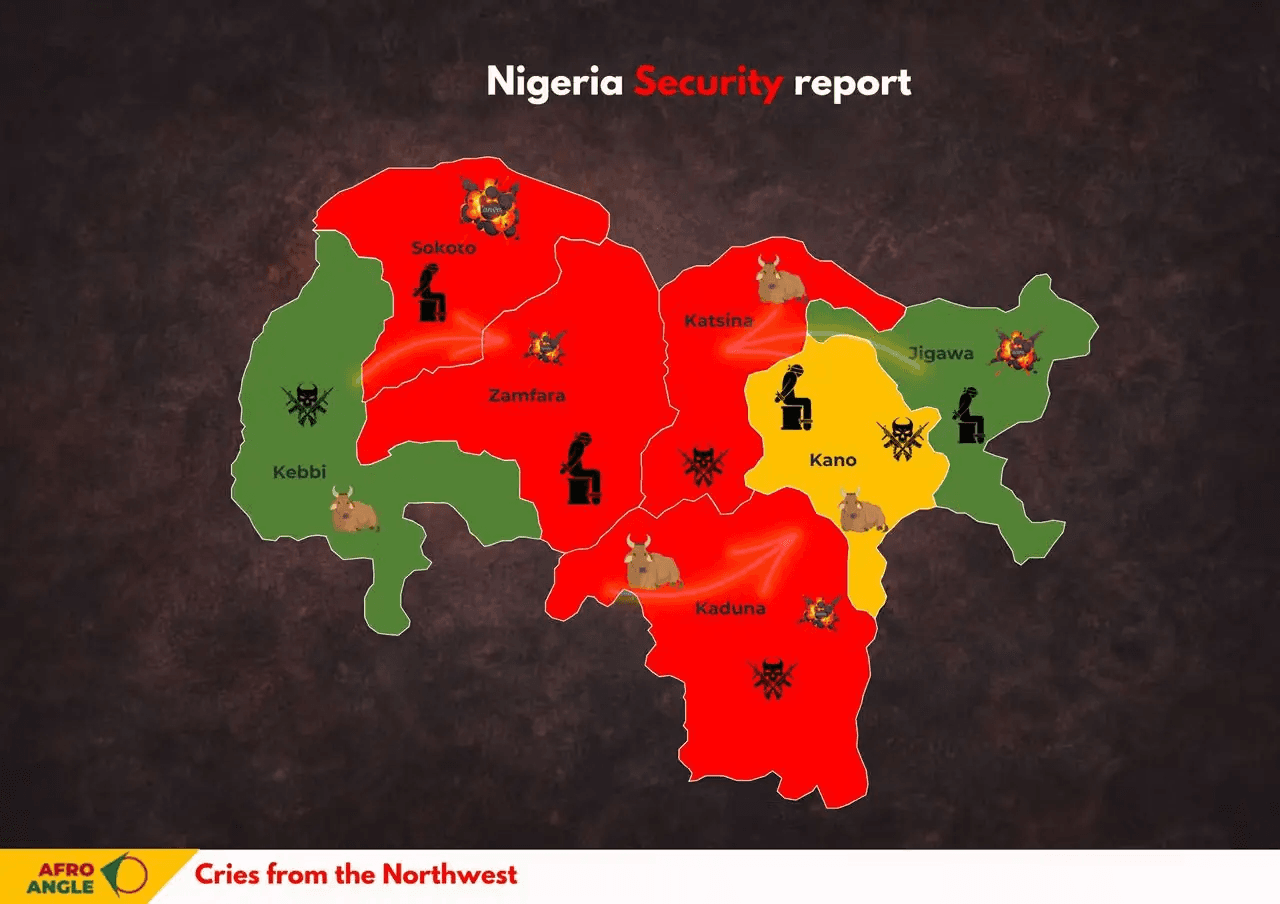
Northern Nigeria Security Situation Report (August 9–15, 2026)
The Afroangle intelligence team has also been tracking the recent surge in violence linked to Lakurawa. In response to the group's increased attacks, the Nigerian military launched Operation Clean Sweep IV, a military campaign combining ground and air operations to disrupt the group's movement and logistics and prevent it from establishing a stronger foothold in the region. The operation will also extend towards the River Niger axis and Kainji Lake National Park, with the aim of preventing these areas from being used as launching platforms for attacks against communities in the North-west. In the North-central, communal violence continued to escalate, with clashes involving Berom and Fulani militias, as well as Maghavul communities. Retaliatory attacks targeting farmlands and cattle have continued to deepen tensions between the communities, increasing the risk of further cycles of violence.
At the broader national level, the second session of the US-Nigeria Joint Working Group was held to address shared security concerns and review progress across three priority areas: protecting Christian communities in Nigeria's Middle Belt, strengthening judicial and security institutions to hold perpetrators of violence accountable, and improving military-to-military cooperation.
There were also efforts at the state level to strengthen operational mobility. The Sokoto State Government approved N1.759 billion for the procurement of 1,000 Bajaj motorcycles to support security forces operating in difficult terrain and communities affected by banditry. While the initiative is a commendable effort to improve the mobility of security personnel, the deployment of such a large number of motorcycles also carries a significant strategic risk in a region where motorcycles have increasingly become a vehicle for violence and destruction. The Sokoto government should therefore consider a phased and carefully controlled rollout to reduce the risk of these vehicles falling into the hands of the same armed groups the security forces are expected to confront.
Weekly Review
In the reporting week, the trend of violent attacks persisted as at 10 police personnel were killed during an armed clash operation in Makuku, Sakaba Local Government Area of Kebbi State. Seventeen armed bandits were also reportedly killed in the incursion, which lasted for almost two hours. The death of such a large number of police personnel highlights the growing cost of insecurity for security forces operating on the frontline and represents one of the most significant losses the police have suffered in recent operations involving direct combat.
Counter-terrorism operations also continued across the region. In Zamfara State, the Air Component of Operation Fansan Yamma conducted precision airstrikes against suspected terrorists reportedly converging on motorcycles in Anka Local Government Area. According to military sources, the strikes neutralised scores of terrorists, while surviving fighters abandoned their motorcycles and fled into surrounding bushes.
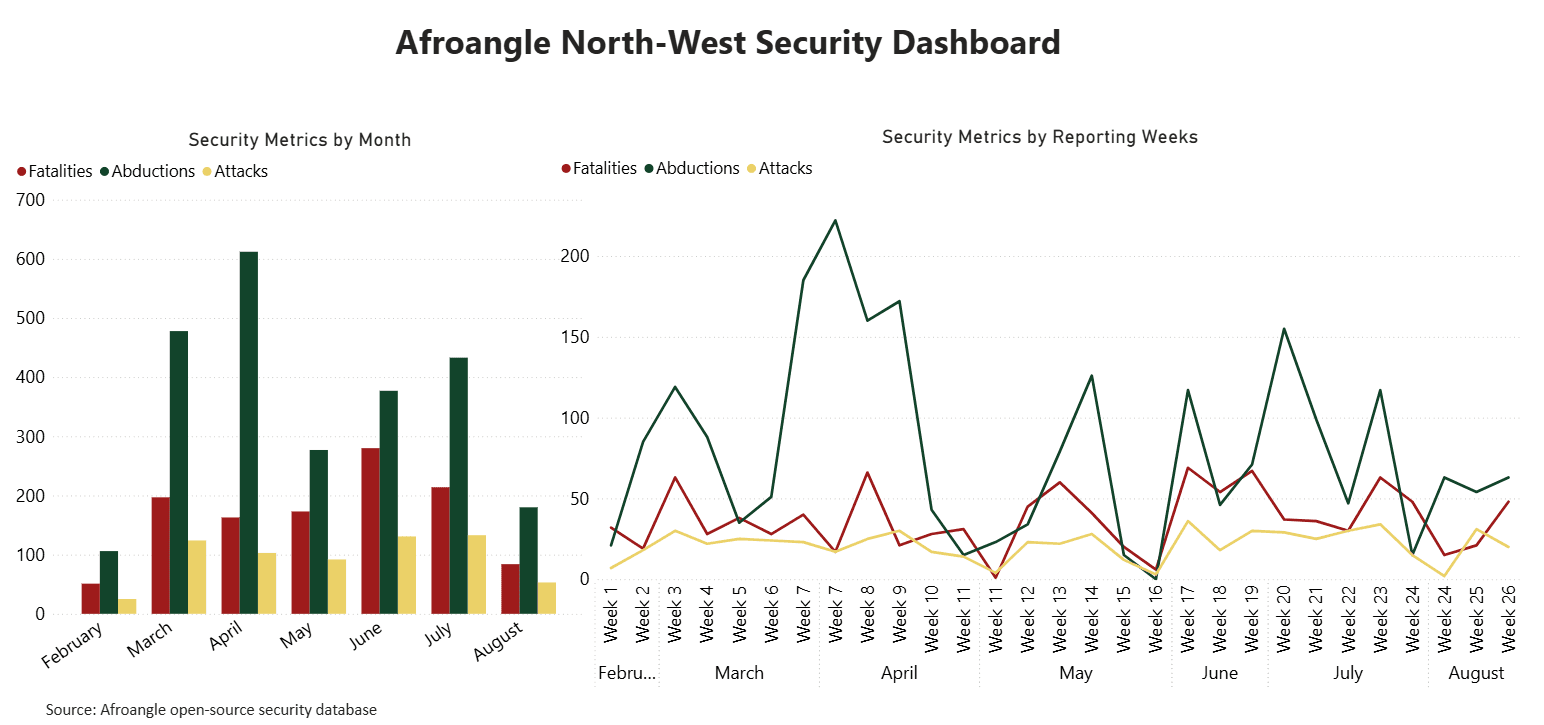
The reporting data shows a mixed trend across the tracked security metrics. Abductions recorded a significant decline, falling from 112 victims in the previous week to 63, representing a 44% decrease. Fatalities also declined from 48 to 35, although the majority of those killed were security personnel and civilians caught up in violent incidents. The number of recorded incidents also fell by 33%, from 30 to 20 across the region.
At the state level, the main security metrics remained concentrated in Zamfara, Sokoto, Katsina and Kebbi. Zamfara recorded the highest number of abductions with 27 victims, followed by Sokoto with 14. Katsina recorded the highest number of incidents, with nine, while Sokoto recorded six. Fatalities were concentrated in Kebbi, which recorded 27 deaths, followed by Sokoto with 13. The figures from Kebbi are particularly significant. The state recorded its highest level of fatalities since Afroangle began its reporting, suggesting that the resurgence of Lakurawa is beginning to have a more visible impact on the state's security environme
Motorcycles Have Become a Driver of Violence and Destruction in North-west Nigeria
Since armed banditry and terrorism escalated across the North-west, motorcycles, which have historically been an important means of transporting people and goods across the region's rural and hinterland communities, have increasingly become a driver of violence and destruction. They have become one of the most commonly used means of transportation for armed groups operating across the region. Their mobility provides advantages that other forms of transportation cannot easily offer in the terrain where much of the conflict is taking place.
Ease of Access
Motorcycles allow armed groups to move quickly across rugged terrain and dense forests, often under weather conditions that can restrict heavier vehicles. This gives them a mobility advantage over the larger vehicles used by state security forces. Their use is not limited to transportation. Armed groups have also improvised motorcycles for tactical purposes, including mounting machine guns during coordinated attacks, a tactic that has become increasingly common among armed groups across the wider West African Sahel.
The accessibility of motorcycles also allows armed groups to organise larger raids and surprise attacks against remote communities, withdraw quickly and disappear into surrounding forests before security forces can respond. The same mobility allows fighters to move weapons, abducted victims, and looted goods deeper into forested areas after an attack.
Logistics
This combination of mobility and logistical utility has made motorcycles an essential part of armed bandit operations. Government restrictions on motorcycle sales in parts of the country have also created another dimension to their use. Motorcycles have increasingly become a form of ransom payment, with kidnapped victims and their families effectively becoming suppliers of logistics to armed groups when abductors demand motorcycles in exchange for releasing hostages.
Regional supply networks have also become important in sustaining the availability of motorcycles and other logistical supplies. Prominent bandit figures such as Halilu Sububu have demonstrated knowledge of the motorcycle corridors and terrain used to move weapons and supplies across regional borders into Nigeria. Reporting by HumAngle has documented logistical networks moving supplies through the Côte d'Ivoire-Mali-Burkina Faso tri-border area and the Ghana-Burkina Faso frontier, as well as routes connecting Libya, Niger and Nigeria. Motorcycles provide an important means of moving through these corridors and facilitating the movement of supplies across the region into Nigeria.
Potentially Dangerous State Initiative
This makes the Sokoto State Government's plan to procure 1,000 motorcycles particularly sensitive. The intention behind the initiative is understandable, but the scale of the procurement creates vulnerabilities that need to be considered before deployment. Large motorcycle stockpiles could become targets for bandit raids, while security patrols using the motorcycle could also be ambushed, allowing armed groups to seize them and replenish their own mobile arsenal.
The procurement should therefore be approached cautiously. Rather than deploying the motorcycles at once, the government should consider a phased rollout, beginning with carefully selected frontline areas where difficult terrain makes conventional vehicles less effective. Strict accountability and tracking mechanisms should also be established around their allocation and use. Beyond the procurement itself, greater attention should be given to the supply routes sustaining motorcycle availability across the region, alongside stronger measures to prevent motorcycles from becoming a standard form of ransom payment.
Outlook
Moving forward, the northern conflict theatres are likely to remain volatile as armed groups continue their attacks while the military sustains its ongoing counter-terrorism operations. The offensive against Lakurawa should also account for potential spillover into neighbouring states, particularly Kwara and Niger, as pressure on the group could push fighters towards new operating areas. Force protection should also become a greater priority. The recent killing of 10 police officers in Kebbi highlights the risks facing security personnel operating in frontline areas and reinforces the need to strengthen force protection measures as Nigeria prepares for a wider deployment of state security actors, including the potential expansion of state police.
The continuing communal violence in the North-central also requires urgent attention. With clashes occurring repeatedly between competing communities, security forces may need to maintain a more sustained presence across identified flashpoints, while local conflict-resolution mechanisms should be strengthened to prevent retaliatory attacks from developing into wider cycles of violence.
Afroangel Intel Admin
Afroangle Intel Admin
comments
No comments yet