
Pete Edochie Bows Out at 79 with a Legacy Written in Proverbs
by
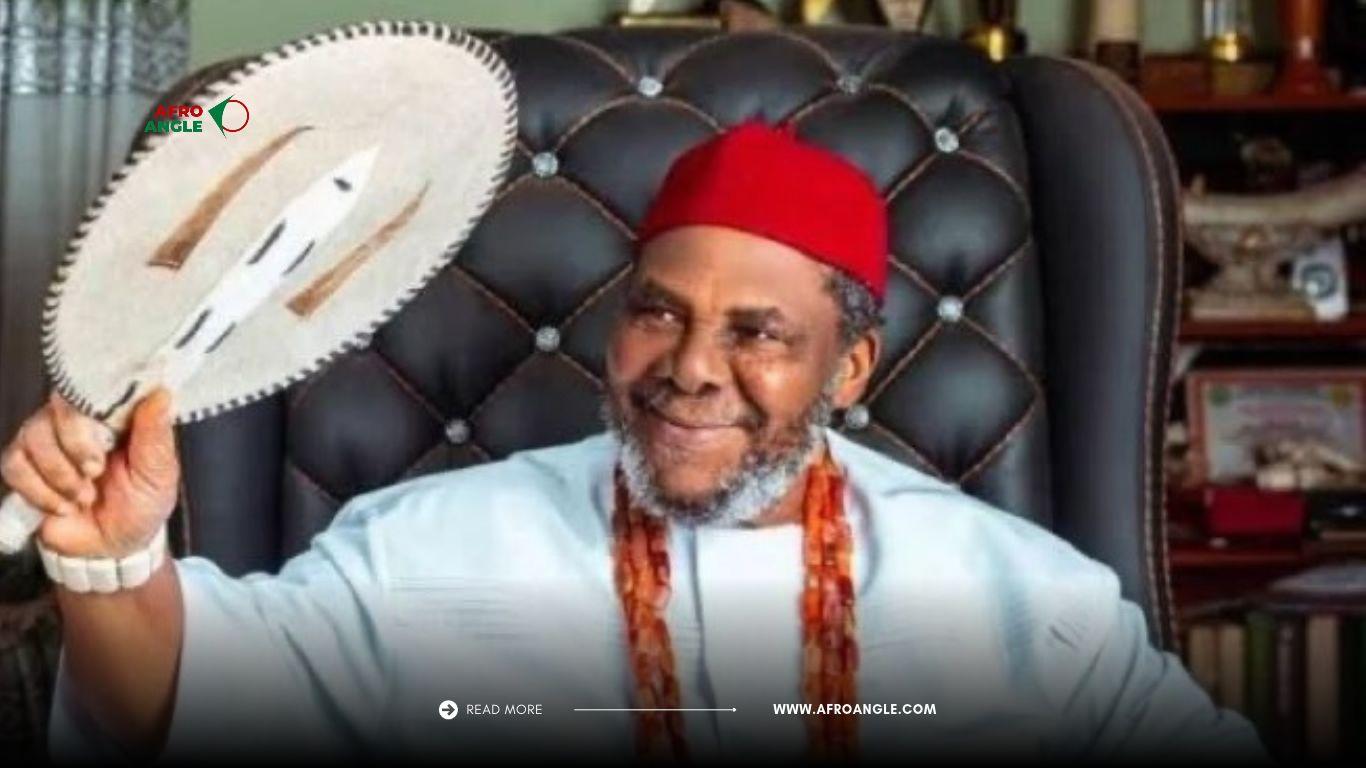
For years, reports of Pete Edochie's death have occasionally surfaced in the Nigerian media, only to be dismissed by his family and representatives. In 2012, the then President of the Actors Guild of Nigeria, Ibinabo Fiberesima, debunked one such report, while his son, Yul Edochie, also refuted another in 2016. However, on Wednesday, 25 November 2026, news of the veteran actor's death at 79 was confirmed by Leo Pete Edochie. He died in Enugu, bringing to an end a career that spanned decades in broadcasting and Nigerian cinema.
Widely recognised for his commanding screen presence, deep voice and characteristic use of traditional proverbs, Edochie occupied a distinctive place in Nollywood. Through his portrayals of kings, elders and family patriarchs, he brought the language, wisdom and expressions of traditional Igbo society into Nigerian homes. From his memorable interpretation of Okonkwo in Chinua Achebe's Things Fall Apart to his numerous appearances in Nollywood productions, he developed a screen identity that became synonymous with the authority and eloquence of the African elder.
Before the Screen
Long before Pete Edochie became one of Nollywood's most recognisable faces, he had built a career in journalism and broadcasting. Born in Zaria, Kaduna State, on 7 March 1947, to Igbo parents, he received his early education in northern Nigeria and would later receive further professional training from the British Broadcasting Corporation in 1980.
At 20, Edochie joined the Eastern Nigerian Broadcasting Corporation as a broadcaster, beginning a career that would span over two decades. He rose through the ranks to become a senior broadcasting executive and the pioneer director of Anambra Broadcasting Service's ABS 3 FM Stereo in 1987. He retired from broadcasting in 1988, having also worked with the Voice of Biafra during the Nigerian Civil War.
Acting, however, would give him his most enduring public identity. Following his acclaimed portrayal of Okonkwo in Things Fall Apart, he featured in several productions, including Igodo, Rituals and Billionaire's Club. His extensive filmography, spanning different generations of Nollywood, established him as an enduring presence in Nigerian cinema.
Things Fall Apart and the Emergence of an African Cinematic Elder
A defining moment in Edochie's acting career came in 1987, when he starred in the Nigerian Television Authority's adaptation of Chinua Achebe's Things Fall Apart. Edochie played the lead character, Okonkwo, a respected warrior and influential leader in the Igbo community of Umuofia, whose fear of appearing weak and inability to adapt to changing social circumstances eventually contributed to his tragic downfall. His portrayal brought one of African literature's most recognisable characters to life on screen, earning him widespread recognition and establishing a lasting association between the actor and Achebe's fictional protagonist.
The role also placed Edochie within a story deeply rooted in Igbo oral tradition, where proverbs and communal expressions carry important social and cultural meanings. Through Okonkwo, the audience encountered a society in which language was an important means of expressing wisdom, authority and communal values. His portrayal would become an early indication of the kind of characters with which audiences would come to associate him.
Edochie's acting career also spanned a significant period in the development of Nigerian cinema. From the era of television productions to the emergence and commercial growth of Nollywood, he remained a familiar presence on Nigerian screens. His participation in productions across different generations of the industry made him a link between the early traditions of Nigerian television drama and the contemporary film industry. Alongside other veterans, he helped shape a generation of screen performances that influenced how Nigerian films portrayed family relationships, traditional institutions and African society.
Lionheart and His Later Appearances
For many younger Nigerians, their introduction to Edochie's acting may have come through Genevieve Nnaji's 2018 film Lionheart. Edochie played Chief Ernest Obiagu, a wealthy businessman and owner of Lionheart Transport Company, whose declining health forces his daughter, Adaeze (played by Nnaji), to assume greater responsibility for the family business.
The film introduced his familiar screen persona to a younger generation within a contemporary business setting. Although Chief Obiagu retained the authority and commanding presence associated with many of Edochie's earlier characters, Lionheart also presented him as a father whose expectations about family, business and succession were challenged by changing circumstances. His appearance in the film demonstrated his continued relevance in an industry whose storytelling and audience keep evolving.
Beyond Lionheart, Edochie continued to feature in several productions in his later years. These included Ifediche (2023), King Mabutu (2023), in which he played Kasanga, The Rising Sun (2023), Drawn to You (2024), and Ibobo: The Blind Seer (2025).
A Legacy Written in Proverbs
Much of Edochie's legacy rests on his distinctive portrayal of the Nigerian elder, a characterisation he developed over several decades and which remains difficult to replicate. Over the years, he became renowned for playing traditional rulers, wealthy businessmen, community leaders, and influential family patriarchs. His deep, resonant voice, measured delivery, and characteristic use of proverbs and traditional expressions became defining features of his performances, giving his characters an unmistakable sense of authority.
His performances also drew on the richness of Igbo oral tradition, particularly the use of proverbs as instruments of wisdom, instruction, and social commentary. Through his dialogue and characterisation, he brought indigenous expressions and traditional forms of communication into mainstream Nigerian entertainment. His frequent use of the Igbo language and culturally grounded expressions gave many of his characters an authenticity that audiences came to associate with his performances. In this way, his work helped keep familiar elements of traditional expression visible in an industry whose stories and audiences continued to change.
His influence also extended to his family. Away from the screen, Edochie was married to Josephine Edochie, with whom he raised six children. Two of his sons, Yul and Linc Edochie, followed in his footsteps to become actors in Nollywood, extending the family's connection with the entertainment industry.
A Celebrated Life
Edochie's contributions to Nigerian entertainment earned him several recognitions during his lifetime. In 2003, former President Olusegun Obasanjo conferred on him the national honour of Member of the Order of the Niger (MON).
He received a Lifetime Achievement Award from the Africa Movie Academy Awards in 2013 and the Industry Merit Award at the Africa Magic Viewers' Choice Awards in 2014. In 2016, he also received the City People Entertainment Lifetime Achievement Award, among other honours.
Pete Edochie's legacy is perhaps best understood in the characters he brought to life and the cultural expressions he made familiar to generations of audience. Through his portrayal of Okonkwo, he gave a face to one of African literature's most celebrated characters, while his subsequent performances as kings, elders and patriarchs established a screen identity that became synonymous with his name. His deep voice and frequent use of proverbs made him a familiar presence in Nigerian homes, carrying expressions of traditional wisdom into an evolving entertainment industry.
Beyond the screen, his witty, often thought-provoking lines found a second life in Nigerian popular culture. Excerpts from his performances have continued to circulate on social media as memes, captions, and everyday responses, with some of his remarks becoming familiar expressions among audiences who may not have watched the original films. This has allowed his words to travel beyond the stories in which they were first spoken, keeping his presence alive in contemporary conversations. Though he has taken his final bow, the characters, words, and cultural traditions he brought to the screen will continue to live on in African storytelling.
Samuel Omofala
Samuel Omofala is a journalist, law student, and award-winning essayist with a strong focus on entertainment, culture, and the economy. In 2025, he won the 7th edition of the prestigious Fisayo Soyombo Inter-varsity Essay Contest, beating over one hundred other entries. His contributions to campus journalism at the University of Ibadan have earned him significant recognition, including Most Energetic Campus Journalist (Administrative), a nomination for Most Promising Campus Journalist, and leadership of a local press organisation.
comments
No comments yet