
Speaking English, forgetting home: why language preservation must begin in the classroom
by
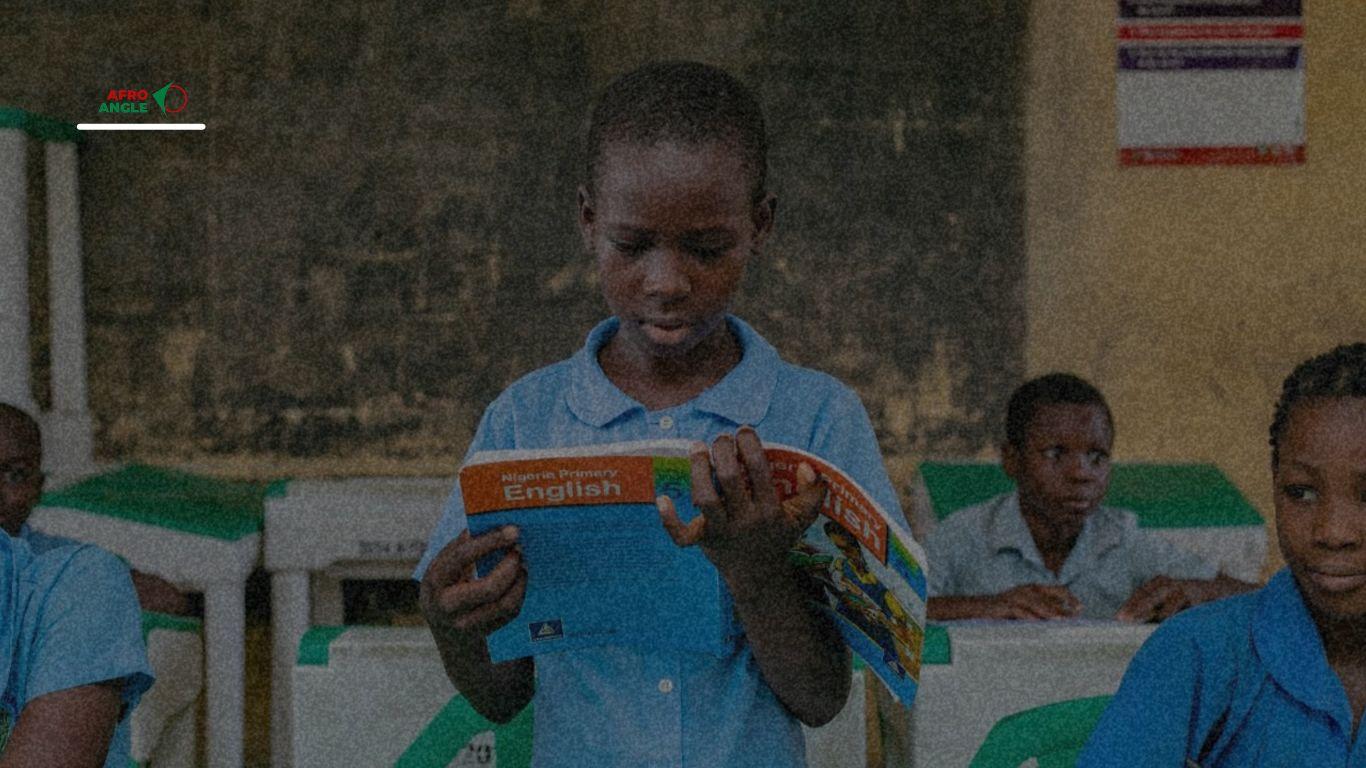
The preservation of indigenous languages in Nigeria faces a challenge that goes beyond the declining use of native languages among younger generations. From homes to classrooms and public spaces, the growing dominance of English has continued to raise questions about the place of indigenous languages in a society known for its linguistic and cultural diversity. The debate has become particularly important as concerns grow over how these languages can be sustained and passed on to future generations.
The conversation recently gained public attention following a viral video of a young Urhobo boy who expressed displeasure over the alleged punishment of pupils for speaking Urhobo in school. According to a report published by Intel Region on 16 November 2026, the boy questioned why speaking English was encouraged while speaking an indigenous language attracted punishment. He also raised concerns about the declining use of Urhobo names, drawing attention to what he considered a gradual disconnection from his people’s cultural identity.
The video has since brought renewed attention to the treatment of indigenous languages in Nigerian schools and the responsibility of educational institutions in preserving them. While some efforts have been made by governments and cultural organizations to promote local languages, questions remain about the extent to which these efforts translate into meaningful classroom practices and everyday use.
Beyond the circumstances surrounding the boy’s complaint, the incident raises a more fundamental question: how can indigenous languages survive when the environments in which younger generations are expected to learn and use them do not always encourage their development? This question deserves closer examination, particularly at a time when the future of indigenous languages is increasingly tied to decisions about education, government policy and cultural preservation.
Language, identity and the need for preservation
Language is more than a means of communication. It carries the history, values, traditions, indigenous knowledge and collective experiences of a people. Through language, generations transmit knowledge, preserve cultural practices and maintain connections with their ancestry. The gradual disappearance of a language can also mean the loss of valuable cultural knowledge and expressions that may not be adequately documented in other languages.
However, the growing preference for English among younger generations, sometimes encouraged by parents who associate early English proficiency with academic and social advancement, has contributed to declining interest in indigenous languages in some communities. Some children understand their parents’ languages but struggle to speak them, while others have little opportunity to learn them.
According to the United Nations Educational, Scientific and Cultural Organization (UNESCO), approximately 7,000 of the 8,324 documented spoken and signed languages worldwide remain in use. Its March 2025 multilingual education report also noted that only 351 languages are used as mediums of instruction globally. UNESCO further estimated that 40 per cent of learners worldwide do not receive education in a language they speak or understand fluently.
These figures show that language preservation is closely connected to education. Schools are not merely institutions for acquiring academic knowledge; they are also important environments for transmitting languages and cultural identities. When children are discouraged from using their indigenous languages, schools risk reinforcing the perception that those languages have little relevance beyond informal communication.
The concern here, therefore, is not whether children should learn English, but whether acquiring proficiency in English should require losing proficiency in their indigenous languages.
Government policies and the place of indigenous languages in Nigerian education
Nigeria’s language-in-education policy has undergone significant changes, reflecting the difficulty of balancing linguistic diversity, educational needs and national communication.
In 2022, the federal government introduced a National Language Policy that prescribed mother-tongue or the language of the immediate community as the medium of instruction for Primary 1–3. The policy sought to improve foundational learning while promoting indigenous languages and cultural identity.
However, on 13 November 2025, the Federal Ministry of Information and National Orientation announced that the federal government had discontinued the implementation of the policy. The decision followed resolutions reached at the 69th National Council on Education meeting held in Akure, Ondo State. The council reaffirmed English as the medium of instruction from primary to tertiary education.
According to the Federal Ministry of Information, the reversal was informed by practical challenges, including Nigeria’s more than 500 indigenous languages, inadequate instructional materials, insufficient teacher preparation in multilingual education and difficulties associated with transitioning pupils from indigenous languages to English during higher levels of education. The government also introduced an Inclusive Language Policy encouraging the teaching and learning of at least one Nigerian language alongside English.
These challenges highlight the complexity of implementing mother-tongue education in a country with considerable linguistic diversity. However, they also raise questions about the level of investment made in developing the resources and structures required to implement the previous policy effectively. A policy that prescribes indigenous-language instruction without adequately trained teachers, standardized learning materials, appropriate curricula and assessment structures will inevitably encounter difficulties.
The challenge is therefore not limited to choosing a language of instruction; it also involves building the capacity to teach and learn through that language. Lagos State offers an example of efforts to integrate indigenous-language preservation into its educational system. The state’s 2023 Education Policy provides for the use of Yoruba as a medium of instruction in lower primary classes, with English taking over in Primary 4–6. Yoruba is also included as a subject in the primary school curriculum.
Beyond the curriculum, the Lagos State Universal Basic Education Board (LASUBEB), in May 2026, partnered with SIKIRABU Africa to introduce an interactive educational board game for teaching Yoruba in public primary schools. According to The Punch report of 20 May 2026, the initiative is designed to improve pupils’ understanding of Yoruba language, culture and traditional values through play-based learning.
These initiatives demonstrate the importance of combining educational policies with practical learning methods. Nevertheless, teaching an indigenous language as a subject and using it as a medium of instruction are two different approaches. While both contribute to language preservation, the latter provides opportunities for children to acquire academic knowledge through their indigenous languages.
African experiences and lessons from countries that have developed their languages
Nigeria is not the only African country confronting the challenge of preserving indigenous languages while maintaining the importance of international languages. Other countries have adopted different approaches, offering useful lessons for its educational system.
Ethiopia, for instance, introduced a multilingual Education and Training Policy in 1994, allowing regional languages to serve as mediums of instruction in primary education. This represented a departure from the previous dominance of Amharic in formal education. Tanzania provides another example through its adoption of Kiswahili as a major language of national communication and primary education. The country’s Education and Training Policy, 2014 (2023 edition), provides for Kiswahili as the medium of instruction in schools that use Kiswahili, while English serves as the medium in English-medium schools. The curriculum also provides for the teaching of languages such as French, Chinese and Arabic in their respective languages.
Beyond Africa, Japan and Finland provide useful examples of institutional language development. Japan has maintained Japanese as the principal language of its educational system, public administration and national communication while developing its scientific and technological industries.
Finland, meanwhile, recognizes Finnish and Swedish as its two official languages. According to InfoFinland, both languages have recognized positions in public administration, with language arrangements also reflected in the country’s municipalities and public services. The experiences of these countries demonstrate that preserving and developing a national or indigenous language does not prevent a country from acquiring international languages, participating in global communication or advancing technologically. Rather, the development of local languages can exist alongside the acquisition of foreign languages.
For Nigeria, the lesson is to develop an educational framework that recognizes linguistic diversity, provides appropriate resources for indigenous-language learning and ensures that English proficiency does not become a measure of how much a child has abandoned their linguistic heritage.
Making language preservation a shared responsibility
Government policies alone cannot guarantee the survival of indigenous languages. Their preservation requires sustained participation from parents, schools, educational institutions, researchers, writers, media organizations, technology developers and local communities.
At the family level, parents have an important responsibility to transmit indigenous languages to their children. Speaking these languages at home, telling traditional stories and encouraging children to communicate with older family members can establish the foundation for intergenerational language transmission.
Schools should create environments where indigenous languages are encouraged and respected. Beyond making them compulsory subjects, they should organize debates, poetry competitions, storytelling sessions, drama and other activities that provide opportunities for pupils to use the languages. Where practical, foundational subjects should also be taught through familiar indigenous languages, supported by a gradual and structured transition to English.
Governments must invest in teacher training, curriculum development, dictionaries, textbooks and other instructional materials. Such investments are necessary to make indigenous-language education practical, consistent and accessible. Educational institutions should also support research into the development of indigenous-language terminology, particularly for scientific, technological and professional subjects.
Writers, journalists and publishers can contribute through indigenous-language literature, translations and digital publications. Media organizations should increase the use of indigenous languages in news, educational programmes and public communication, while technology developers can create platforms that support their documentation and everyday use.
Importantly, language preservation should not be restricted to the three major Nigerian languages. The country’s linguistic diversity requires an inclusive approach that recognizes the importance of smaller language communities and provides opportunities for their languages to be documented, taught and developed.
English will remain important to Nigeria’s education system and international engagement. However, preserving indigenous languages should not be treated as an alternative to acquiring English or other foreign languages. A multilingual educational system can accommodate both, allowing children to develop international communication skills without losing their linguistic identities. A language cannot survive on cultural celebrations and occasional expressions of pride alone. Its future depends on whether the next generation can speak it, read it, write it and use it to acquire and communicate knowledge.
Waris Hamzat
Waris Hamzat is a freelance journalist and content writer based in Ibadan, Nigeria, and a recent First Class graduate of Library, Archival and Information Science from the University of Ibadan. He writes opinion and analysis on Oyo State politics, local governance, and the issues shaping everyday life in southwestern Nigeria. His reporting interests span human-centred journalism, indigenous knowledge, digital inclusivity, education, and AI literacy, with a focus on telling underreported stories at the intersection of information, technology, and society.
comments
No comments yet