
The Shifting Activities of the Sadiku Boko Haram Faction in North-Central Nigeria
by
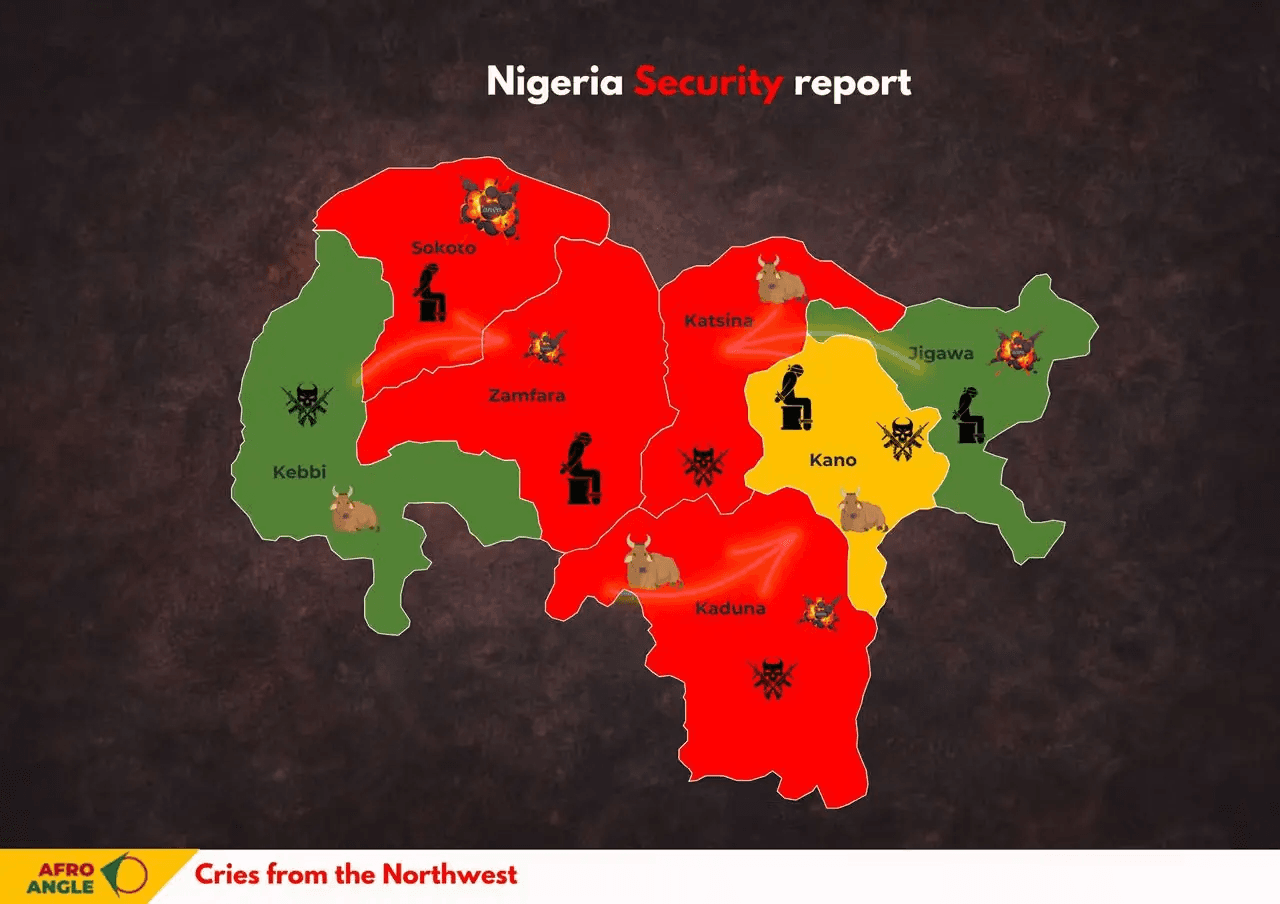
Northern Nigeria Security Situation Report (September 20–26, 2026)
Introduction
In the North-Central region, one of the Boko Haram factions, known as the Sadiku group and headed by Mallam Sadiku, operates from Niger State, with activities extending across the Kainji Lake and Borgu areas. According to open-source reports, the group released a new video in which it purportedly claimed to be fighting bandit groups terrorising communities in the Borgu axis of Niger State. The statement also claimed that the group had begun clashing with Kambari vigilantes. According to open-source reporting, this action is aimed at deterring the growing violence perpetrated by bandit groups, particularly factions linked to Dogo Gide, which have clashed with Lakurawa militants in the Ibbi Forest in recent weeks. The group may also be seeking to rally local support in anticipation of possible attacks by Dogo Gide-linked groups.
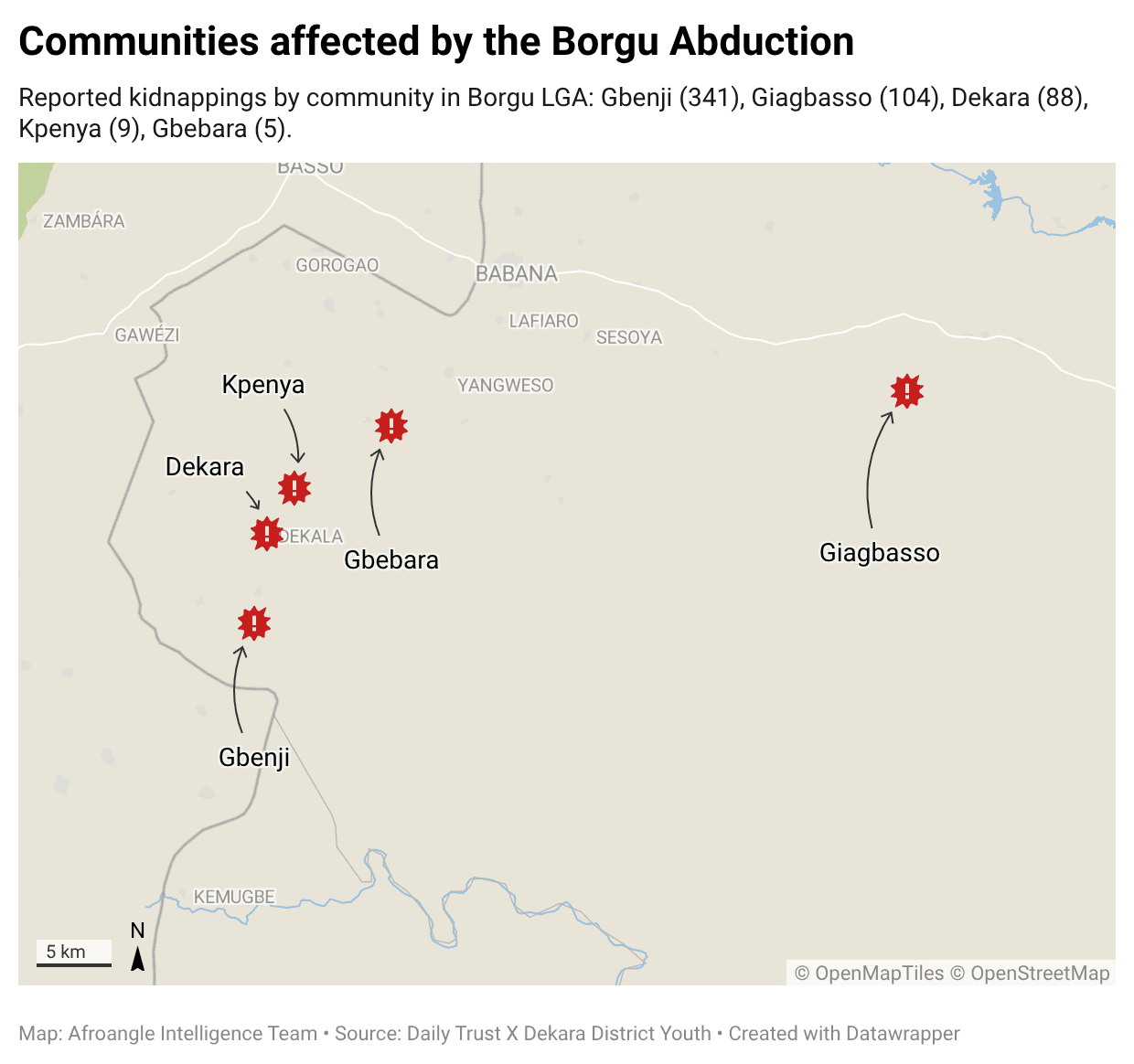
Similarly, in the recent abduction in Niger State, the affected communities released a full list of victims abducted in Borgu last month, claiming that 547 worshippers had been kidnapped. This figure contradicts claims made by state officials. The locations identified include Gbenji, Giagbasso, Dekara, Kpenya (Masaka) and Gbebara. These communities indicate the geographical spread of the abductions across the local government area. (see visual below).
In the North-East, internal purges within ISWAP continue, while clashes among the group's leadership raise concerns about its internal cohesion. A report by HumAngle indicated that the group had lost one of its key and most experienced fighting units, known as the Buduman unit, following a breakdown in relations between its commander, Yaku, and the group's leadership under Ba Shuwa. Ba Shuwa has faced repeated challenges to his leadership since succeeding Al-Mainuki, who was killed in a joint Nigeria-US operation. This internal fragility, alongside the reported loss of an experienced fighting unit, could further weaken the group's operational capabilities and resolve as it continues to face military pressure.
As Nigeria's insurgency landscape evolves, armed groups are also adjusting their strategies, operations and tactics in response to changing security conditions and government policies. One group that has undergone significant changes is Jama'atu Ahlis Sunna Lidda'awati wal-Jihad (JAS), commonly known as Boko Haram, which has splintered into three factions. Of these, Sadiku's faction stands out because it operates outside the group's traditional area of activity in the North-East. Its geographical location, modus operandi and evolving tactics warrant closer examination as the wider insurgency landscape continues to change.
Weekly Review
The North-West remained one of the most volatile regions during the reporting week, with repeated armed attacks, abductions, livestock rustling and a growing number of reported incidents across Sokoto, Zamfara and Kebbi states. In Sokoto State, attacks across Shagari, Sabon Birni, Isa, Rabah, Kebbe, Goronyo and Tureta demonstrated the geographical spread of armed-group activity. Reported incidents included attacks on multiple villages, civilian fatalities, abductions and livestock rustling.
In Sabon Birni, an attack involving approximately 100 armed men and more than 50 motorcycles reportedly resulted in civilian fatalities and injuries in Garki and Dokwaro. In Shagari, attacks on Argum, Phappoji, Sagi and Taka Lafiya resulted in reported deaths, livestock losses and abductions. The reported convergence of armed groups around Tungar Barki also raised concerns about further attacks. Kidnapping remained a significant threat. In Kebbe, 12 people were reportedly abducted from Girkau. Eight women were subsequently released, while four men reportedly remained in captivity amid demands for ransom, fuel and engine oil.
In Zamfara State, the chairman of Bungudu LGA reportedly regained his freedom after 61 days in captivity. Separately, an attempted abduction involving a senior state government adviser in Tsafe reportedly ended with the military rescuing the official and his family, although three other civilians were abducted. These incidents highlight the continued targeting of civilians, public officials and economically active individuals.
In the North-Central, the threat remained concentrated largely in Plateau State. Following heightened violence across several parts of the state in recent weeks, the state government imposed a dusk-to-dawn curfew in Barkin Ladi, Bokkos and Mangu LGAs. The measure was introduced in response to the increase in violence. In a separate incident, five miners were reportedly killed and two others injured when armed men attacked them in Barkin Ladi. The rising number of attacks has affected businesses and livelihoods, with farmland and livestock targeted and security personnel also among the victims. These incidents demonstrate the wide-ranging impact of the violence on civilian livelihoods and security operations. Further south, in Kogi State, a newlywed couple were reportedly kidnapped along the Iyemero-Eruku route. In a separate incident, local vigilantes arrested two suspected members of a kidnapping gang operating along the Kogi-Enugu border.
In the North-East, reported violence was more limited during the week. One notable incident was an attack by insurgents on Wumbi community in Kala-Balge LGA, where a local vigilante commander and four civilians were reportedly injured. Overall, the reporting week saw varying levels of security threats across Northern Nigeria, with persistent armed-group activity in the North-West, continued violence in parts of the North-Central, and a comparatively lower number of reported incidents in the North-East.
The Changing Activities of JAS Sadiku Group in North-Central Nigeria
Following Shekau's death in 2021 during clashes with ISWAP, JAS splintered into factions. The group is now led by Bakura Doro, whose operations are centred around Lake Chad. Its other factions include Darul Gazwa, led by Alhai Kale in south-eastern Borno, and the Ali Ngulde faction, which operates around the Mandara Mountains and Gwoza. Sadiku's group is the only faction operating outside the North-East's traditional area of insurgency. Although Sadiku has sworn allegiance to Doro, it has developed a different operational approach, partly shaped by the security environment in the Kainji-Borgu area, where insurgent and bandit groups operate.
Local alliances and adaptation
Sadiku has developed relationships with local bandit networks in Niger State, gaining access to fighters, weapons and knowledge of the terrain. Unlike the North-East, where JAS emerged from a long-running insurgency, the group operates in an environment where kidnapping and banditry are already established. Its willingness to work with local actors has helped it establish a presence in the area. ISS research reports contact between Sadiku and Lakurawa since 2023, including the reported deployment of Sadiku's fighters to support the group. These links suggest that Sadiku's relationships extend beyond Niger State. The group has also reportedly maintained ties with bandit leader Bello Turji. However, the relationship later deteriorated, with the two groups reportedly clashing. These developments show how Sadiku's alliances can provide access to local networks while remaining vulnerable to disputes between armed groups.
A shift towards criminal financing
Sadiku's activities increasingly involve kidnapping for ransom, extortion and attacks against civilian communities. These activities generate revenue and provide resources needed to sustain its operations. Its reported involvement in the attack in Kaiama LGA, Kwara State, also indicates that its activities extend beyond Niger State. By relying on methods already used by bandit groups in the region, Sadiku can finance its operations through local sources of income while exploiting existing criminal networks. The group also benefits from smuggling routes that transport weapons towards its strongholds, reducing its reliance on independent supply networks. This overlap between insurgency and banditry makes it difficult to distinguish operations driven by ideological objectives from those primarily intended to generate revenue or secure local influence.
A fluid relationship with the North-East leadership
Despite its local independence, Sadiku remains connected to the wider JAS leadership under Bakura Doro. Sadiku initially resisted Doro's leadership following the killing of a prominent Boko Haram imam but later swore allegiance. Reports indicate that Doro supplies weapons to Sadiku, while revenue from operations in Niger State flows back to the wider JAS leadership. Doro has also reportedly mediated disputes between Sadiku and local bandit leaders, suggesting that he retains some influence over the faction.
Sadiku's relationship with Doro therefore appears to combine formal allegiance with considerable operational independence. Its reliance on local alliances and criminal revenue allows it to adapt its activities to the security environment in North-Central Nigeria, even while maintaining links to the wider JAS network. More importantly, the group's growing reliance on kidnapping, extortion and local armed alliances raises questions about how far its activities are still driven by JAS's ideological objectives. This does not necessarily mean that Sadiku has abandoned those objectives. Rather, its operations suggest that local survival, access to resources and influence over territory have become important alongside its wider insurgent affiliation. Monitoring the relationship between Sadiku and Doro will help establish whether the faction's local priorities are increasingly diverging from the objectives of the North-East leadership.
Outlook
Security conditions across Northern Nigeria are likely to remain tense in the coming weeks as armed groups continue their attacks. However, divisions within these groups may also create opportunities for the Nigerian military to exploit. In the North-West, bandit attacks against civilians are likely to continue, disrupting movement and livelihoods while causing further property damage. In the North-East, the military should closely monitor the leadership disputes and internal purges within ISWAP, which could intensify in the coming weeks and affect the group's cohesion and operational capabilities.
In the North-Central, security agencies should closely monitor the possibility of clashes involving the JAS Sadiku group, bandit factions, Lakurawa and other armed groups operating around the Kainji-Borgu area. State forces could use any divisions among these groups to disrupt their operations. Meanwhile, the escalating security situation in Plateau State requires a coordinated response from both state and federal authorities to protect communities and limit further disruption to livelihoods.
Afroangel Intel Admin
Afroangle Intel Admin
comments
No comments yet