
ESCALATING RURAL INSECURITY ACROSS NORTHWEST NIGERIA
by
Listen to this article
Security Situation Report : 09–15 March 2026
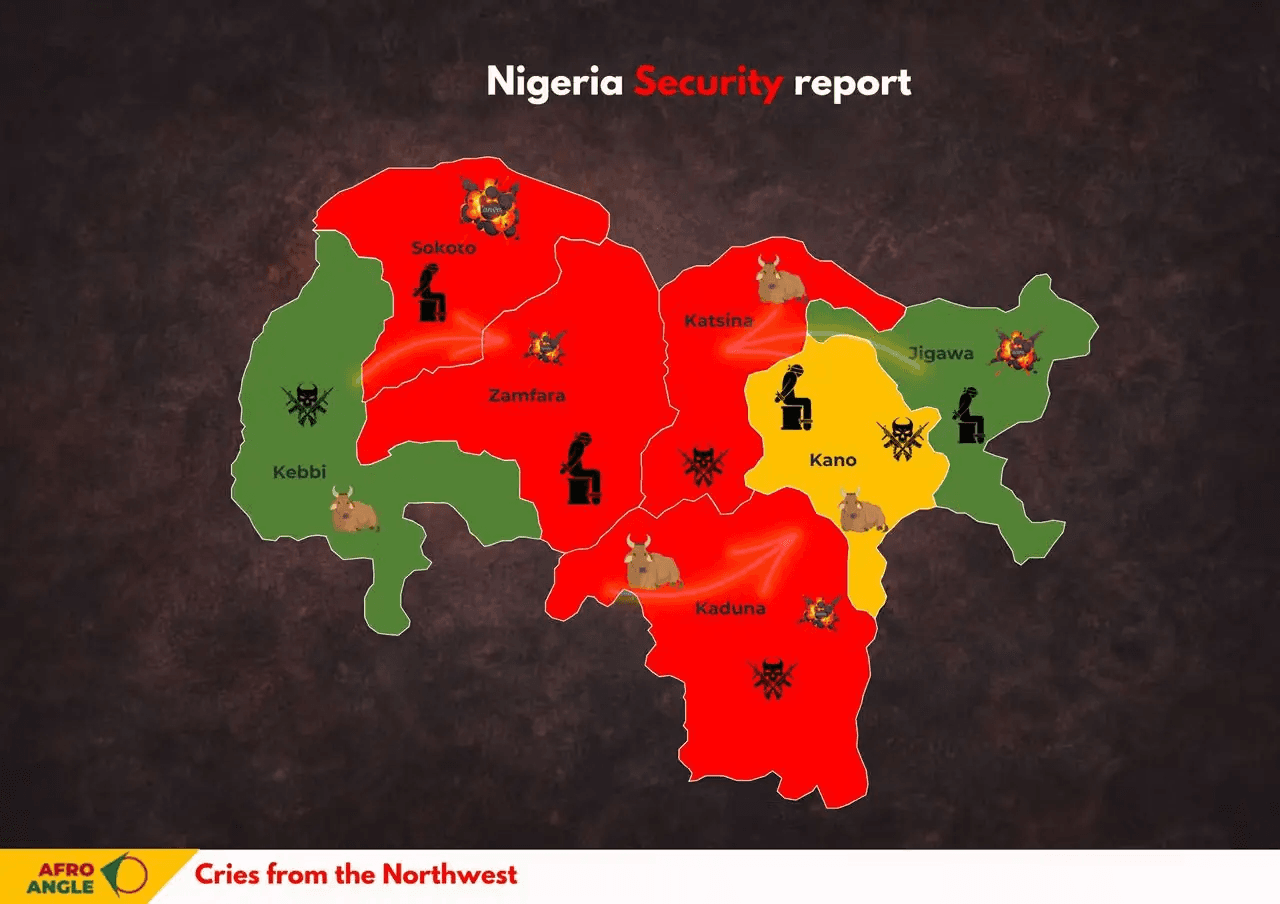
The northwest region continues to face severe insecurity as armed bandit groups expand their operations. Between 09 and 15 March 2026, coordinated raids, mass abductions, highway ambushes, and attacks on civilians and security personnel underscored the evolving tactics and operational reach of criminal networks. Among the deadliest incidents this week, on 11 March, bandits attacked the Dansoda community in Dandume Local Government Area (LGA) in Katsina State, killing 10 male and five female civilians, injuring several others, and abducting at least 20 residents. This large-scale assault lasted several hours, highlighting both the operational capacity of the attackers and the vulnerability of rural communities.
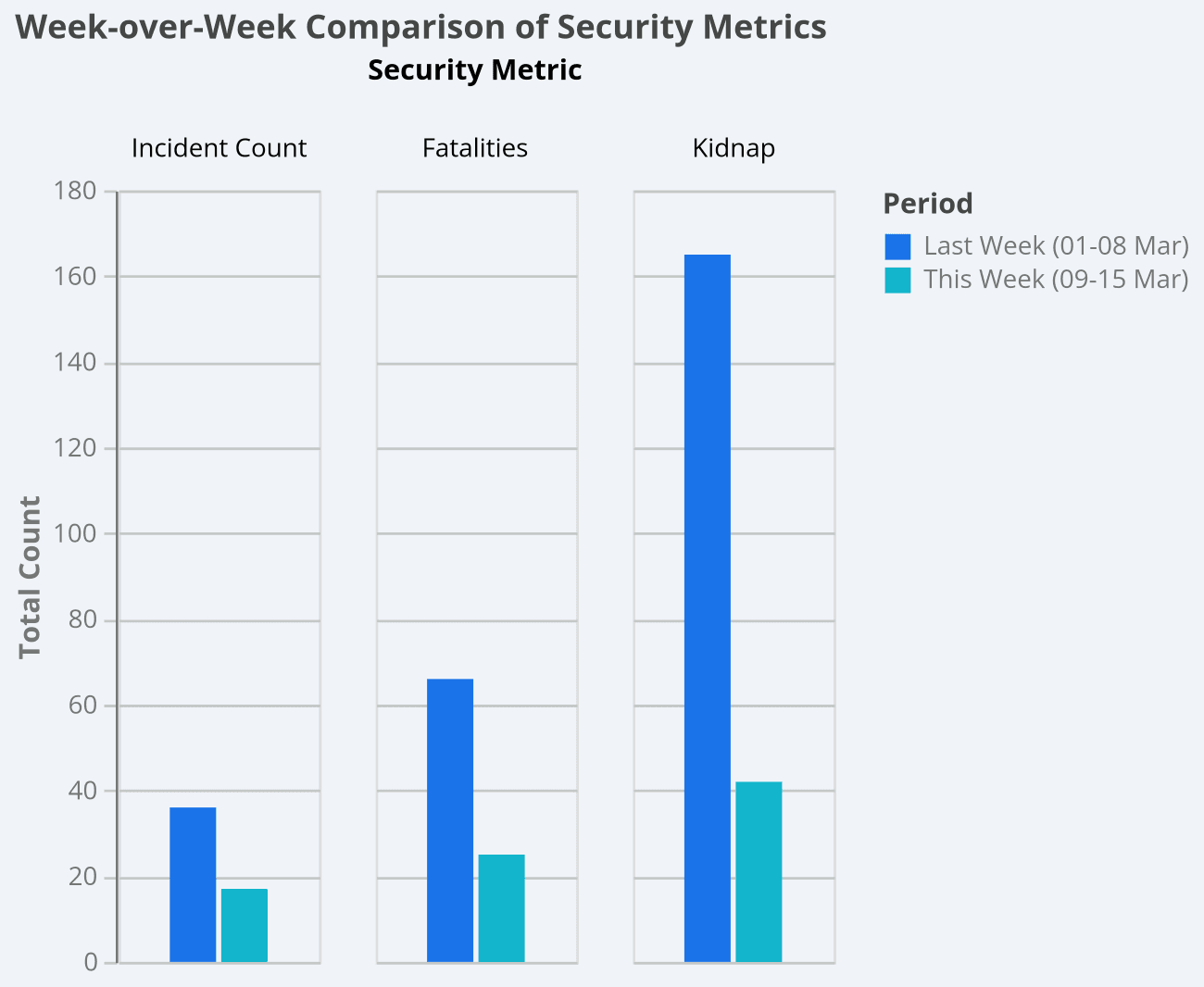
In this week, the security situation saw a significant decrease in recorded incidents and victims when comparing the first week of March (01-08) to the second week (09-15). Overall incidents dropped sharply, from 36 in the first week to 17 in the second, representing a 52.8% reduction in the frequency of attacks. This trend was even more pronounced in the impact metrics, with fatalities decreasing from 66 to 25, a reduction of 62.1%. The most substantial drop was in abductions, which fell from 165 to 42, marking a massive 74.5% decrease.
Despite the overall decline in violence, the regional concentration of insecurity shifted slightly but remained focused on the same area. Last week, Katsina was the most affected state for both incidents and fatalities, while Kaduna recorded the highest number of abductions. In this week, Katsina State (or Katsina) was uniformly the most affected state across all three categories: incidents (17), fatalities (25), and abductions (42). In summary, while the raw numbers indicate a less violent period in the second week, the data suggests that attacks continued to be severe, with the security focus remaining heavily centered on Katsina and its surrounding regions.
Kidnapping for ransom continues to drive bandit operations. There were high-profile abductions of civilians in Rabah, Bungudu, Maru, Kauran Namoda in Zamfara State; Kankara, Bakori, Dandume, Malumfashi in Katsina State; and Kajuru, Kachia, Kubau, Giwa in Kaduna State. Communities are targeted not randomly but often selectively, focusing on households, traders, students, and local leaders capable of paying ransoms or providing leverage over the local populace.
Adaptive operational tactics and sophistication:
Bandits increasingly employ coordinated attacks, disguise tactics, ambushes on highways, and targeted raids on private residences.
Disguise: Early on 08 March, bandits disguised in hijab attacked residents during prayers at Mallamawa in Rabah LGA, Sokoto State, killing one male civilian, injuring four others, and abducting at least 20 civilians. These tactics reflect growing sophistication in deception and timing to maximize fear and disruption within communities.
Ambush: Another tactic adopted by the attackers include ambush on Kaduna State Vigilante Service (KDVS) convoy in Giwa-Fandogari, Kaduna State on 07 March, where one officer was killed and four others injured, including the local government area (LGA) commander.
Attack on GSF: Attack on government security forces (GSF) and positions such as police stations is another mode of operation by the bandits. On 08 March, bandits abducted an officer, looted of ammunition, and set a police station ablaze in Illo, Kebbi State.
Community-level economic and social disruption:
As indicated in past reports, beyond immediate loss of life, these attacks create long-term economic disruption. Looting of homes, shops, and markets has been reported in Musawa, Funtua, Malumfashi, and Matazu LGAs. Large-scale rustling of livestock affects farming livelihoods, while imposed levies, such as the ₦40 million demand in Doma village, Faskari LGA, Katsina, deepen community vulnerability and displacement. Notorious bandit leaders, including Isiya Kwashen Garwa and Bello Turji, maintained dominance in the Northwest through violent enforcement and economic extraction. Amidst their assaults, communities continue to face cycles of displacement, economic hardship, and psychological trauma as repeated attacks leave them unable to resume normal life.
Security responses and limitations:
Several security interventions were recorded, including the recovery of nearly 100 cattle in Dandume LGA on 15 March, the rescue of abducted civilians in Bebeji, Kano on 08 March, and a joint operation in Gusau, Zamfara on 03 March where a bandit was killed and a motorcycle recovered. These actions, carried out by local vigilante groups such as the Vigilante Group of Nigeria (VGN) and Civilian Watch Corps (CWC) alongside the police, demonstrate attempts at rapid response to bandit activities. Despite these efforts, however, such successes remain sporadic, and bandits continue to move relatively freely across local government areas and state borders, exploiting persistent gaps in rural security coverage and highlighting the overall insufficiency of current police operations.
Banditry in northwest Nigeria remains a hybrid criminal-insurgent threat, exploiting gaps in rural security, weak governance, and cross-state mobility. Without coordinated security interventions, disruption of ransom economies, and robust community-based defenses, high-casualty raids, mass abductions, and economic destabilization are likely to persist.
Community vigilance, local intelligence, and prompt coordination with security agencies have occasionally mitigated losses, but the scale and sophistication of bandit operations this week demonstrate that broader strategic engagement is essential to restore security and protect livelihoods across northwest Nigeria.
Salihu Abdulmumini Bamle
Salihu Abdulmumini Bamle is a Security and Crisis Management specialist and conflict journalist covering insecurity and humanitarian crises in the Northwest Nigeria.
comments
No comments yet